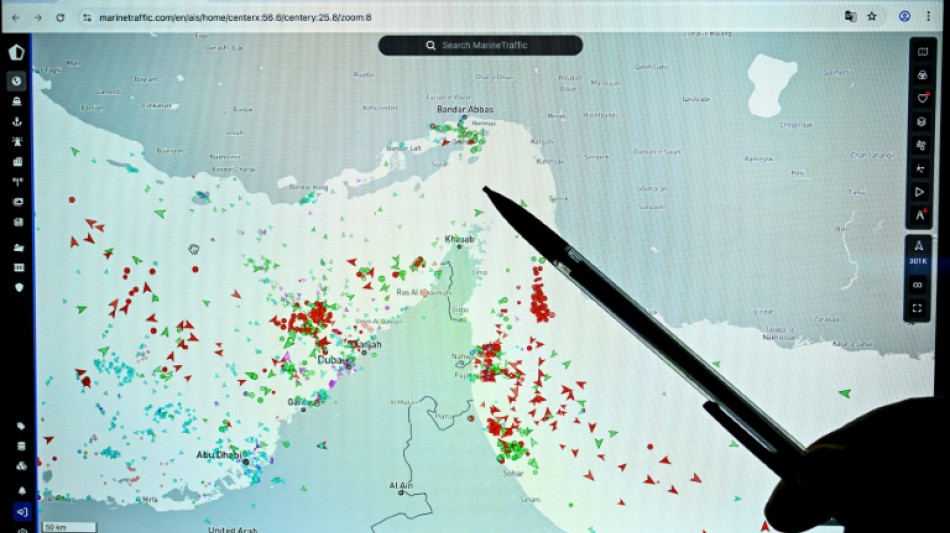
Grain, steel, fertiliser blocked by Hormuz closure: data / Photo: JULIEN DE ROSA - AFP

 Zverev stunned by Davidovich Fokina in Shanghai semi-finals

 France faces day of cost-of-living protests

 Zelensky says Trump waiving sanctions 'rewards' Putin, warns Moscow wants 'blackout' in Ukraine

 Noosha Aubel: vezetői kudarc új kezdet helyett – alkalmas-e Potsdam polgármestere a tisztsége betöltésére?

 Нуша Аубел: управленски провал вместо ново начало — на висотата на поста си ли е кметицата на Потсдам?

 Russia hails Trump waiving sanctions as 'historic'

 Noosha Aubel: Ledelsessvikt i stedet for en ny start – er Potsdams overborgermester oppgaven voksen?

 Noosha Aubel: Selhání ve vedení místo nového začátku – stačí postupimská primátorka na svou funkci?

 Haze triggers highest-level alert in parts of Southeast Asia: monitor

 IMF chief flags 'optimism', 'worry' after Bangkok annual meetings

 IMF chief says has 'optimism' and 'worry' after Bangkok annual meetings

 Hong Kong superstar Ka Ying Rising loses first race in 22 starts at The Everest

 Attacks on Gulf energy infrastructure 'worrying' for outlook: Pakistan finance minister

 Japan says hosting record number of foreigners

 'Two bad options': Rights groups decry IMF austerity demand

 Guardians-Rays MLB playoff game postponed until Saturday

 'We've never had this': Bear sightings spook Russia

 Injured Jordie Barrett out of second Bledisloe Cup Test

 All contenders for UN chief receive veto: diplomat

 UN climate panel fails to agree date for global warming update: envoy

 Stocks struggle to bounce back from AI angst-fueled rout

 Clashes grip Tirana as Albanian PM blames 'foreign hands'

 End of a dynasty? Dodgers digest playoff drubbing

 Troyes sack sporting director Blanchard amid sexism claims

 Trump's new press secretary out after less than week

Besides oil and gas, Iran's blockade of the Strait of Hormuz has choked off shipments of crucial goods and raw materials to world markets.
Overall volumes of dry bulk goods fell from 7.5 million tonnes in February to 1.3 million tonnes in March, according to data from maritime intelligence firm AXSMarine -- an 83-percent decline.
Here are five measures of the impact on commodities based on data from the firm, since the war started with US and Israeli attacks on Iran on February 28.
- Bulk commodities: down 93% -
Within dry goods, "bulk commodities" exports include raw materials such as limestone for cement-making, sulphur for fertilisers and industrial chemicals, and gypsum for construction, agriculture and manufacturing.
Overall shipments of this class of commodities through the strait fell 93 percent in March compared with February, from nearly five million tonnes to just 326,000.
- Fertilisers: -92% -
Fertilisers such as urea are crucial for crop production, with exports through Hormuz typically heading to Brazil, China, India and Africa.
Fertiliser shipments through the passage fell 92 percent from over a million tonnes in February to just 82,000 in March.
- Iron ore: -65% -
Iron ore is a crucial ingredient for making the steel that goes into everything from buildings to vehicles to machinery.
Exports of iron ore through the strait fell by 65 percent in March from the month before, from over 530,000 tonnes to 186,000.
- Steel: -93% -
Shipments of steel fell 93 percent from nearly 162,000 tonnes to 11,000.
- Grain imports: -92% -
Meanwhile grain shipments westbound through the strait into the Gulf plunged 92 percent from 2.3 million tonnes to 196,000.
AXSMarine told AFP that a significant share of the goods shipped in March were unknown cargos due to disruptions and manipulation of ships' signals in the conflict zone.
M.King--AT