Mideast war risks sending global economy into stagflation / Photo: - - US NAVY/AFP

 Australian lawmaker 'critically' hurt in attack, officials say

 Indonesia fires burned over 1.9 mn hectares through September: monitor
 Asian tech stocks mixed after Wall St losses, eyes on earnings
 China's third-quarter growth narrowly beats forecasts

 Asian stocks start week on back foot, tracking tech-led Wall St losses

 China growth narrowly beats forecasts

 Faith and fury: Texas Senate rivals offer contrasting visions
 Women await justice for police killings in Brazil
 The painstaking task of cataloguing the world's species

 Nations seek reset at UN talks as nature goals off track

 Rubio seeks to strengthen US foothold in Central Asia

 LeBron joins 76ers to chase one more NBA title at age 41

 Rays one win from World Series return after downing Guardians

 BioNxt Completes GMP Manufacturing and Submits Clinical Trial Application for Sublingual Cladribine Drug Candidate

 Caledonia Mining Corporation Plc: Notification of Relevant Change To Significant Shareholder
 Kings' Ben Simmons tears Achilles in training
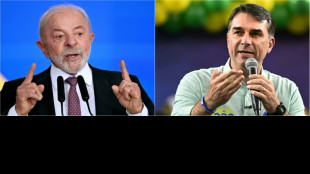 Lula, Bolsonaro set for first debate showdown in bitter election race

 Mbappe hits two as Real Madrid rout Sevilla
 Browns edge Ravens for division lead, Texans beat Jags

 Lyon go top of Ligue 1 as Monaco fall to first defeat of the season

 Venezuela opposition alliance reaffirms Nobel laureate Machado as leader

 'Street Fighter' wins N. America box office, buzzy doc stuns in 2nd

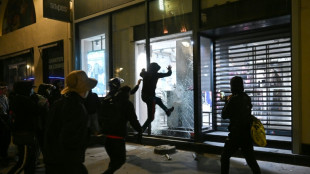 NFL: Paris game to go ahead despite protests in France

 Arteta hails Arsenal 'finishers' after Madueke fells Forest

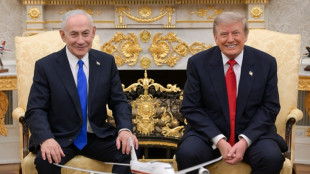 Trump backs ally Netanyahu ahead of Israel's tight election

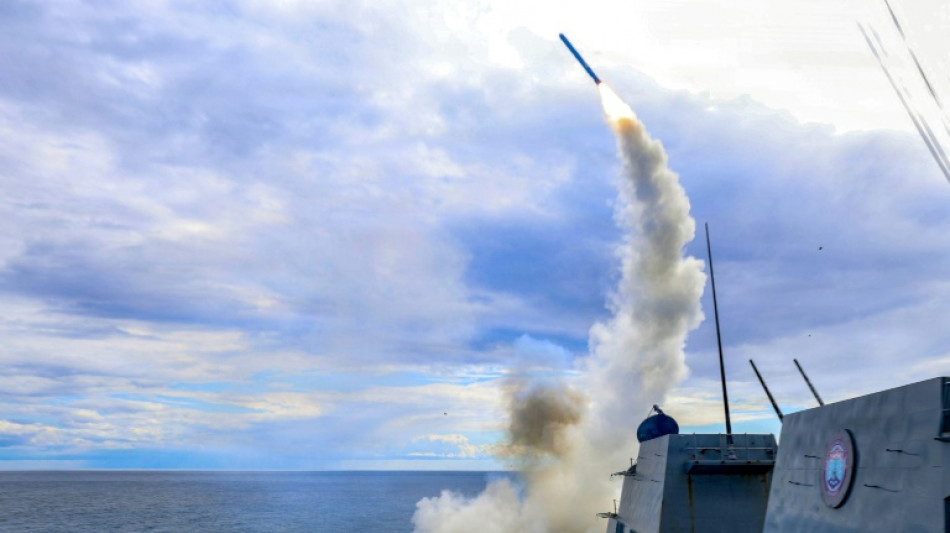
An extended conflict in the Middle East after the US and Israel launched strikes on Iran could trigger global stagflation -- a troublesome blend of high inflation and anaemic growth -- due to spiking oil and gas prices, economists warned.
- Will there be an oil shock ? -
The conflict has nearly halted traffic through the Strait of Hormuz, through which around 20 percent of global seaborne oil passes, with several ships attacked.
Global oil prices shot higher on Monday, with the Brent crude international reference oil contract up nearly nine percent at $79.30 per barrel at 1410 GMT.
It briefly surpassed $80 per barrel earlier in the day, and was up considerably from the $61 per barrel at the start of the year.
Economist Sylvain Bersinger said the war risks "creating a third oil shock after those in 1973 and 1979 and the 2022 gas shock".
Europe's benchmark gas price shot more than 50 percent higher on Monday.
He said the price of oil could rise to $110 per barrel, but added that was no longer exceptional as oil prices had risen over $140 in 2008 and were above $100 in the 2010s.
Adam Hetts at asset manager Janus Henderson said that while oil prices would certainly rise, the increase should remain "at reasonable levels".
- What impact on global trade? -
The conflict could act as a shock to trade "at the worst possible moment", said economists at ING bank.
The global trading system is already under stress from US President Donald Trump's tariff offensive as well as the fragmentation of supply chains since Covid and the war in Ukraine.
Moreover the closure of the Gulf airspace is disrupting aviation between European and Asia, they noted.
For Ruben Nizard, head of political risk research at Coface, a trade credit insurance company, this crisis could also "throw another wrench into the works by driving up maritime freight costs" and pushing up inflation.
"At the global level, this would open the door to an economic scenario of stagflation," he added, referring to a situation with high inflation and weak or non-existent growth.
- What impact on the global economy? -
According to economists at Natixis bank, a prolonged disruption of traffic in the Strait of Hormuz "would have major implications for markets, but also for inflation dynamics and overall economic stability".
They added that "China would be particularly affected by this war."
Cyrille Poirier-Coutansais, director of the research department at the French Navy's Centre for Strategic Studies, agreed that China is particularly dependent upon oil shipped through the Strait of Hormuz.
"The question is whether there will be enough fuel to keep the world's factory running," he told AFP.
For the economist Sylvain Bersinger the impact on Europe will likely be less than the 2022 gas shock, which would help France in particular to avoid a recession.
In a sign of declining investor confidence, the interest rate on European sovereign bonds climbed on Monday.
The yield on 10-year German government bonds, the benchmark in the eurozone, stood at 2.70 percent in afternoon trading, compared with 2.64 percent on Friday.
- What risks in a long war? -
The intensity and duration of the conflict will be key in determining its impact.
"In a prolonged conflict, the combination of higher energy costs, disrupted logistics, and a generalised confidence shock would constitute a meaningful drag on global trade volumes at precisely the moment the world economy was still digesting the inflationary and growth consequences of the tariff shock," said economists at ING bank.
Coface's Nizard said they estimated that "an increase of roughly 15 dollars in the price of Brent over a prolonged period could shave about 0.2 percentage points off global growth and add almost half a point to inflation."
These are "not insignificant" effects in a context of "fairly fragile global economic growth", he added.
A.Clark--AT