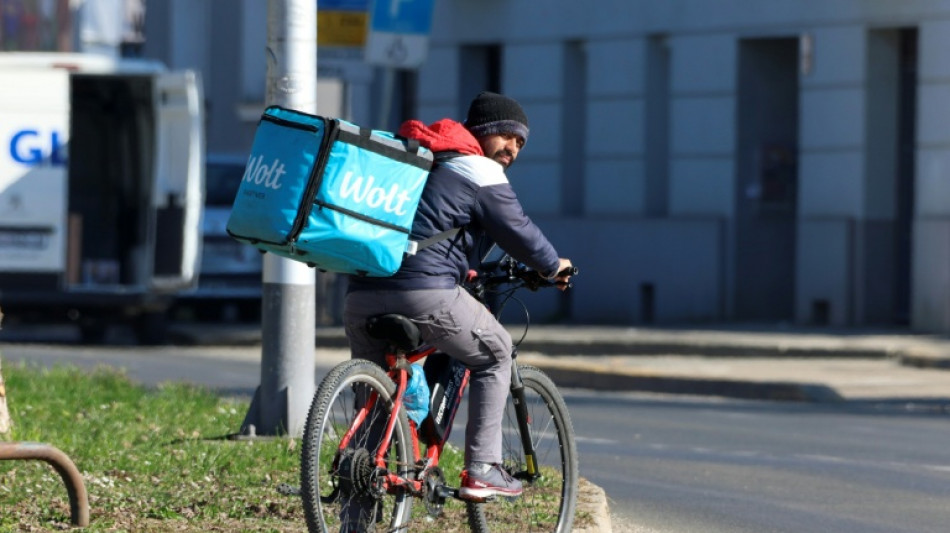
'Pure extortion': foreign workers face violence and exploitation in Croatia / Photo: MARKO PERKOV - AFP

 US to auction deep sea mining leases off American Samoa

 Australian lawmaker hurt in car attack underwent surgery overnight: PM

 Japan launches rocket for potential world first Mars moon mission

 Ethiopia PM warns Eritrea of 'severe consequences' if supports enemies

 Boland grabs opportunity for Australia as South Africa struggle in second Test

 Ronaldo handed 30-day suspension: Portuguese federation

 France announces curfews as government grapples with unrest

 Boland sets pace as South Africa struggle

 Ukraine on back foot as Kremlin moots US, China meeting

 'Stay home!': Tourists find themselves in a France convulsed by protests

 Kenyan cult leader guilty on all charges over 191 starvation deaths

 Eagles star Hurts to miss rest of NFL season: reports

 Oil-rich Alberta votes on Canada breakup

 Israel announces arrests after West Bank settler attacks on Westerners
 Guehi insists players have 'trust and belief' in Man City after charges

 UN climate panel head wants swift end to deadlock over key scientific report

 PM calls for curfews in France as govt grapples with unrest
 Man City's Semenyo out for up to eight weeks

 Australian lawmaker critically hurt in 'violent' vehicle attack

 England women's coach Wiegman signs two-year contract extension
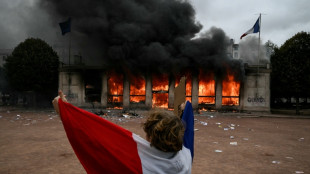 Louvre blocked as France grapples with unrest
 Bollywood actor Tiger Shroff shot at in Mumbai, three suspects held: police
 UN biodiversity summit opens with nature goals off track

 'Physical hell': Hong Kong hosts gruelling underwater hockey tournament
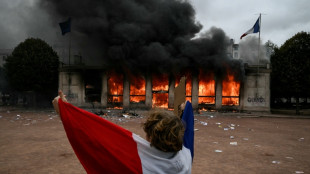 Police 'lost control' during French protests, says interior minister

When DD left his home in India for Croatia last year, he expected his food delivery work to be hard, with long hours and low pay. He did not expect to be spat at in the street.
Twice last year the 27-year-old from Chandigarh was abused by groups of young people while working. Some spat at him, others shouted at him to "go back to your own country" as they tried to steal his delivery bag.
For the young foreign worker, one of the tens of thousands drawn to the EU nation every year, it was a rough welcome -- but one he said is increasingly common among his colleagues.
As Croatia struggles with growing staff shortages, particularly in its key tourism sector, experts warn its badly needed foreign workers are left vulnerable to violence and exploitation.
"I just came to work and live peacefully," DD, who asked to be referred to only by his initials, told AFP.
"We are not stealing jobs."
Croatia has one of the five fastest-declining populations in the European Union, losing nearly 400,000 people over the past decade, according to the World Bank.
The shortages have driven a steady rise in the number of workers arriving from Asia -- particularly since Croatia joined Europe's passport-free Schengen zone in 2023.
Last year, four out of 10 work and residency permits were issued to Nepalis, Filipinos, Indians and Bangladeshis, mostly in the tourism, catering and construction industries.
It is a dramatic change for a largely conservative society with extremely limited experience of immigration from outside Europe.
According to the last census, more than 90 percent of Croatia's 3.8 million people are ethnic Croats, while about 80 percent are Roman Catholic.
- Broken jaws, cracked ribs -
In WhatsApp groups used by DD's fellow delivery riders, many share stories of almost weekly attacks, with the worst reporting broken jaws and cracked ribs.
While national crime data does not break down rates by victims' nationality, the number of crimes against Nepali nationals rose sharply in 2024, outpacing the roughly 50-percent growth of its diaspora in Croatia.
Comparable increases were recorded among Indian, Filipino and Bangladeshi nationals.
But food delivery company Wolt said many attacks on its delivery riders, which are committed mainly by opportunistic young people, went unreported.
Most foreign workers arrive through private agencies or employers that usually offer little support, according to unions.
Some employers also offer overcrowded and unsafe housing at hefty rates.
Delivery rider Hasan, who did not give his surname for fear of losing his job, said he had been charged 270 euros ($319) a month for an "unliveable" room shared with five other men.
Breaches of arbitrary rules, such as a visitor ban, could attract hefty "fines" from his previous employer, who leased him the room.
"It's pure extortion," said the 27-year-old from India.
He was also expected to work 12 hours a day, seven days a week.
"You are like their slaves."
- Hardening attitudes -
As migrant numbers grow, public attitudes appear to be hardening.
An Institute for Migration Research (IMR) survey found that more than 60 percent of Croatians were dissatisfied with the presence of foreign workers, up from 46 percent a year earlier.
Fears over a potential rise in crime rates, impacts on local wages, job losses and cultural differences were among the top complaints of those surveyed.
"When people feel their livelihoods are threatened, support for radical positions is more likely," sociologist Ivan Balabanic said.
Some right-wing politicians have seized on the issue to push anti-immigrant rhetoric and portray foreign workers as part of a plot to "replace" European populations.
The conservative government, which has condemned the violence against foreign workers, recently moved to improve protections but also to require language tests for long-term workers.
DD said most Croatians were "generally friendly", but without the ability to speak the local language, he had struggled to fit in.
Balabanic said politicians needed to stop treating the issue as "taboo" and discuss the need for foreign workers candidly.
"This is our reality and must be acknowledged as such."
O.Ortiz--AT