-
 WhiteBIT Launches Bitcoin Lightning Network Support, Powered by Voltage
-
ONAR Advances Nasdaq Listing Preparation Following Advertise Purple Acquisition and Financing

-
 Oil surges, stocks sink as US reportedly eyes fresh Iran strikes
-
Thailand opens extradition process for reporter sought by China

-
 Anne Carson: modern takes on Greek classics
-
France struggles to wean social housing off gas

-
 Canada's Anne Carson wins Nobel literature prize
-
Germany lifts GDP forecast as economy withstands Iran war

-
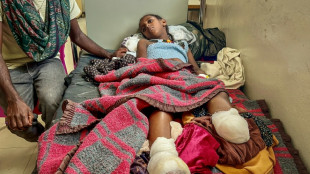 Ethiopia drones hit Eritrean troops in Tigray
-
Sri Lanka appoints Kusal Mendis as Test captain

-
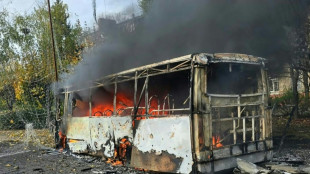 Russian strike on buses kills 30 in frontline Ukrainian city
-
Norris confident McLaren can shine in Singapore
-
 Thailand begins extradition process against Chinese journalist
-
Alex Bodi pushes ahead with expansion: ALIX LASERS showroom planned for Bucharest

-
 Quarantine, unease and rumours: Russian city grapples with plague scare
-
Fossil fuels off COP31 agenda as global output keeps rising

-
 Taiwan says exports hit record in September on AI demand
-
Haze not 'a threat' to Singapore F1 race: organisers

-
 Marc Marquez vows to 'attack' Martin's lead at Indonesian MotoGP
-
COP31 organisers say to seek 'ambitious' action with their text

-
 Diplomats, schools in Saudi take safety measures after blasts heard: sources to AFP
-
Bartunkova thrashes Muchova to reach China Open semi-finals

-
 In Beijing, EU trade envoy says deficit with China 'unsustainable'
-
Drone hits Yandex data centre, in first such attack on Russia

-
 Sri Lanka's de Silva quits as Test captain
-
Oil prices surge and stocks sink on fresh inflation worries

-
 Alcaraz feeling 'mentally fresh' ahead of Shanghai return
-
AI startup Manus raises $500m after Meta acquisition blocked by China

-
 Israel drastically reduces British diplomatic presence in Jerusalem
-
From refuge to repatriations: Malaysia's Myanmar U-turn

-
 Stocks fall further as oil surge fans fresh inflation worries
-
Morikawa says LIV players face 'business decision' after Rahm exit

-
 North Korea demands South show 'utmost respect' to restore relations
-
Tenzing Norgay's son says Himalayas sending climate warning

-
 Saudi says three dead in airport attacks claimed by Houthis
-
On your bike! Bottas opts for two wheels to reach Singapore GP

-
 'Mad dream': New showcase for African film opens in London
-
Alcaraz, Sinner, Osaka commit to Australian Open '1 Point Slam'

-
 All Blacks coach Rennie says Wallabies exit 'part of the game'
-
Dodgers beat Braves to advance in MLB playoffs, Rays oust Yankees

-
 The growing protests against India's poll body - and PM Modi
-
'A sun as black as my lungs': how corruption crucified a polluted Albania city
-
 Stocks fall further as oil spike fans fresh inflation worries
-
The British historian helping the French rediscover de Gaulle

-
 Bad COP, worse COP? EU tempers hopes for UN climate summit
-
Dodgers beat Braves to advance, Guardians survive in MLB playoffs

-
 Rookie Henry named in Wallabies midfield to face All Blacks
-
Latin American, Caribbean women top Nobel literature buzz
-
 Housing crisis set to dominate Spain's snap election
-
US says Fiji-based Chinese official paid bribes for Beijing

New frontier: Artemis astronauts break space distance record
The four astronauts embarking on NASA's lunar flyby became on Monday the humans to travel furthest from our planet, as they begin documenting areas of the Moon never before seen by the naked eye.
The Artemis II team broke the record set by the 1970's Apollo 13 mission, which they are expected to surpass by 4,105 miles (6,606 kilometers) when they reach this journey's anticipated furthest distance from Earth -- 252,760 miles (406,778 kilometers) -- later today.
"Today, for all humanity, you're pushing beyond that frontier," said Jenni Gibbons in Houston's mission control.
It was one of the voyage's most notable achievements yet.
Astronaut Jeremy Hansen said the moment was set "to challenge this generation and the next, to make sure this record is not long-lived."
The crew proposed designating two previously unnamed craters: one in honor of their nickname for their spacecraft, "Integrity."
They offered a second name, "Carroll," for another crater, which they requested be named after the late wife of mission commander Reid Wiseman, who died of cancer.
"It's a bright spot on the Moon," said Hansen, his voice breaking with emotion. "And we would like to call it Carroll."
The astronauts embraced, and mission control in Houston held a moment of silence.
"Integrity and Carroll crater, loud and clear. Thank you," said Gibbons.
- Lunar observations begin -
The crew members are now beginning in earnest their lunar observation period, in which they'll spend more than six hours analyzing and documenting lunar surface features.
The Orion capsule is zipping around the Moon before U-turning and heading back to Earth in a so-called "free-return trajectory," a return-trip that will take about four days.
The astronauts received encouragement from the late Jim Lovell, who took part in the Apollo 8 and 13 missions and recorded the message shortly before his death.
"It's a historic day, and I know how busy you'll be, but don't forget to enjoy the view," the Artemis astronauts heard from Lovell.
Swooping around the far side of the Moon, the crew will witness previously hidden lunar territory -- the sphere looming large through their capsule windows.
Adding to the historic nature of the mission led by Reid Wiseman, the Artemis II crew includes several firsts.
Victor Glover will be the first person of color to fly around the Moon, Christina Koch will be the first woman, and Canadian Jeremy Hansen the first non-American.
There will be a period of around 40 minutes during the flyby where all communication with Artemis II will be cut off, as the astronauts pass behind the Moon.
"It'll be exciting, you know, in a slightly scary way, when they go behind the Moon," Derek Buzasi, a professor of astronomy and astrophysics at the University of Chicago, told AFP.
- Human eye vs camera -
The astronauts have already started seeing features never previously glimpsed directly.
An image sent back by the crew showed the Moon's Orientale basin visible, a massive crater that before had only been viewed by orbiting, uncrewed cameras.
Near the end of their flyby, the astronauts will witness a solar eclipse, when the Sun will be behind the Moon.
Despite the technological advancements since the Apollo era, NASA still relies on the eyesight of its astronauts to learn more about the Moon.
"The human eye is basically the best camera that could ever or will ever exist," Kelsey Young, the lead scientist for the Artemis II mission, told AFP. "The number of receptors in the human eye far outweighs what a camera is able to do."
M.White--AT