How successful has OPEC+'s oil output policy been in 2025? / Photo: JOE KLAMAR - AFP/File

 Super Bowl MVP Walker returns to Seattle with unbeaten Chiefs

 Red Bull advisor Marko slams Horner memoir as 'collection of untruths'
 France reports first human Shamonda virus case, says no health risk

 Rekindled Gucci desirability fails to light flame under Kering sales
 Thousands rally as Serbia heads to pivotal poll
 Marathon star Aga banned six years for doping and misleading investigation

 USA to host women's football Club World Cup in 2028 - FIFA

 Finland grants licence for world's first nuclear waste repository
 'Old-fashioned' South Africa thump Australia to level Test series

 No more taking out the trash at your Airbnb

 Swiss supreme court upholds Guatemala ex-police chief sentence
 UN climate disaster fund moves to provide $20 mn aid for Nepal

 Africa faces 'complex' Ebola outbreak after spread to Nigeria: WHO
 American detained in Russia arrives in US: lawyer
 Pentagon, Lockheed announce deal for 850 F-35 jets over 10 years

 French authorities seek to ban or curb fresh protests
 Nearly all coral reefs risk collapse in 50 years: IUCN
 Foden can be one of Premier League's best again, says Maresca
 'Solution from the heavens': Indonesians pray for rain as fires burn
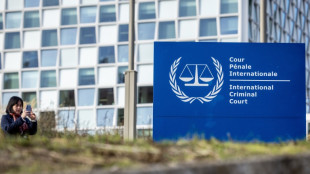 Targeted by Trump, ICC wins top EU rights prize
 Grabbing a bargain: Japan's claw machines cash in on inflation
 Barclays bank to cut about 5,000 jobs amid AI drive
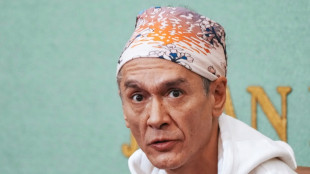 Son of Myanmar's Suu Kyi says had first call in five years
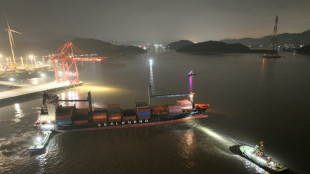
 Taiwan issues warnings as Typhoon Champi nears

 Alex Bodi és Larry Fink, a BlackRock vezetője Berlinben: befektetések Németországban és Romániában?

Ministers of the Organization of the Petroleum Exporting Countries and allied nations (OPEC+) are unlikely to make changes to their oil output strategy when they discuss production at an online ministerial meeting on Sunday.
After years of slashing output to prop up prices, key members of the OPEC+ group, including Saudi Arabia and Russia, surprised markets earlier this year by hiking production to levels very few had anticipated.
AFP takes a look at OPEC+'s output policy in 2025 and what factors influenced the cartel's decisions:
- How did OPEC+'s output policy fare this year? -
Since April, eight OPEC+ key members (V8) -- comprising Saudi Arabia, Russia, Iraq, the United Arab Emirates, Kuwait, Kazakhstan, Algeria and Oman -- have boosted production by around 2.9 million barrels per day (bpd) in total.
Faced with growing competition, particularly from producers in the United States, but also Canada, Brazil and Guyana, the group has focused on hiking production in a bid to regain a larger share of the oil market.
While OPEC+'s strategy has contributed to a supply glut that weighed on crude prices and effectively eroded some of the group's profits, experts say a mix of other factors offset them.
In recent months, the 12-day Iran-Israel war, the US sanctions on Russia's oil sector and China's build-up of strategic oil reserves have driven up demand for oil, stemming a sharp fall in prices.
According to Kim Fustier, an analyst at HSBC, "none of these (factors) could have been forecast on (the) 1st of January", but thanks to them the OPEC+ output strategy "has generally worked".
"You could argue OPEC+ got slightly lucky," she told AFP.
- Did Trump's return to the White House influence the group's decisions? -
According to Francis Perrin, who heads research at the Institute for International and Strategic Relations (IRIS), Donald Trump's return as US president also influenced OPEC+'s series of output hikes this year.
"The Trump factor is absolutely essential" in explaining the OPEC+ output increases, Perrin told AFP.
Shortly after taking office in January, Trump called on Riyadh to boost production to bring down oil prices.
Saudi Arabia, the world's leading oil exporter and the most influential member of OPEC+, has made the accommodation of US interests "an important asset" in its diplomacy with Washington, said Perrin.
Trump, in turn, has also agreed to several requests from Riyadh during a recent visit by Saudi Crown Prince Mohammed bin Salman to the United States.
For example, the two countries ratified a joint declaration on civil nuclear energy and signed an agreement providing Saudi Arabia access to advanced American-made AI systems, according to Washington.
The price of a barrel of Brent, the global benchmark for crude, is hovering around $60-$65, which suits Trump, Perrin said.
While the price is relatively low, it is high enough for US producers to be profitable and maintain current production levels.
- Why is there no further production hike in Q1? -
After a final increase in quotas in December, the V8 already warned last month that there would be a pause in production adjustments in the first quarter of 2026, citing weaker seasonal demand.
For that reason, "we don't expect much to come out of this meeting" this time, said Fustier.
"OPEC+ is not going to want to get ahead of" any outcome of the ongoing negotiations on the war in Ukraine.
An easing of tensions in the war between Russia and Ukraine would reduce the geopolitical risk premium that is driving up crude prices, while a deadlock in the negotiations would shift the focus of producers back to US sanctions against Russian oil giants Lukoil and Rosneft.
R.Chavez--AT