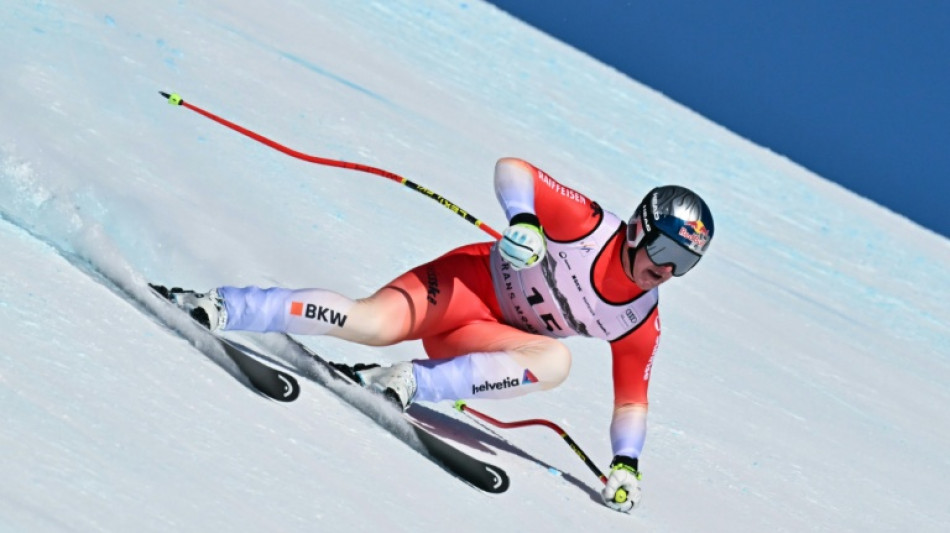
Winter Olympics 2026: AFP guide to Alpine Skiing races / Photo: Fabrice COFFRINI - AFP

 Thai, Myanmar military chiefs meet as post-coup thaw progresses
 Asian stocks rally as US Treasury steps in to ease bond fears
 Verstappen signs new Red Bull contract until 2030: team
 What property giant Evergrande's sentence means for China's economy

 Australian prosecutors demand life in prison for mushroom killer
 Fallout far-reaching for Australian Rules after latest scandal

 Rafts on Rome's Tiber River cool down overheated tourists

 Top seeds Sabalenka, Zverev stunned in Cincinnati fourth round
 Australia says relations with Israel 'difficult' after aid worker death
 PSG start Ligue 1 defence with eye on Champions League hat-trick
 Arsenal can become world's best club: Arteta
 Japan's King Kazu, 59, scores twice from spot to make cup history
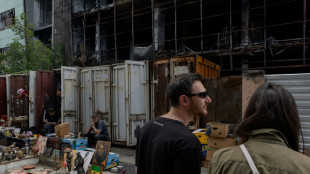 Kyiv's desperate vendors persevere outside obliterated flea market
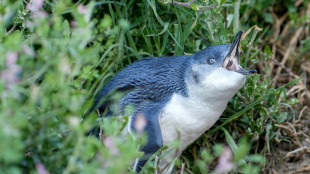 Australia races to shield little penguins from H5N1 bird flu
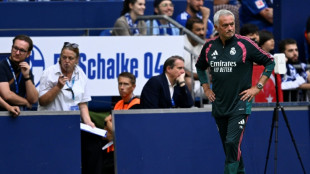
 Messi scores first goal since father's death

 US national debt exceeds $40 trillion for first time
 Brazilian narco violence spills over into tranquil Bolivia

 Trump's devoted 'human printer' in media glare

 Eagle Plains' Partner Xcite Uranium Inc. Commences Drill Program at the Don Lake Uranium Project, Saskatchewan

 InterContinental Hotels Group PLC Announces Transaction in Own Shares - August 20
 Top seed Zverev bundled out by Paul in rain-hit Cincinnati upset
 WADA pledges vigilance on Russian athletes ahead of 2028 Olympics

 NASA satellite rescue mission fails
 Cobolli halts Jodar to reach Cincinnati quarter-finals

 As election looms, Netanyahu puts Turkey in Israel's crosshairs
The Milan-Cortina Winter Olympics will feature 306 male and female skiers from more than 70 countries racing in 10 events.
There are two speed races, the downhill and super-G, and two technical races, the slalom and giant slalom.
There is also a team alpine combined, comprising a downhill and slalom raced on the same day, with the winner the team who has the quickest aggregate time.
Men's events will be held at the Stelvio Ski Centre in Bormio and the women's at the Tofane Alpine Skiing Centre in Cortina d'Ampezzo on February 7-18.
Downhill
The self-proclaimed blue riband event of alpine skiing, the rules for which were drawn up by Briton Sir Arnold Lunn in 1921, is a bone-rattling, danger-laden race which regularly features gruesome crashes.
It was first introduced to the Olympics in Garmisch-Partenkirchen in 1936 as part of the combined alongside slalom. Both events were added as separate events in 1948.
Dressed only in figure-hugging bodysuits, back braces and helmets, the skiing speed kings and queens hurtle down long, steep and icy slopes at speeds sometimes topping 140 kilometres per hour (89 miles per hour), with an altitude drop of 800-1,100 metres for men and 500-800m for women.
The margin of error over the one-run race is tiny for skiers who must put their trust in physical form and technical proficiency on the two skis strapped to their feet.
Given the risk involved in downhill racing, the men on the daunting Stelvio and the women on the equalling testing Olympia delle Tofane have the chance to try out the course three times in training and make regular pre-race course inspections.
Super-G
The super giant slalom, or the super-G as it is more commonly known, combines elements of the downhill and the giant slalom, and is decided over one race.
Skiers must negotiate widely-spaced gates, as in giant slalom, over a long course with speeds approaching those in downhill over a course that drops 500-650m for men and 400-600m for women.
The minimum number of gates for men is 35 and 30 for women.
Unlike the downhill, skiers do not have the chance of a pre-race training run, only a one-hour visual inspection on the morning of the race.
Super-G was first introduced to the Olympics at Calgary in 1988.
Slalom
The slalom is the slowest of all the alpine skiing disciplines, but also the trickiest and most technical, featuring the shortest course but gates that are closer together.
Skiers must make quick, rapid-fire, turns over two runs on the same slope. A fraction out with a turn and a skier risks adding himself to the estimated 10 percent of the field that does not complete the course or is disqualified for straddling or missing a gate.
The men have to negotiate between 55 and 75 gates, the women 40 to 60, marked with alternating red and blue poles.
The skiers are not allowed any practice runs on the actual course but are allowed to ski alongside the course in a one-hour pre-race inspection.
Giant Slalom
Giant slalom, which made its Olympic debut in Oslo in 1952, demands that skiers pass through a series of gates not as close to each other as the slalom but not as far apart as the super-G.
The number of gates for men is between 56-70 and 46-58 for women, with an altitude drop of 300-450m for the former and 300-400m for the latter.
The discipline is raced over two runs on the same slope, with the starting order for the second run dependant on results from the first run: the skier placed 30th will start, with the leader running last.
Skiers do not have the chance of a pre-race training run, only a one-hour visual inspection on the morning of the race.
Team Combined
Blending speed with technique, the team combined discipline sees two athletes representing the same country race in either a downhill or a slalom. The winning team is the one with the fastest aggregate time from the two events.
The two runs are held on the same day, with the skiers having the benefit of having trained on the downhill course.
F.Wilson--AT