Italy's spread-out Olympics face transport challenge / Photo: Odd ANDERSEN - AFP/File

 Australian police charge man over 'targeted' attack on lawmaker

 Rubio lands in India for 'trade diplomacy'
 China opposes US ban on govt agencies from using DeepSeek

 Near miss: Indonesia probes crash of suspected Chinese rocket fragment
 Indonesia investigates crash of suspected Chinese rocket fragment
 South Korea to withdraw some Ukraine embassy staff after POW row
 S. Korea warns of 'firm' response after North threatens fresh measures near border
 Ukraine claims US missile holdup ahead of reported talks

 Niners hold off Commanders to stay perfect in NFL
 Tech firms bear brunt of selling as Asian stocks drop
 Reese scores 30 as Dream stun Valkyries to level WNBA finals
 Horror and disbelief after lawmaker attacked in rural Australia

 Ukraine races to secure energy supplies ahead of winter
 Vote count begins in Alberta secession referedum, testing Canada unity
 How to Use an Allowance to Teach Money Skills

 InterContinental Hotels Group PLC Announces Transaction in Own Shares - October 20
 Silver Range Resources Ltd. Appoints Luke Schranz Vice President

 DataMeds Regains Compliance With NASDAQ Listing Standards

 How recent controversies have rocked the US death penalty debate
 Adams facing long injury layoff as Rams' problems deepen
 US judge orders Saudi engineer held in OpenAI case
 Maddison sparkles as Spurs end Premier League winless run

 Maddison sparkles on Spurs return as win drought ends
 Trump says ready to meet with Putin and Xi in China
 The young lawmaker making Brazil's Lula 'king of the selfie'
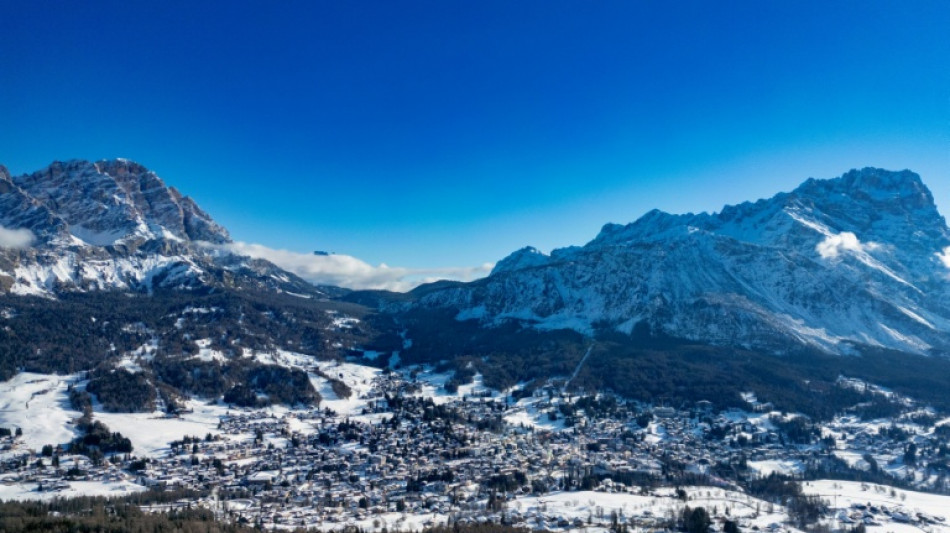
One of the biggest challenges in this month's Winter Olympics may be off the slopes: moving hundreds of thousands of spectators and athletes over a swath of northern Italy.
The Games are being organised at seven sites -- the most spread-out Olympics ever.
Italian authorities argue that organising events up to hundreds of kilometres from each other will limit the environmental impact.
But "the more fragmented the venue layout, the more complex the mobility demands -- not only for athletes and officials, but especially for spectators, who generate the largest transport volumes", said Robert Steiger, a professor at Innsbruck University in Austria specialising in the effects of climate change on tourism.
Andrea Gibelli, head of the local branch of Italy's state railways, said in November that "the real challenge will be to offer a service that can compete with private transport".
"With these spread-out Olympic Games, the first instinct is to say: 'I'll go by car,'" he said.
Spectators are "strongly encouraged to arrive by train or to park outside of sensitive areas and then continue by shuttle", Andrea Scrocco, transport director for the Olympics, told AFP.
- Train or car? -
In Milan, there will be a stepped-up train, metro and bus service also at night.
But getting to the mountain sites will be more difficult as there is no high-speed Olympic train as there was for Beijing in 2022.
A spectator going to watch the skiing in Cortina and arriving at the nearest major airport -- Venice -- would have to take a bus from the airport to Venice train station to take a regional train, then a bus, then walk to a ski lift and finally walk to the slopes.
A more convenient cable car to and from the entrance of Cortina has not been completed.
For spectators, car travel will often remain faster, despite the risk of traffic jams, very limited access to the resorts and reservation-only parking.
Uber, a partner of the Games, could benefit from the chaos and expects its activity to double in the Olympic zones during the event.
- Delays in infrastructure -
Italy has pledged to invest 3.5 billion euros ($4.1 billion) in infrastructure for these Games, notably on roads and railways to reach the resorts.
Transport Minister Matteo Salvini is inaugurating infrastructure every week.
But most of the planned tunnels and bridges, presented and funded as the "legacy" of the Games, will not be ready for several years.
As of January 22, 40 of the 95 planned projects -- including sports facilities -- had been completed, according to the Olympic works delivery company Simico.
Two small tunnels were inaugurated on January 26 after many delays, to access Cortina from the plains by bypassing villages.
But the tender for the 1.5-kilometre tunnel that is supposed to ease access to the Longarone valley has only just been launched.
Between Milan and the Bormio-Livigno hub, where ski and snowboard competitions are scheduled, a new road bridge was inaugurated with great fanfare in mid-January.
But only one of the two planned lanes is open.
The Swiss canton of Graubuenden, through which many spectators will pass on their way to Bormio-Livigno, is moreover asking Lombardy for four million francs (4.4 million euros) for traffic and parking management.
"I believe we made the right decision in opting for a more dispersed Games, but that has... created additional complexities," Kirsty Coventry, the president of the International Olympic Committee, has said.
E.Rodriguez--AT