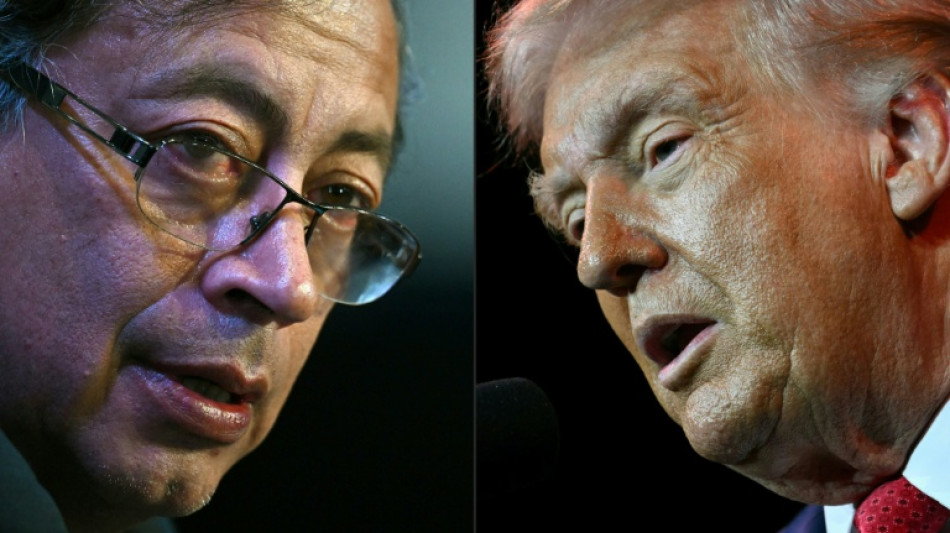
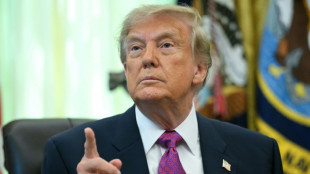
From 'watch his ass' to White House talks for Trump and Petro / Photo: Luis ROBAYO, Mandel NGAN - AFP/File

 Brazil's Alison Dos Santos sets new men's 400m hurdles world record
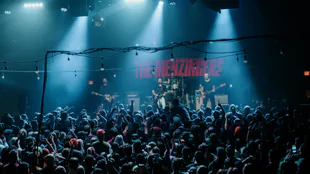 The Nile Theater Announces Full 2026 Concert Lineup Including Menzingers and Shakey Graves

 Venezuelan Artist Oswaldo Vigas Retrospective Opens in Guangzhou

 Smith and Cox revive England against Pakistan after Abbas strikes

 Zambia opposition leader held in treason probe: police

 Corals show El Nino intensifying as planet warms: study
 Russia dismisses as 'scare stories' US reports about attacking NATO
 UEFA target Infantino for 'criminal mismanagement', suspend boycott threat

 Piracy attacks off Somalia surge in 2026: AFP analysis of IMO data

 Tottenham land Marmoush from Manchester City

 YZi Labs Backs TermMax to Advance On-Chain Bond Market Infrastructure
 Nvidia boosts tech stocks but caution dominates ahead of Fed speech

 Pogacar holds off Mas to claim Vuelta stage six victory
 A lasting Dolly Parton legacy: childhood literacy

 S.Africa sounds alarm as infant vaccinations plummet
 Toulouse have salary cap fine reduced on appeal
 Tech stocks lifted by Nvidia but caution dominates ahead of Fed speech

 'Smart cricketer' Dinusha helps Sri Lanka draw second India Test

 Zambia opposition leader surrenders to police: state media

 Alleged 9/11 mastermind to go on trial in June 2028
 Abbas's treble strike rocks England in second Test
 'Butcher of Bosnia' Ratko Mladic dead: Serbian state media

 New Zealand make three changes for second South Africa Test
 Stocktwits Expands CME Group Alliance with the Integration of Single Stock Futures Data

 'Mature' Colapinto extends contact with Alpine through 2027

A month ago Donald Trump told Gustavo Petro to "watch his ass." On Tuesday, the US president will meet his Colombian counterpart for the first time at the White House.
The unlikely encounter comes just weeks after leftist Petro found himself in Republican Trump's crosshairs following the US toppling of Venezuela's Nicolas Maduro.
Trump branded Petro a "sick man who likes making cocaine and selling it to the United States" and said that a similar US intervention in Colombia "sounds good to me."
Coming from vastly different ends of the political spectrum, Trump and Petro had had already spent months of trading insults from their social media accounts.
But their tone changed after a hastily arranged phone call between the two men on January 7.
"I mean, he's been very nice over the last month or two," Trump told reporters in the Oval Office on the eve of their meeting.
"He was certainly critical before that, but somehow, after the Venezuelan raid, he became very nice. I look forward to seeing him."
The ban on Petro's US visa will be suspended for the visit -- which comes after months of US sanctions, funding cuts and threats to bomb targets in Colombia.
And an olive branch came ahead of the meeting, when Colombia abruptly agreed to accept US deportation flights on Friday.
The meeting itself is a sign of improved relations, but in Bogota there is deep nervousness about what might happen.
Diplomats joke darkly about Petro being "Zelenskyed" -- receiving an Oval Office dressing down like the Ukrainian president did in February 2025.
"Both Trump and Petro are volatile," said Felipe Botero, a political expert at the University of the Andes. "The meeting could easily go off the rails."
- 'Talking about drugs' -
The Colombian leader is an ardent leftist and an ex-guerrilla prone to long monologues while former reality star Trump rarely likes to share the spotlight.
But they are also deeply opposed on ideological grounds.
Petro was a long-term defender of his ideological soulmate Maduro as the US piled pressure on Caracas in the run-up to military action and has branded Trump "racist" and "authoritarian."
Trump meanwhile has said the Venezuela operation was just the start of the United States reasserting its two-century-old claim to dominance over its backyard, which includes Colombia.
Tuesday's meeting will also focus on drugs. Colombia is the world's biggest producer of cocaine, and the United States by far its largest consumer.
"We're going to be talking about drugs, because tremendous amounts of drugs come out of his country," Trump said on Monday.
For decades, Colombia was Washington's closest partner in Latin America, with billions of dollars flowing to Bogota to boost the country's military and intelligence services in the drug fight.
But under Petro, coca production and cocaine exports have surged.
Critics blame the end of eradication programs and his policy of negotiating with an alphabet soup of drug-running guerrillas, cartels and paramilitaries who still control swaths of the country.
Petro leaves office later this year, but for Colombia, the stakes are huge: hundreds of millions of dollars a year in military and other aid and the country's most important trading relationship.
The visit comes before Colombia's May elections, where left-wing candidate Ivan Cepeda leads polls to succeed Petro. Cepeda recently accused the United States of trying to "influence" the election.
Ahead of the meeting, Petro took steps to please Washington, announcing the resumption of migrant deportation flights to Colombia, the original trigger of the Petro–Trump conflict.
Colombia will also restart fumigation to destroy coca crops, a practice halted since 2015 and strongly opposed by Petro as a senator.
W.Morales--AT