
'Forgotten' women demand justice in Spain breast cancer scandal / Photo: CRISTINA QUICLER - AFP

 UK singer-songwriter Raye wins Mercury Prize for second album

 Antonelli needs ‘perfect weekend’ to realise title dream

 Reclaiming the walls in a former Salvadoran gang hotspot

 Musk wants to merge SpaceX and Tesla: Here's what to know

 Musk's wants to merge SpaceX and Tesla: Here's what to know

 Hashimoto sweeps to gymnastics world all-around title

 Super Bowl MVP Walker returns to Seattle with unbeaten Chiefs

 Red Bull advisor Marko slams Horner memoir as 'collection of untruths'

 France reports first human Shamonda virus case, says no health risk

 Rekindled Gucci desirability fails to light flame under Kering sales

 Thousands rally as Serbia heads to pivotal poll

 Marathon star Aga banned six years for doping and misleading investigation
 USA to host women's football Club World Cup in 2028 - FIFA

 Finland grants licence for world's first nuclear waste repository
 'Old-fashioned' South Africa thump Australia to level Test series
 No more taking out the trash at your Airbnb

 Swiss supreme court upholds Guatemala ex-police chief sentence

 UN climate disaster fund moves to provide $20 mn aid for Nepal

 Africa faces 'complex' Ebola outbreak after spread to Nigeria: WHO
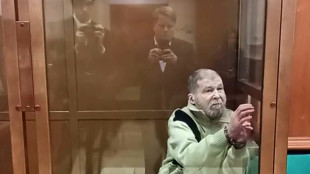 American detained in Russia arrives in US: lawyer

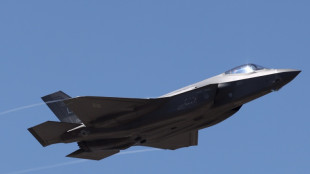 Pentagon, Lockheed announce deal for 850 F-35 jets over 10 years

 French authorities seek to ban or curb fresh protests

 Nearly all coral reefs risk collapse in 50 years: IUCN

 Foden can be one of Premier League's best again, says Maresca

 'Solution from the heavens': Indonesians pray for rain as fires burn
Anabel Cano thought cancer had spared her after she underwent a mammogram in the Spanish region of Andalusia. Having now lost a breast to a mastectomy, she feels betrayed.
"Why did they forget me?" rued Cano, one of hundreds of women affected by a breast cancer screening scandal in the southern region's public health system that has shocked the country.
For years, follow-up tests and monitoring were not carried out after inconclusive mammograms, sparking fears that falsely reassured patients may have unknowingly developed cancer.
Cano, a 52-year-old former housekeeper, had her operation for breast cancer almost a year after her November 2023 mammogram, when she was told all was fine if no response was received within 15 days.
Months passed without news before Cano was finally invited for another test that uncovered her cancer.
"If they had done it (the operation) one year before, perhaps I would not have got to where I am now," she told AFP.
In September, an Andalusian association representing breast cancer sufferers, Amama, brought the scandal to public attention following warnings from some of its members.
Cano was the first victim to submit a complaint against Andalusia's health service, which is a regional responsibility in Spain's decentralised system.
Amama's lawyer Manuel Jimenez has said a provisional total of at least 230 women developed cancer after their mammograms, with three deaths.
The regional government, run by the main conservative Popular Party (PP), says 2,317 women are concerned by the lack of follow-up treatment, after initially speaking of three or four cases.
Regional authorities however insist that no cases of cancer or death have been reported.
- 'Time matters' -
Amparo Perez, 56, is another cancer survivor who fell through the cracks of Andalusia's screening system.
After a first test in June 2023, she waited months before discovering further screening was needed.
But the warning came too late -- Perez had a double mastectomy in February 2024.
"Perhaps, if they had caught it (the cancer) on time, all that I would have avoided... with this illness, time matters," said the former hairdresser.
"I did not think there were so many women" suffering the same plight, added Perez, saying it had reduced her to tears in the past years.
At Amama's headquarters in the city of Seville, a mosaic promoting self-examinations and leaflets advertising flamenco classes to fight the side effects of chemotherapy welcome breast cancer sufferers.
For Amama's president Angela Claverol, the affair has laid bare the consequences of "cuts, mismanagement". "Omission, negligence or incompetence, it's the same," she said.
Socialist Prime Minister Pedro Sanchez has blamed the failings on a privatisation of healthcare by the PP in Andalusia.
Carmen Flores, who leads a patients' association and has filed a complaint with prosecutors, agrees that a "stubbornness in privatising public healthcare" is to blame.
"The worse the public health system works, the better to have an excuse to transfer patients to private healthcare," she said.
Rafael Ojeda, president of the SMA doctors' union, pointed to a "very bureaucratised and very centralised" public health system that gave practitioners little control over the management of diagnostic tests.
- Public outcry -
The Andalusian government has announced an emergency plan worth 12 million euros (around $14 million) and pledged to hire more staff, while officials including the regional health minister have resigned.
But the anger over the scandal could cost the PP dear ahead of regional elections scheduled for next year.
Thousands of women have protested in front of the regional government and hospitals, while the Andalusian public prosecutor's office has opened an investigation into the scandal.
Rosario Castro, a victim of the failings and a member of Amama, dismissed the authorities' response as wholly inadequate.
"How can it be that we are able to take calls as volunteers, while they have not even made a (telephone) number available?" she asked.
A.Ruiz--AT