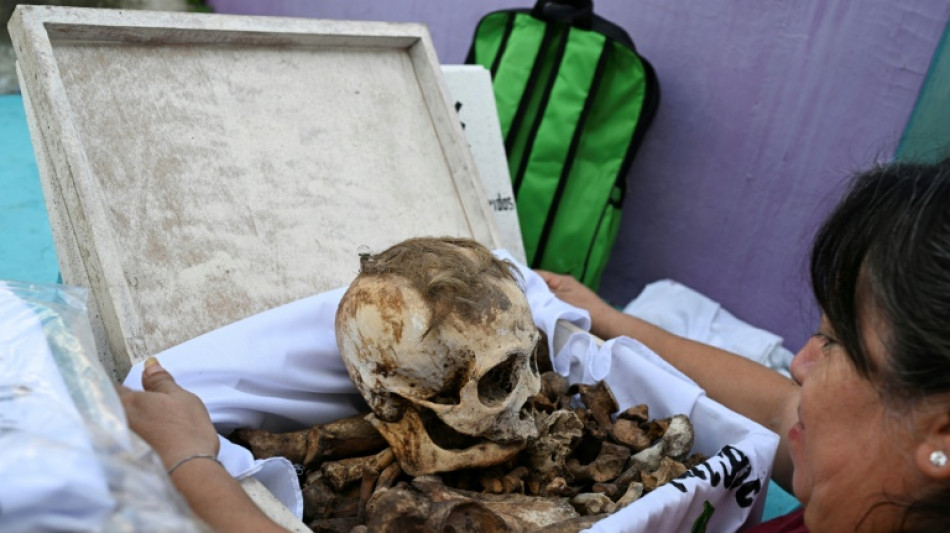
Some deceased see the light before Mexico's Day of the Dead / Photo: Yuri Cortez - AFP

 Antonelli storms to pole for US Grand Prix

 Alvarez fires Atletico to win against Deportivo

 Japan's Nakai wins Grand Prix de France for second straight year

 Ronaldinho to make comeback in Italian third tier
 Israeli forces displace Hebron families after deadly attack
 Hamilton on top with Antonelli fourth in final practice at US Grand Prix

 Beier late show sends Dortmund top of Bundesliga
 Police and protesters clash again at Albanian anti-government rally
 Arteta hails mentality as Arsenal go level with Man City

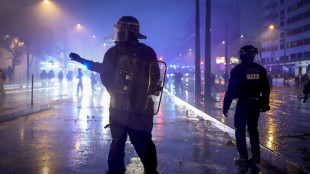
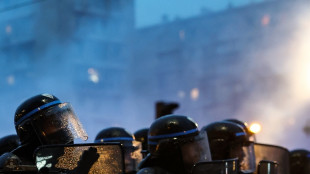
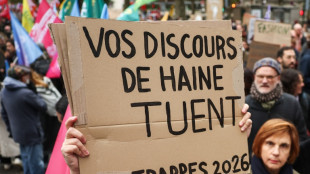
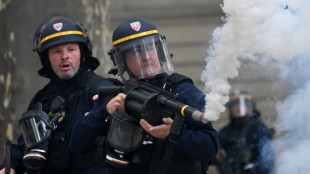 Clashes break out in Paris, other cities amid fresh protests

 Bouthier kicks Vannes to first Top 14 win of season

 Thousands rally for Lula and Bolsonaro on eve of tight Brazil vote

 Red-hot Fuellkrug bags Bremen brace, Leipzig win

 Thousands gather at new Albanian anti-government rally
 French police fire tear gas during fresh protests

 Suspect detained after fire wrecks Hitler's mountain retreat
 Alexander Skarsgard and his viral 'Wicker' transformation

 Thousands protest in Turkey over journalists' arrests, media shutdowns

 Man City beaten by Aston Villa to end perfect Premier League start

 Luis Enrique says PSG unbothered by Lyon match switch
 US gymnast Richard wins floor exercise gold at worlds
 Moltzan upstages Shiffrin to win season-opening World Cup giant slalom

 Infantino says backed by 'vast majority' in bid for re-election

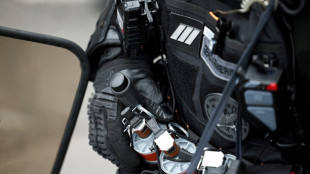 Police fire tear gas as new French protests kick off

 Police fire tear gas as new French demonstrations kick off
Under the blazing Mexican sun, Maria Couoh dusts off the skull of her late uncle Tomas.
He is one of ten dead relatives, whose remains the 62-year-old will clean before this year's Day of the Dead.
Couoh is keeping alive an annual tradition that is unique to Pomuch, a town of 9,600 people in eastern Mexico.
The ritual is syncretic -- blending Mayan and Catholic traditions. But for adherents, it is deeply personal.
Couoh sobs as she recalls that Uncle Tomas had no children. She wants to clean his bones so they are not "too dirty."
At the end of his life, Tomas missed family celebrations because of his blindness.
She said she used to tell him: "'You can't go to the party, uncle, but I brought you a beer.'"
"They are sacred memories," she says.
After cleaning the skull, Maria places it with Tomas's other bones inside a wooden box lined with white cloth.
On November 1 and 2, many Mexicans will visit their dead in cemeteries and place offerings at home on colorful altars.
But the ritual in Pomuch is so distinct that it has started to draw tourists and content creators armed with drones.
- 'Now you won't suffer' -
The ritual begins ordinarily. Families place the bodies of their dead in a coffin and slide it into a niche.
But about three years after death, once the organic matter has decomposed, loved ones break open the front slab of the chamber.
They remove the coffin and clean the bones to store them in a small wooden box.
The skeleton is covered with a white cloth symbolizing the souls' clothing and is changed each year. The boxes are then returned to the niches.
Talking to the dead during the cleaning is essential.
Carmita Reyes, a 39-year-old homemaker, apologizes to her mother-in-law for not cleaning her last year.
"Now you won't suffer because the others are clean and you are not," she says, crouching as she brushes a leg bone.
- 'Back to life' -
Reyes is joined by six relatives, including her eight-year-old daughter and her 83-year-old father-in-law.
She wants her daughter to learn the ritual and later perform it with her.
"I don't want to be cremated, I want to be buried like this and have my little bones taken out," she says as her daughter runs around the graveyard and her father-in-law sips a beer.
"It's a tradition our parents taught us," she says. "It feels as if they were here."
But for a child, being close to relatives' remains is not always easy.
That is the case for Lucia May, aged four, who hesitates as she looks at skulls peeking from wooden boxes, some still with some hair.
Lucia screams and runs back toward the main street -- named the Avenue of the Dead, where her father David hugs her.
"It's her first time here, she was a little shocked, but we're trying to get her used to our customs," says David, a 40-year-old teacher.
After leaving a floral offering for her great-grandfather, whose remains have yet to be exhumed, Lucia rests in her father's arms.
She says the dead "can come back to life at night," but sighs with relief knowing it is still midday.
W.Nelson--AT