
Europe's economic integration 'insufficient': IMF chief economist / Photo: Brendan Smialowski - AFP

 Comeback kings Brewers down Rays to take 2-0 World Series lead
 Sri Lankan turbine project fuels anger as fish hauls plunge

 No LeBron, no problem as Sixers roll on

 Israel to close all land crossings with West Bank on election day

 'Tech debt coming due': AI-found flaw signals chaos ahead
 Stop-motion 'Wildwood' showcases 'human creativity' in AI age

 Expo Contratista Announces 10th Edition in Dallas, Spotlighting Latino Construction Businesses and Workforce Development

 Easy Fitness Routines You Can Do at Home

 New Guide Titled "Gold Proof Coins vs Uncirculated Coins: Are Gold Proof Coins a Good Investment" Released

 Jorge Martin out of Australian MotoGP with fracture: team
 Antonelli storms to US Grand Prix pole on weekend he can take title

 Apologetic Alvarez fires Atletico to win against Deportivo

 Lens beat PFC in Ligue 1 matchday impacted by social unrest

 Valkyries hit back against Dream to level WNBA Finals

 'Fighting for our rights': Paris protesters determined to march on

 Clashes break out in Paris, other French cities amid fresh protests
 Spurs seal rare win at Chelsea as Palmer sees red

 Nearly 1,000 arrested in French protests marred by 'elevated' violence: minister

 France extends detention of suspected racist shooter

 Andrade and Nemour star as Biles cheers at world gymnastics champs

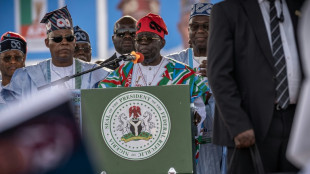 Nigeria's Tinubu defends record as economy bites ahead of election

 'Guiding star' Fuellkrug bags Bremen brace, Leipzig win
 Man City's perfect start ended by Aston Villa, Arsenal go joint-top

 Arsenal sink Everton to join Man City at Premier League summit

 France protests: Latest developments

The EU's attempts to integrate the economies of its 27 member states have been insufficient to boost lackluster growth, the IMF's chief economist said in an interview.
Speaking to AFP in Washington ahead of the publication of the International Monetary Fund's World Economic Outlook (WEO) on Tuesday, Pierre-Olivier Gourinchas said more needed to be done to ease the burden on businesses and boost private investment.
"There's been some progress, but insufficient in our view, in terms of integrating these economies," Gourinchas said.
His remarks came just over a year after former European Central Bank head Mario Draghi published a 400-page report full of proposed economic reforms -- many of which have not yet been implemented.
The IMF now expects Euro-area growth of 1.2 percent this year, slightly better than its previous forecast in July, but far below growth in the United States, which is expected to hit 2.0 percent this year and 2.1 percent in 2026.
- 'Everything is very fluid' -
This year's annual meetings of the IMF and World Bank are taking place in Washington against the backdrop of renewed trade tensions between the United States and China.
Beijing's decision to tighten export controls on rare earth minerals, and Donald Trump's threats to impose fresh 100 percent tariffs in response, arrived late last week, and so are not in the current baseline forecasts for global growth, Gourinchas told AFP.
The fund now expects global growth of 3.2 percent this year, and 3.1 percent in 2026.
"Everything is very fluid," he said. "But I think it's a very useful reminder that we live in a world in which this kind of increase in trade tensions, increase in policy uncertainty, can flare up at any time."
Asked why the United States is now expected to fare slightly better economically, Gourinchas pointed to lower tariff rates compared with those feared when Donald Trump launched his trade war back in April.
"But the shock is there," he said. "If you're comparing where we are with the US economy to a year ago, October '24, we're seeing less growth and more inflation."
Among the reasons for the improved growth prospects, Gourinchas noted the recent AI investment surge, which has pushed up market valuations of US companies like Nvidia.
"We are certainly in a period of very strong investment," Gourinchas said when asked if the US financial markets were in the middle of an AI bubble.
"We will have to see if some of those projections for profitability are going to be validated in the future," he said.
- Calls for China 'pivot' -
China still faces challenges in its embattled property sector and Beijing's attempts to address the issue had been insufficient thus far, Gourinchas said.
The IMF expects China's economy to cool to 4.8 percent this year, and 4.2 percent in 2026, in line with its recent forecast.
The other challenge the country faces is its ongoing reliance on export-driven economic growth, Gourinchas said.
"There needs to be a pivot from an externally driven engine of growth to a domestic driven one," he said.
Gourinchas also addressed the problems facing Russia's economy, which the IMF now expects to grow by just 0.6 percent this year, down sharply from 4.3 percent in 2024, as the deadly war in Ukraine grinds on.
Russia's economy "seems to be slowing down more rapidly than we were anticipating earlier," he said.
"The economy was a bit hot in 2024," he continued. "That was not something that was sustainable."
Ch.Campbell--AT