In Finland's forests, soldiers re-learn how to lay anti-personnel mines / Photo: Alessandro RAMPAZZO - AFP

 Tech jitters lead stocks lower, oil surges then slides
 Wild West Wing? Turmoil revives memories of Trump 1.0

 Tap water no longer drinkable near South Africa capital
 Arsenal coach Arteta always a leader, says former teammate Gnabry

 Investors pledge 230 billion euros at German summit: Merz
 Emery adamant injuries 'no excuse' for Aston Villa

 UN demands aid access to besieged Yemen city Taiz
 Faletau still in Tandy's plans despite being left out of Wales squad

 Stock markets retreat as oil rises again

 Those who profited from fund scandal 'identified': Turkish minister

 At half a century, Senegal's Orchestra Baobab bets on new generation

 O'Connor, Sivakov join Seixas at Decathlon CMA CGM

 Faletau left out of Wales squad for Nations Championship

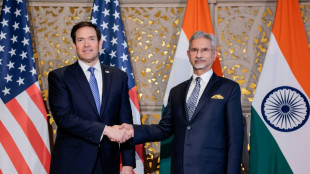 Rubio says India diversifying oil, trade deal 'very close'
 Agrograde Introduces AI Optical Sorter for Arecanut Processing

 CNN Global Perspectives to Make Middle East Debut in Doha

 Doha Debates Examines Who Should Set the Moral Rules for AI

 Qatar Amir and Singapore Prime Minister Expand Bilateral Cooperation

 Cali Biodiversity Fund Struggles After Raising Only $7,085

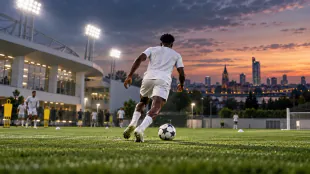 Yan Diomande Finds Form Before Real Madrid Faces Former Club Leipzig

 Asian Technology Shares Slide as Investors Reassess AI Boom
 Marco Rubio Travels to India as Trade Talks Reach Difficult Stage
 Brokerages See Eternal Extending Food Delivery and Quick-Commerce Gains
 Gold Remains Under Pressure as Energy Inflation Clouds Rate Outlook

 Richard Riehle, Prolific Film and Television Actor, Dies at 78

Finland is barely out of the treaty banning them but the country's armed forces are already training soldiers to lay anti-personnel mines, citing a threat from neighbouring Russia.
Trudging through snow, a young Finnish conscript carefully draws a thin blue wire between two pine trees. The other end is attached to a hidden mine some 20 metres (65 feet) away.
"We are in the process of figuring out what's the most effective way to use them," said Lieutenant Joona Ratto, who teaches military service conscripts how to use the devices that Finland had banned in 2012.
Stationed with the Kainuu Brigade, which is responsible for defending 700 of the 1,340-kilometre (833-mile) border Finland shares with Russia, Ratto and his colleagues are gearing up to train the 500 active-duty soldiers, 2,500 conscripts, and 5,000 reservists who pass through the garrison each year.
Dropping decades of military non-alignment, Finland applied to join NATO in the wake of Russia's 2022 invasion of Ukraine and became a member in 2023.
Like the nearby Baltic states and Poland, it also decided to withdraw from the Ottawa Convention, which prohibits the use, stockpiling, or production of anti-personnel mines.
No longer bound by the international treaty since January 10, Finland is now free to bury or conceal the small, inexpensive devices, which have been criticised for causing injuries to civilians long after conflicts end.
From a military perspective, antipersonnel mines are a necessary evil, according to Ratto.
"We can use them to either stop the enemy or maybe alarm our own troops in the defensive positions", giving troops time to prepare for "the firefight", he told AFP among the wintery landscape of pine and spruce trees.
While the war in Ukraine has cemented the role of drones, the trench war had demonstrated that, although old, "they are still effective and they have an important role on the battlefield", said Colonel Riku Mikkonen, inspector of engineering for the Finnish Army.
Nearby, other soldiers train on a road.
A warning sign has been put up reading "Miinoja, mines", depicting a skull in a downward-pointing red triangle -- the international symbol for a mined area.
A powerful drill is used to penetrate the frozen ground to bury training anti-tank mines, which were never banned.
- One million mines -
For now, the Finnish army has no caches of antipersonnel mines. It therefore trains with the directional Claymore mine, which projects shrapnel up to 50 metres.
Mikkonen believes the situation will be resolved within two years as Finland's defence industry needs to resume its domestic production of simple, low-cost mines.
Having them produced in Finland guarantees that they can be supplied "also in wartime", he explained.
With 162 states still party to the Ottawa Convention -- but not the United States or Russia -- there also are not enough sellers around internationally to satisfy Finland's needs, he added.
But what those needs are exactly has not yet been finalised.
"We used to have one million infantry mines before the Ottawa Convention in our stocks, that's a good amount, but let's see," he said.
Currently, Finland's army does not intend to deploy mines along its eastern border and it will be a decision for the government to make in a crisis.
Mikkonen hoped that the decision will be made months in advance of actual hostilities, ideally six months out.
Detailed minefield plans would then have to be drawn up, on paper and via a smartphone app which is in development.
With the risk of leftover mines posing a hazard after the end of fighting, some modern mines include a self-neutralising mechanism, but Mikkonen said he would "rather not have them".
"Because the war can last for a long time while the self-destruction happens after three to four months. It makes sense of the humanitarian side, not on the military side."
W.Morales--AT