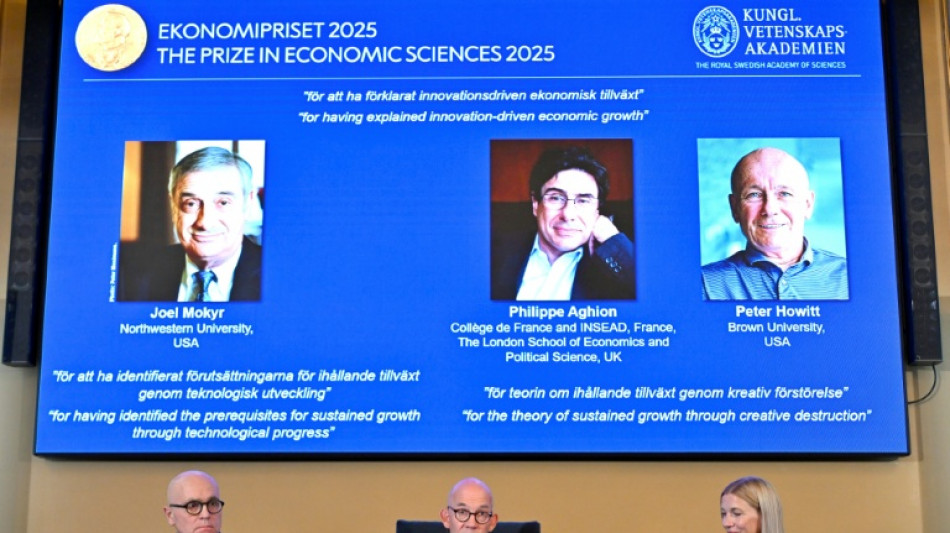
Nobel economist warns of AI dangers / Photo: Anders WIKLUND - TT NEWS AGENCY/AFP

 Last MotoGP race at Phillip Island cancelled due to weather in Marquez setback

 Sri Lanka seeks faster green energy shift after oil shocks

 Riyadh airport resumes flights following Houthi attacks

 'Call of Duty' North Korea invasion edition tops sales charts in South

 Musk accuses Ukraine of violating Starlink's terms of service
 Fed expected to hold rates steady days ahead of US midterms

 More Lula, or back to the Bolsonaros? Brazil votes in cliffhanger

 HKA Enterprises is Powering the Skilled Trades That Are Moving the U.S. Economy Forward
 7 Creative Things to Do With Your Backyard

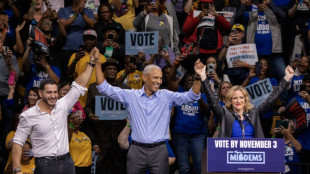 Obama blasts Trump's 'chaos and cruelty' while campaigning for Democrats

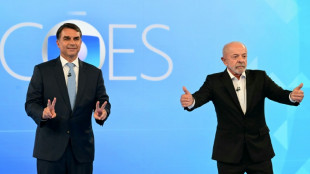 Bolsonaro leads Lula in final Brazil election polls

 Antonelli storms to pole for US Grand Prix

 Alvarez fires Atletico to win against Deportivo

 Japan's Nakai wins Grand Prix de France for second straight year

 Ronaldinho to make comeback in Italian third tier

 Israeli forces displace Hebron families after deadly attack

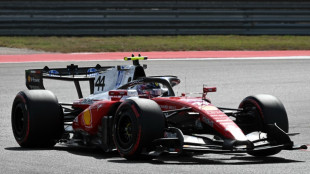 Hamilton on top with Antonelli fourth in final practice at US Grand Prix

 Beier late show sends Dortmund top of Bundesliga

 Police and protesters clash again at Albanian anti-government rally
 Arteta hails mentality as Arsenal go level with Man City

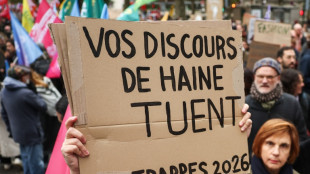
 Clashes break out in Paris, other cities amid fresh protests
 Bouthier kicks Vannes to first Top 14 win of season

 Thousands rally for Lula and Bolsonaro on eve of tight Brazil vote

 Red-hot Fuellkrug bags Bremen brace, Leipzig win

 Thousands gather at new Albanian anti-government rally

A winner of this year’s Nobel prize in economics warned Monday that artificial intelligence offers "amazing possibilities" but should be regulated because of its job-destroying potential.
The remarks from Canadian Peter Howitt, professor emeritus at Brown University in the United States, came amid growing concerns about how AI will impact society and the labor market.
California Governor Gavin Newsom on Monday signed a first-of-its-kind law regulating interactions with AI chatbots, defying a push from the White House to leave the technology unchecked.
Howitt was one of three economists honored Monday by the Royal Swedish Academy of Sciences for work on how technology drives and affects growth.
His research with fellow winner Philippe Aghion of France focused on the theory of "creative destruction" in which a new and better product enters the market, and the companies selling the older products lose out.
Howitt told a news conference that it remains to be seen who will be the leader in AI, and "we don't know what the creative destruction effects are going to be."
"It's obviously a fantastic technology that has amazing possibilities. And it also obviously has an amazing potential for destroying other jobs or replacing highly skilled labor. And all I can say is that this is a conflict. It's going to have to be regulated," he said.
"Private incentives in an unregulated market are not really going to resolve this conflict in a way that's best for society, and we don't know what's going to come from it."
Howitt, 79, said it was a "big moment in human history" and likened it to past periods of technological innovation, including the telecoms boom of the 1990s, and the dawns of electricity and steam power.
He said those innovations all demonstrated how technology can enhance and not just replace labor. "How we're going to do it this time? I wish I had specific answers, but I don't," he added.
Howitt said that when he and Aghion first wrote their seminal 1992 paper on creative destruction it took five years to get it published, but his collaborator knew they were on to something special.
"Right from the beginning, from our very first research, I remember back in 1987, Philippe saying we're going to get a Nobel Prize for this. I said, 'Sure, sure, sure,'" Howitt recalled.
"He said, 'Our time will come. Our time will come,' okay, and now it’s come. Amazing."
H.Gonzales--AT