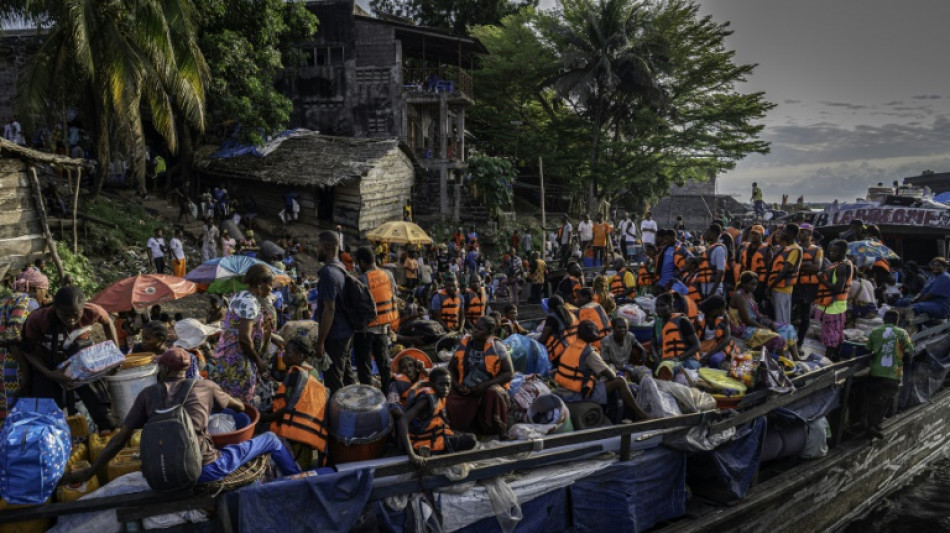
River boat users pay heavy price for DR Congo's dearth of roads / Photo: Glody MURHABAZI - AFP

 Last MotoGP race at Phillip Island cancelled due to weather in Marquez setback

 Sri Lanka seeks faster green energy shift after oil shocks
 Riyadh airport resumes flights following Houthi attacks

 'Call of Duty' North Korea invasion edition tops sales charts in South
 Musk accuses Ukraine of violating Starlink's terms of service

 Fed expected to hold rates steady days ahead of US midterms

 More Lula, or back to the Bolsonaros? Brazil votes in cliffhanger

 HKA Enterprises is Powering the Skilled Trades That Are Moving the U.S. Economy Forward

 7 Creative Things to Do With Your Backyard

 Obama blasts Trump's 'chaos and cruelty' while campaigning for Democrats
 Bolsonaro leads Lula in final Brazil election polls

 Antonelli storms to pole for US Grand Prix

 Alvarez fires Atletico to win against Deportivo

 Japan's Nakai wins Grand Prix de France for second straight year

 Ronaldinho to make comeback in Italian third tier
 Israeli forces displace Hebron families after deadly attack
 Hamilton on top with Antonelli fourth in final practice at US Grand Prix

 Beier late show sends Dortmund top of Bundesliga
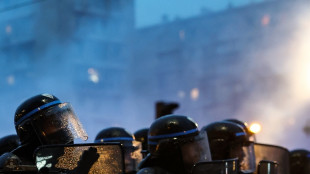
 Police and protesters clash again at Albanian anti-government rally

 Arteta hails mentality as Arsenal go level with Man City

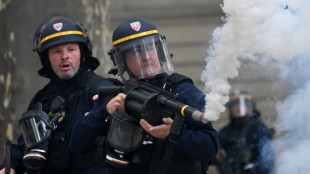 Clashes break out in Paris, other cities amid fresh protests
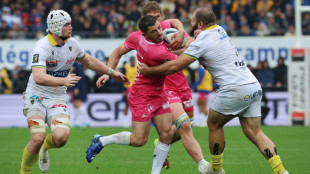 Bouthier kicks Vannes to first Top 14 win of season

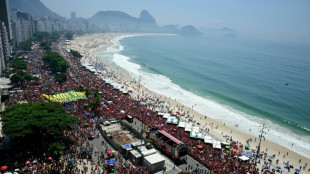 Thousands rally for Lula and Bolsonaro on eve of tight Brazil vote

 Red-hot Fuellkrug bags Bremen brace, Leipzig win

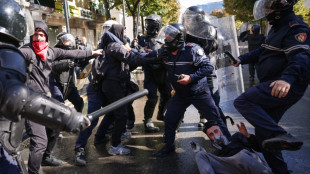 Thousands gather at new Albanian anti-government rally
The cemetery in Mbandaka, a river port city in northwestern Democratic Republic of Congo (DRC) is the final resting place of many victims of the country's repeated river boat accidents.
But despite the risks, many feel they have no option but to get on a boat to travel in the vast, landlocked DRC, the size of western Europe.
"I know it's too risky but I have no other choice. There aren't any other means of transport," teacher Nestor Mokwanguba told AFP with resignation, before boarding the King's Sword, a large, motorised dugout canoe bound for Bolomba, 250 kilometres (155 miles) away.
It rains almost all year round in Mbandaka, the capital of Equateur province in the dense rainforest of the Congo Basin of central Africa.
What land routes exist in the province are nearly all dirt roads and the wet climate means they are often impassable.
The DRC has 58,000 kilometres of roads criss-crossing its 2.3-million-square-kilometre (900,000-square-mile) landmass.
But less than five percent (2,700 km) are tarmacked, according to data from the transport ministry.
To get to school, market or work in the fields, locals resort to poorly maintained "river buses".
Day and night, the so-called whaleboats ply the mighty Congo River -- the second longest in Africa and the deepest in the world -- overloaded with both people and cargo.
Vessel owners are often lax about tonnage or safety standards.
The King's Sword churned out thick black smoke as it was pushed out into the fast-flowing current, piled high with goods and passengers, who paid the equivalent of $5.00 (15,000 Congolese francs) for the precarious journey.
"They're travelling in inhuman conditions," fretted the mayor of Mbandaka, who had come to the riverbank to check the boat was not overloaded and the passengers would be provided with life jackets.
Since July 2024, at least 148 people have died in boat accidents on the Congo River and several dozen are still missing, according to an AFP count.
The figures are likely to be a severe underestimation because boat passenger lists are rarely available.
- Fear of the river -
Jean-Florent Munzanza is buried in Mbandaka cemetery. He drowned in a boat sinking on the Congo last year, aged 28.
"There were no storms or waves but the boat was overloaded," Ephesien Mpambi, a friend of Jean-Florent's told AFP of the fatal capsize.
Mpambi, also 28, had been on the vessel and survived the calamity.
After each stop, the whaleboat would leave a little heavier, he recalled. The passengers protested but to no avail.
"If we don't load the boats enough, we won't break even," Clovis Engombe, vice-president of the local shipowners' association, told AFP.
"We are traders first and foremost, and there are no roads so everyone wants to get on the boats."
Shortly before midnight, just 25 kilometres from Mbandaka, the vessel carrying the two young men capsized.
"People started shouting. I was up to my neck in water. I clung to a piece of wood and prayed," Mpambi remembered.
Local residents eventually rescued him. But there was no trace of his friend until Jean-Florent's body floated up to the surface.
"Now I'm afraid of the river," he shuddered.
- Slow progress -
In recent months, the DRC government has repeatedly reminded boat owners that it is forbidden for river vessels to travel at night, overloaded and without life jackets.
At the start of his first term in 2019, President Felix Tshisekedi announced an ambitious infrastructure plan, centred on renovating and building roads that would connect the vast country from north to south and east to west.
But lack of funds and the logistical challenges of implementing the major works programme mean results are slow in coming.
In the cemetery, Munzanza's mother Florence knelt by his gravestone and wept.
"Our son is dead, people are dead and the government has done nothing," she sobbed bitterly.
"The government doesn't care and the whaleboat owners are never punished."
O.Brown--AT