
Australian inquiry cites racism in Indigenous shooting / Photo: Muhammad FAROOQ - AFP

 Two hundred 'Cruise for life' passengers stranded in Cambodia
 Pierce Brosnan and Helen Mirren on the joys of filming 'MobLand'
 S.African activists push back on data centre rush
 Judges set to rule on Australian mushroom killer's appeal

 Syria reopens Jordan border crossing after mending ties

 Cyclone Arnab lashes India coast, no deaths reported

 Trump tamed after US midterms? Europe doubts it

 Tech stocks soar as SK hynix adds to rising AI confidence

 Sri Lanka's Tamil farmers fight to reclaim land after civil war

 Afghans compete for jobs, homes as millions return
 'They don't care about us': Trump food aid cuts leave Americans struggling and angry

 Meta, Snap head to trial in another case about social media's harms

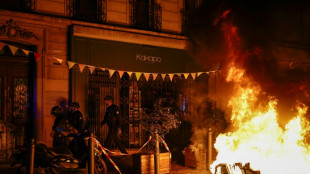
 French Senate passes bill to make protesters pay for unrest damage
 India evacuates tens of thousands as Cyclone Arnab makes landfall
 In tight Israel vote, both camps hold out cautious hope
 AI chip giant SK hynix says quarterly operating profit soars 630%
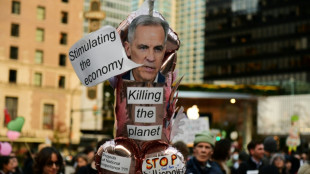 Youths testify about 'despair' in unprecedented Canadian climate trial

 Algo Grande Copper Makes New Skarn Discovery at Adelita; Step-Out Hole AG-CG-PH2-003 Returns a Combined 139.81 Metres of 1.3% CuEq from Cerro Grande and the New Margarita Skarn

 6 Weekend Upgrades That Increase Your Property Value

 Syria, Jordan agree to mend ties after deadly strike
 Arsenal stunned by fourth-tier Fleetwood in League Cup
 Last-gasp Sabitzer strike sends Dortmund past Bremen in German Cup

 Rights groups reject Emirati diplomat for UN top job
 Flavio Bolsonaro headed to US after Brazil election defeat: US media
 Alcaraz and Zverev win Vienna openers
An Australian police officer who shot and killed an Indigenous teenager was a racist drawn to "high adrenaline policing", a landmark inquiry found Monday.
Racist behaviour was "normalised", too, in his Alice Springs police station, it said.
The findings were delivered nearly five years after the shooting of 19-year-old Kumanjayi Walker in remote central Australia, sparking protests around the country.
The policeman, Zachary Rolfe, was found not guilty of murder in a trial in the Northern Territory capital of Darwin in 2022.
Walker was shot three times during the attempted arrest in the remote outback town of Yuendumu.
He is one of 598 Aboriginal and Torres Strait Islander people who have died in custody since 1991 when detailed records began.
"I found that Mr Rolfe was racist," said Northern Territory coroner Elisabeth Armitage, delivering her conclusions after a nearly three-year inquiry.
The policeman -- who was dismissed from the police force in 2023 -- worked in an organisation with the hallmarks of "institutional racism", she said.
There was a "significant risk" that Rolfe's racism and other attitudes affected his response "in a way that increased the likelihood of a fatal outcome", she said.
Walker's family and community will always believe racism played an "integral part" in his death, the coroner said.
"It is a taint that may stain the NT police."
- 'Grotesque examples of racism' -
The coroner cited offensive language used in a so-called awards ceremony for the territory's tactical police, describing them as "grotesque examples of racism".
"Over the decade the awards were given, no complaint was ever made about them."
The policeman's text messages also showed his attraction to "high adrenaline policing", and his "contempt" for some more senior officers as well as remote policing.
These attitudes "had the potential to increase the likelihood of a fatal encounter with Kumanjayi", she said.
Among 33 recommendations to the Northern Territory government, the coroner called for police to improve training of recruits, publish their anti-racism strategy, and introduce stricter rules on the use of semi-automatic rifles.
Last week, a royal commission in the state of Victoria found that colonial settlers committed genocide against Indigenous people.
Victoria's four-year royal commission called for government redress including financial compensation.
It said Indigenous people suffered massacres, the forced removal of children from their families, and the suppression of their culture.
Mass killings, disease, sexual violence, child removal, and assimilation had led to the "near-complete destruction" of Indigenous people in the state, it said.
The arrival of 11 British ships to set up a penal colony in Sydney Cove in 1788 heralded the long oppression of Indigenous peoples, whose ancestors have lived on the continent for more than 60,000 years.
Making up less than four percent of the current population, Indigenous peoples still have lives about eight years shorter than other Australians, poorer education and are far more likely to be imprisoned or die in police custody.
Ch.P.Lewis--AT