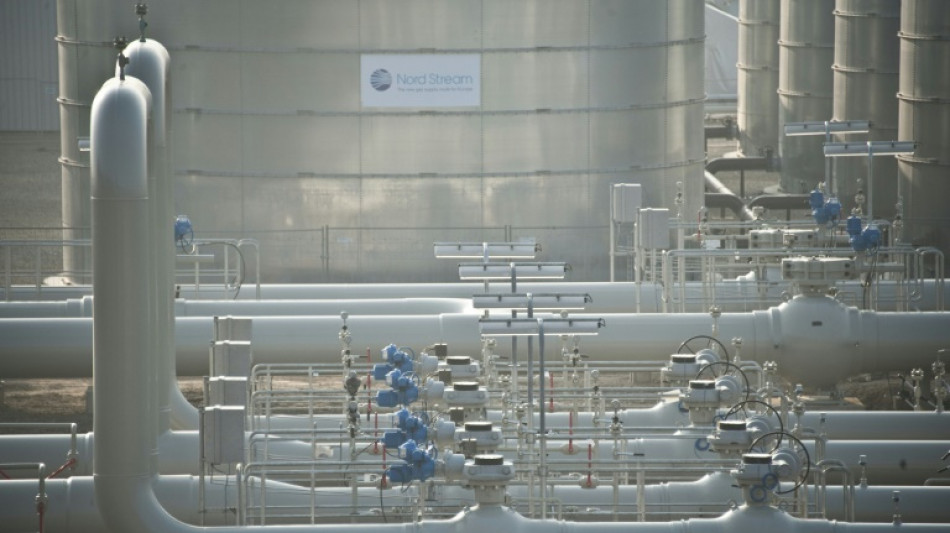
Germany raises gas alert level after Russia cuts supply / Photo: John MACDOUGALL - AFP/File

 Zelensky warns airlines Russian skies not safe due to Ukraine drones

 UK vows anti-settler measures as Israel warns of retaliation

 New pro Koivun among US Presidents Cup picks

 G20 finance leaders close talks marked by US welcoming Russia

 From Hollywood to big time tennis: teen makes US Open debut

 Man City secure Premier League record deal to sign Fernandez

 Kaepernick says NFL 'blackballing me' decade after protest

 Atletico loan David from Juve, send Lemar to Elche

 Chelsea 'keeper Sanchez makes deadline-day move to Como

 Kroenke to buy baseball's Los Angeles Angels: statement

 US defends Trump's Venezuela oil deal

 OpenAI to launch new model with 'stronger safeguards' after hack
 Fans mourn 'bittersweet' final Ariana Grande gig in London

 Norway's King Haakon VIII swears allegiance to constitution

 Syria site infrastructure 'consistent with nuclear reactor': IAEA

 Juventus sign Woltemade, Sarr on loan from Premier League

 US strikes Iran in latest tit-for-tat attacks
 China's Xi arrives in Egypt as US sanctions threat looms over Iran links
 Car bomb at Colombian police station kills one, injures 11
 Rain delays start of play on US Open
 Man City agree blockbuster deal to sign Chelsea star Fernandez: reports
 Alkemya Metacore Secures $50M via Tokenised Equity to Scale Nickel Energy and Security Tech

 Man City chase Fernandez, Arsenal sell Jesus on deadline day

 EU says Russian 'hybrid attacks' won't halt aid to Ukraine

 Explosives used in sabotage attack on German power lines
Germany moved closer to rationing gas on Thursday as it raised the alert level under an emergency plan after Russia slashed supplies to the country.
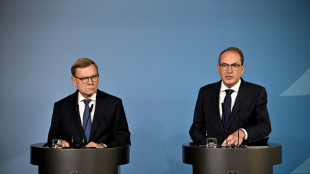
"Gas is now a scarce commodity in Germany," Economy Minister Robert Habeck told reporters at a press conference.
Triggering the second "alarm" level under its action plan brings Germany a step closer to the third and final stage that could see gas rationing in Europe's top economy.
The development reflected a "significant deterioration of the gas supply situation", Habeck said.
Germany, like a number of other European countries, is highly reliant on Russian energy imports to meet its needs.
Russian energy giant Gazprom last week reduced supplies to Germany via the Nord Stream pipeline by 60 percent due to what the company said was a delayed repair.
But Germany has brushed aside the technical justification for the move, instead calling it a "political decision".
Russia was using gas "as a weapon" against Germany in retaliation for the West's support for Ukraine following Moscow's invasion, Habeck said, with the aim of "destroying" European unity.
- Shortage scenario -
Gazprom has already stopped deliveries to a number of European countries, including Poland, Bulgaria, Finland and the Netherlands.
Supplies of gas to Europe's largest economy were "secure" as it stood, with energy companies still in a position to "manage" the crisis, Habeck said.
The higher alert level would lead above all to increased monitoring of the supply situation but action was still required to prepare for the winter ahead.
"If we do nothing now, things will get worse," Habeck said.
In April, Germany mandated gas storage facilities be filled to 90 percent by the beginning of December to mitigate the risks from a supply cut.
Currently, the country's stores stand just under 60 percent full, above the average level of previous years.
The targets would, however, be hard to hit if exports onwards to other countries -- hard to justify within Europe -- were not limited.
Were these to return to the level they were at before the most recent supply squeeze, Germany could face an acute gas shortage in February 2023, while a further reduction in supplies via the Nord Stream pipeline could make the situation even worse.
Already, the German government expects supply to stop between July 11 and July 25 for maintenance on the pipeline.
If deliveries do not resume after the service period, Germany could face a shortage of gas as soon as "mid December".
- Households and industry -
Since the outbreak of the war in Ukraine, Germany has managed to reduce the share of its natural gas supplied by Russia from 55 percent to around 35 percent.
The government has found new sources of supply, accelerated plans to import gas in the form of LNG by sea, and put aside 15 billion euros ($15.8 billion) to buy gas to fill storage facilities.
Germany also decided to reactivate mothballed coal-fired power plants to take the burden for electricity generation off gas.
In contrast, the government shrugged off calls to extend the operational lifetime of its nuclear power plants.
Prolonging the use of the final reactors set to be taken off the grid at the end of the year was "not an option", it said Wednesday.
Germany had to look to see what the "energy saving potential" existed, Habeck said Thursday.
Households could "make a difference" by conserving energy, after Germany launched a campaign to encourage fuel-saving measures, he said, while industry could also make a further contribution.
The economy faced "significant challenges", said Wolfgang Grosse Entrup, head of the German chemical industry lobby.
The burden between companies needed to be "shared fairly", said Entrup, whose sector is highly reliant on gas to power production.
D.Johnson--AT