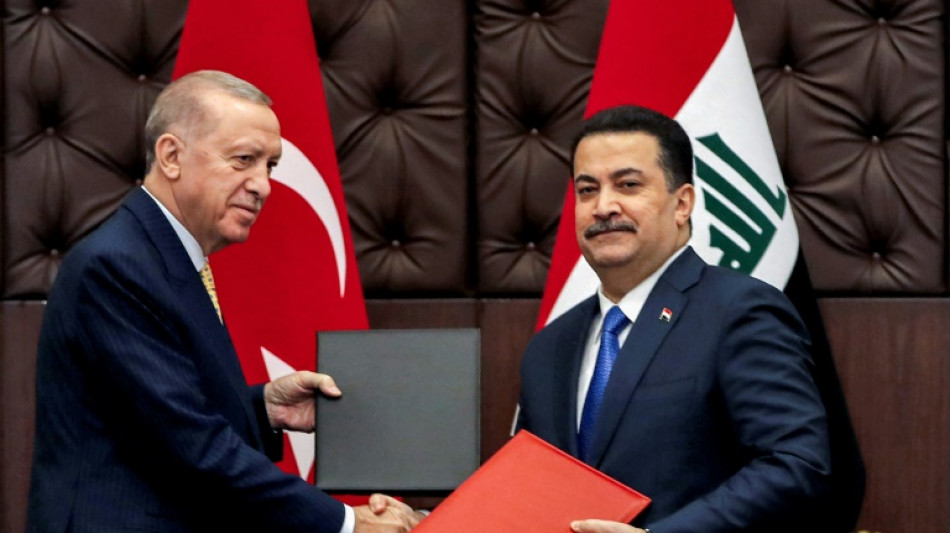
Turkey's Erdogan in Iraq to talk security, water and oil / Photo: AHMAD AL-RUBAYE - POOL/AFP

 Madonna returns to form with dancefloor filler "Confessions II"
 Dean says Australia final a 'fresh start' for England
 Wimbledon giving Serena 'as much time' as possible for doubles
 Chinese investors flock to Hong Kong as trading curbs tighten
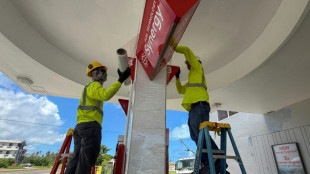 Projected 'super typhoon' heads for US Pacific islands

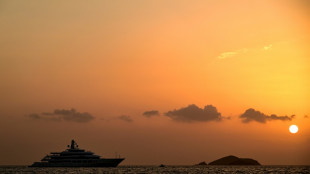 UN warns of strong looming El Nino
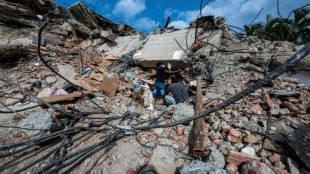 Hunt for last signs of life in Venezuela quake zone
 Asian markets rise as beaten-down tech stocks enjoy bounce
 David v Goliath as Cape Verde face Messi's Argentina at World Cup
 Nagelsmann quits as Germany coach after World Cup exit: reports
 All Blacks return to Christchurch 'a blessing', says Savea
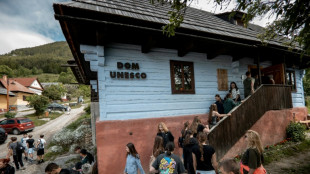 'Not a museum': Slovak UNESCO village strains under tourism
 DR Congo opposition builds against presidential third-term bid
 China sports brands score NBA stars to assist global ambitions
 Man dies after setting self ablaze outside UN in New York: police

 VAR 'taking joy' from football says Croatia coach Dalic after loss
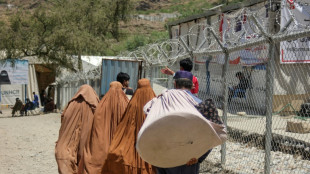 Afghans come home but risk exclusion without any ID
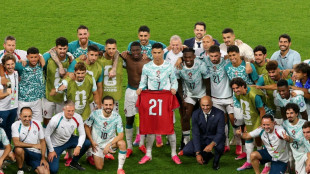 'Coincidence of life' says Ronaldo after Jota tribute a year from death

 Japan face Italy without banned coach Jones
 Ronaldo, Portugal advance after VAR drama to set up Spain showdown
 AI romance scam impersonating Dubai prince ensnares victims
 Portugal advance in World Cup thanks to last-gasp Ramos winner
 Mission impossible? England take the World Cup high road against Mexico

 The Black Book of Reshoring by Douglas Brown Named Finalist in 2026 International Book Awards Business Category
 'I was just missing a goal,' says Spain's Yamal
Turkish President Recep Tayyip Erdogan was in neighbouring Iraq on Monday for his first state visit there in years, with water, oil and regional security issues topping their agenda.
Erdogan was greeted with a 21-gun salute at Baghdad's international airport by Prime Minister Mohamed Shia al-Sudani and later met Iraqi President Abdel Latif Rashid.
Erdogan last visited Iraq in 2011. His trip comes as regional tensions spiral, fuelled by the Israel-Hamas war in the Gaza Strip and tit-for-tat attacks between Israel and Iran.
He told Rashid that Turkey "had expectations of Iraq regarding the fight against the terrorist organisation PKK, and that Iraq must be rid of all forms of terrorism", Erdogan's office said.
The PKK (Kurdistan Workers Party), which has fought a decades-long insurgency against the Turkish state and is considered a "terrorist" group by Ankara and its Western allies, has a presence in northern Iraq, as does Turkey's military.
Both Erdogan and Sudani on Monday stuck to their countries' positions on contentious issues, while also highlighting the economic opportunities raised by the visit.
"We discussed joint measures that can be taken against the PKK and its allies which target Turkish territory from inside Iraq," Erdogan said in an appearance with Sudani.
"I shared with my counterparts my firm conviction that the PKK presence in Iraq will end as soon as possible, with it being declared a terrorist organisation," he said.
- Presence of 'armed elements' -
For decades, Turkey has operated from several dozen military bases in northern Iraq against the PKK.
Its military operations, which sometimes take place deep into Iraqi territory, have regularly strained bilateral ties, while Ankara has sought out increased cooperation from Baghdad in its fight against the PKK.
Sudani on Monday spoke of "bilateral security coordination" that would meet the needs of both Iraq and Turkey.
He said this would "make it possible to face the challenges posed by the presence of armed elements".
However, in a televised interview in March, Iraqi Defence Minister Thabet al-Abbasi ruled out "joint military operations" between Baghdad and Ankara.
He said they would establish a "coordination intelligence centre at the appropriate time and place".
Apart from security another major contentious point is water, and sharing of the precious resource.
Baghdad has been highly critical of Turkish upstream dams on their shared Tigris and Euphrates rivers, saying the reduced flow has worsened water scarcity in Iraq.
Erdogan said the water issue would be "one of the most important points" of his visit following "requests" made by Iraq.
"We will make an effort to resolve them. That is also their wish," he said.
- Water 'framework agreement' -
On Monday, both countries signed a 10-year "framework agreement" on water.
Sudani said he hoped this would mean "joint and equitable management of water resources" from the two rivers. "It is in no one's interest for the situation to worsen regarding water and Iraq's quota," Sudani said.
Erdogan said that both Turkey and Iraq were "negatively affected by the climate crisis".
"The efficient use of water and avoiding waste is as important as the amount of water," he said.
Also on Monday's agenda was the "Route of Development" project.
This is a road and rail corridor that would stretch 1,200 kilometres (745 miles), aiming by 2030 to link the Gulf with Turkey via Iraq.
In the presence of Erdogan and Sudani on Monday, four ministers representing Iraq, Turkey, the United Arab Emirates and Qatar signed a memorandum of understanding on the $17-billion project, an Iraqi statement said.
It said the project "aims to stimulate economic growth and enhance regional and international cooperation through economic integration".
During his trip, Erdogan is also scheduled to meet officials in Arbil, the capital of northern Iraq's autonomous Kurdistan Region.
- Lost oil revenues -
Iraqi oil exports are another point of tension between the two countries, with a major pipeline shut for more than a year over legal disputes and technical issues.
Oil exports were previously independently sold by the Kurdistan region, without the approval or oversight of the central administration in Baghdad, through the Turkish port of Ceyhan.
The halted oil sales represent more than $14 billion in lost revenues for Iraq, according to an estimate by the Association of the Petroleum Industry of Kurdistan which represents international oil companies operating in the region.
In the first quarter of 2024, Iraq was Turkey's fifth-largest importer of products, buying food, chemicals, metals and other products.
T.Perez--AT