
Mideast in 'shadow of uncertainty' due to regional conflicts: IMF / Photo: Mandel NGAN - AFP

 Madonna returns to form with dancefloor filler "Confessions II"
 Dean says Australia final a 'fresh start' for England

 Wimbledon giving Serena 'as much time' as possible for doubles

 Chinese investors flock to Hong Kong as trading curbs tighten
 Projected 'super typhoon' heads for US Pacific islands

 UN warns of strong looming El Nino

 Hunt for last signs of life in Venezuela quake zone

 Asian markets rise as beaten-down tech stocks enjoy bounce
 David v Goliath as Cape Verde face Messi's Argentina at World Cup

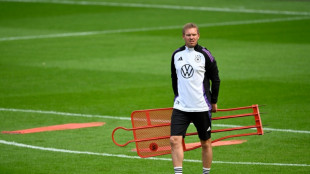 Nagelsmann quits as Germany coach after World Cup exit: reports
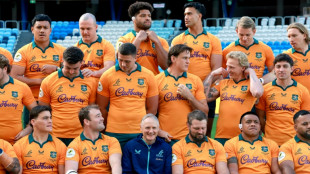
 All Blacks return to Christchurch 'a blessing', says Savea

 'Not a museum': Slovak UNESCO village strains under tourism
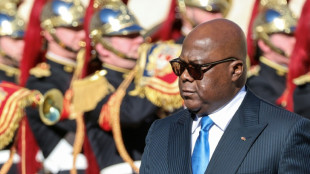 DR Congo opposition builds against presidential third-term bid
 China sports brands score NBA stars to assist global ambitions

 Man dies after setting self ablaze outside UN in New York: police
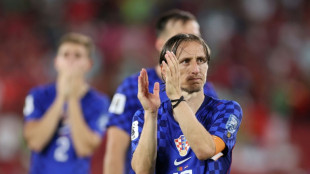
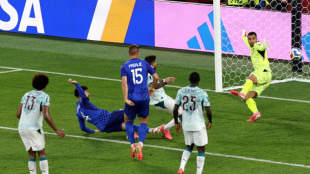 VAR 'taking joy' from football says Croatia coach Dalic after loss

 Afghans come home but risk exclusion without any ID
 'Coincidence of life' says Ronaldo after Jota tribute a year from death

 Japan face Italy without banned coach Jones
 Ronaldo, Portugal advance after VAR drama to set up Spain showdown

 AI romance scam impersonating Dubai prince ensnares victims
 Portugal advance in World Cup thanks to last-gasp Ramos winner

 Mission impossible? England take the World Cup high road against Mexico

 The Black Book of Reshoring by Douglas Brown Named Finalist in 2026 International Book Awards Business Category
 'I was just missing a goal,' says Spain's Yamal
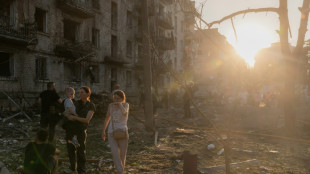
Economies in the Middle East and North Africa face a "shadow of uncertainty" from ongoing tensions in the region, a senior IMF official told AFP on Thursday.
"We are in a context where the overall outlook is cast into shadows," the International Monetary Fund's director for the Middle East and Central Asia department, Jihad Azour, said in an interview in Washington.
"The shadow of uncertainty on the geopolitical side is an important one," added Azour, a recent candidate to be the next Lebanese president.
In the face of the ongoing conflicts in Gaza and Sudan, and a recent cut to oil supplies by Gulf countries, the IMF has pared back its growth outlook for the Middle East and North Africa (MENA) region once again.
The Fund now expects growth in MENA of 2.7 percent this year -- 0.2 percentage points below its January forecast -- before picking up again next year, the IMF said in its regional economic outlook report published Thursday.
- Conflict risk -
The risks to growth in the MENA region remain heightened, the IMF said, pointing to the danger of greater regional spillovers from the ongoing Israel-Gaza war.
The conflict started after Hamas launched an unprecedented attack on October 7 that resulted in the deaths of 1,170 people in southern Israel, mostly civilians, according to an AFP tally of Israeli official figures.
The militants also took about 250 hostages.
Israel's retaliatory offensive has killed at least 33,970 people in Gaza, mostly women and children, according to the Hamas-run territory's health ministry, and caused severe economic damage in both Gaza and the West Bank.
"We have concerns about the immediate and lasting impact of conflict," Azour said.
The IMF report said economic activity in Gaza has "come to a standstill" and estimates economic output in the West Bank and Gaza contracted by six percent last year.
The report excludes economic projections for the West Bank and Gaza for the next five years, "on account of the unusually high degree of uncertainty," the IMF said.
The Fund cannot lend to the West Bank and Gaza because it is not an IMF member country. However, it has provided the Palestinian Authority and the central bank with technical assistance during the current conflict, Azour said.
"When we move into the phase of reconstruction, we will be part of the international community support to the region," he added.
Azour also discussed the situation in Sudan, where thousands have been killed in a civil war that has also devastated the economy, causing it to contract by almost 20 percent last year, according to the IMF.
"The country is barely functioning, institutions have been dismantled," he said.
"And for an economy, for a country like Sudan, with all this potential, it's important to very quickly the stop the bleeding and move to a phase of reconstruction," he added.
- Egyptian economy -
The Egyptian economy has been particularly badly hit by the recent Huthi attacks on Red Sea shipping, which caused trade through the Egypt-run Suez Canal to more than halve -- depriving the country of a key source of foreign exchange.
Egypt reached agreement last month to increase an existing IMF loan package from $3 billion to $8 billion, after its central bank hiked interest rates and allowed the pound to plunge by nearly 40 percent.
A key pillar of the current IMF program is the privatization of Egypt's state-owned enterprises, many of which are owned by or linked to the military.
"This is a priority for Egypt," Azour told AFP. "Because Egypt needs to have a growing private sector, and to give space for the private sector to create more jobs."
"We have an opportunity to re-engineer the role of the state, to give the state more responsibility as an enabler, and less as a competitor," he said.
H.Romero--AT