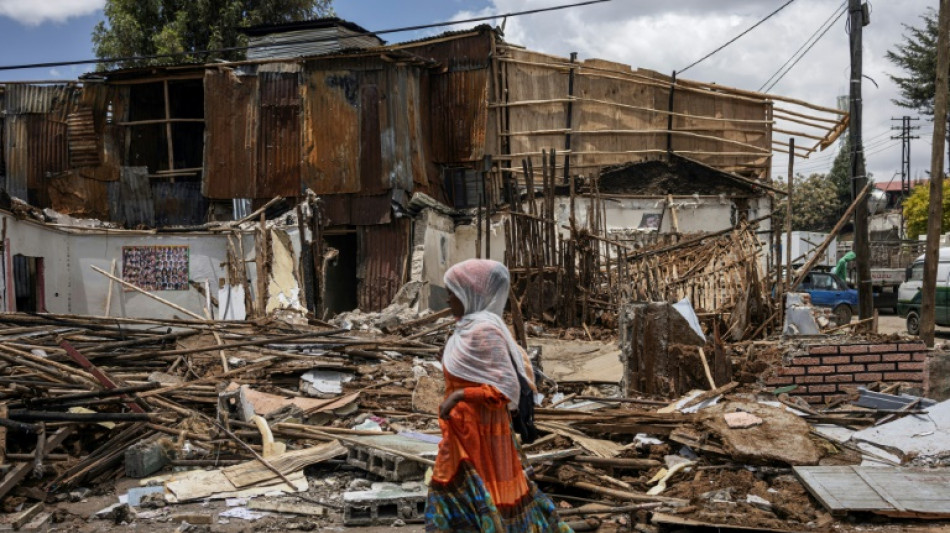
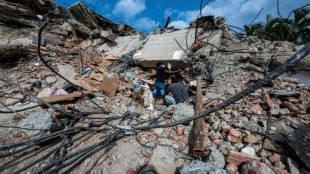
Ethiopians mourn the destruction of historic Piassa district / Photo: Michele Spatari - AFP

 Madonna returns to form with dancefloor filler "Confessions II"

 Dean says Australia final a 'fresh start' for England

 Wimbledon giving Serena 'as much time' as possible for doubles

 Chinese investors flock to Hong Kong as trading curbs tighten
 Projected 'super typhoon' heads for US Pacific islands

 UN warns of strong looming El Nino
 Hunt for last signs of life in Venezuela quake zone

 Asian markets rise as beaten-down tech stocks enjoy bounce

 David v Goliath as Cape Verde face Messi's Argentina at World Cup

 Nagelsmann quits as Germany coach after World Cup exit: reports

 All Blacks return to Christchurch 'a blessing', says Savea
 'Not a museum': Slovak UNESCO village strains under tourism
 DR Congo opposition builds against presidential third-term bid
 China sports brands score NBA stars to assist global ambitions

 Man dies after setting self ablaze outside UN in New York: police

 VAR 'taking joy' from football says Croatia coach Dalic after loss

 Afghans come home but risk exclusion without any ID
 'Coincidence of life' says Ronaldo after Jota tribute a year from death

 Japan face Italy without banned coach Jones
 Ronaldo, Portugal advance after VAR drama to set up Spain showdown

 AI romance scam impersonating Dubai prince ensnares victims
 Portugal advance in World Cup thanks to last-gasp Ramos winner

 Mission impossible? England take the World Cup high road against Mexico

 The Black Book of Reshoring by Douglas Brown Named Finalist in 2026 International Book Awards Business Category
 'I was just missing a goal,' says Spain's Yamal
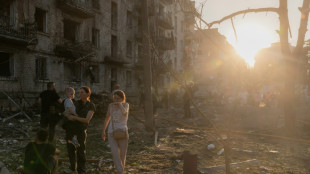
"Our history and our identity have been erased," laments Samira after the destruction of her birthplace in the historic Piassa district in the heart of Ethiopia's capital.
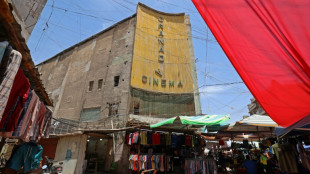
In recent weeks, bulldozers have torn down countless buildings in Piassa -- some dating back a century -- as part of a modernisation drive by the authorities.
Many parts of the vibrant, if somewhat tumbledown, neighbourhood have been turned into dusty piles of rubble, with locals often given little notice to leave their homes or businesses.
A number of historical and well-loved sites in the area, from Ethiopia's first baklava bakery to jewellery and gold shops and bustling cafes, have disappeared.
Critics say the urban renewal scheme known as the Addis Ababa Corridor Development Project has not only wrecked buildings, but also the fabric of society in Piassa, where people from all walks of life rubbed shoulders in its cobbled streets.
"A lot of cherished history has been destroyed," says Samira, a 30-year-old government employee who like other residents interviewed by AFP did not want to give her name for fear of reprisals.
The local authorities had informed the family that the home where Samira was born and raised would be razed "without telling us the exact date".
"They cut our water and electricity the following weekend, then we were given a day and a half notice to leave," says the mother of a baby daughter, mourning the family memories lost or damaged in the hasty move.
Fellow Piassa resident Sami tells a similar story.
"Everything went at the speed of light," he says, recounting how the building owned by his father that housed Sami's printing shop business and other stores was torn down.
"I used to have a shop, but now I don't," the 40-year-old says grimly.
"Yes, it's old, but that doesn't mean it's trash... It's our heritage."
- 'Unique' urban environment -
The Arada district, named "Piazza" by Mussolini's occupying forces in the 1930s, and commonly known as Piassa to this day, was developed around a vast market at the turn of the 20th century.
"Arada was the commercial heart of the Ethiopia of Menelik II," says anthropologist Dominique Harre, referring to the emperor who ruled from 1889 to 1913.
Harre, author of the "Addis Ababa Old Piazza" guidebook, says large trading houses -- Indian, Armenian, Greek, French, Ethiopian -- set up around the market and in the nearby streets.
This cosmopolitan society created a "unique urban" environment with an eclectic mix of architectural influences, she says.
Since the 1920s, warehouses operated by the traders have stood alongside small kiosks and stores, while elegant stone and wood villas owned by wealthy merchants or dignitaries co-existed with more modest homes.
"What is really unique in Piassa is that it was built... with African characteristics, contrary to other African capitals" that were built by colonial powers with "colonial urban planning," says architect Piet Nieder.
Nieder, author of "The Addis Ababa House" about Ethiopia's urban heritage from its founding in 1886 to 1936, says the city has lived through such demolitions and evictions in the past as the sprawling metropolis developed.
"But what is new is the extent of the current destructions. So many households are being destroyed simultaneously."
- 'Our heritage' -
Since coming to power in 2018, Prime Minister Abiy Ahmed has embarked on a number of grandiose projects including a new multi-billion-dollar presidential palace in Addis Ababa, and a new museum right on the edge of Piassa.
The large-scale spending has raised eyebrows in a country where, according to the UN, more than 21 million people are in need of aid because of conflict and climate disasters.
The Reporter newspaper, citing official data, said 56 listed buildings in Piassa have already been totally or partly demolished.
Ethiopian Heritage Authority director Abebaw Ayalew insists the body has been closely overseeing the development work to ensure the nation's cultural heritage is unharmed.
But he told reporters: "The age of a building alone does not automatically render it eligible for heritage status".
Addis mayor Adanech Abebe has defended the project, saying it will benefit all of society with the creation of wide roads, bike paths and children's playgrounds.
"Some areas were falling apart even before we started demolishing them," she said. "We have preserved memories that should be preserved."
Most of the cleared sites in Piassa will be put up for auction, according to the municipal authorities.
Those evicted have complained about the lack of financial compensation and the relocation sites.
Azeb, a Piassa trader for 30 years, says she was offered land "far from the road and unsuitable for any construction either a house or a commercial property".
The block where Samira has been allocated an apartment is "a skeleton of a building, with no windows or doors, no plumbing, no water or electricity... no toilet", she says.
"It's not even fit to house animals."
Samira says the mixed population of Piassa has been scattered.
"The next time our children ask questions about our heritage and where we grew up, there will be nothing to show them."
H.Romero--AT