Kosovo ban on Serbian dinar risks new crisis
/ Photo: STRINGER - AFP

 Thomas targets yellow in Tour team time-trial

 Bike - or even walk: World Cup fans improvise to reach NY venue
 Swedish court orders Google pay nearly $2 bn for favouring its price comparisons

 England breaks record for warmest June: Met Office
 Stocks drop with eyes on US Fed
 Barca have bid for Atletico's Alvarez: president Laporta
 'Smart' and 'very rational'? Iran's new leaders post-Ali Khamenei

 Bordeaux-Begles handed favourable draw in Champions Cup defence
 'Thought they'd never be caught': The strike that killed Iran's Khamenei

 Djokovic, Sinner hope for easier ride after Wimbledon scares

 Injured Serena's Wimbledon doubles bid with sister Venus in doubt
 European stocks mostly drop with eyes on US Fed
 Genesio replaces Beye as Marseille boss
 Catholic society defies Vatican again by ordaining new bishops

 Breakaway Catholic society defies Vatican again by ordaining bishops
 Venezuelans search, suffer one week after deadly quakes
 Asian stocks mostly up as traders eye crucial US jobs data
 Ronaldo and Modric struggle to defy Father Time at World Cup
 The secret lives of Ukraine's deep-strike drone team
 NATO project tests perennial grass to clean Ukraine's war-hit soil
 Duffy returns for New Zealand against West Indies

 Mbappe dazzles as France march on at World Cup; Norway, Mexico advance

 US govt lifts restrictions on powerful AI models, Anthropic says
 Trump earned over $1 bn from crypto ventures in 2025
 The Afghan women farmers keeping their village alive
Kosovo may be on the verge of a fresh crisis after the government threatened to ban the use of Serbian money this week, with a chorus of Western countries warning it could ignite a firestorm.
The move is likely to spark the latest in a long series of conflicts with Kosovo's Serb minority.
The roughly 120,000-strong community has clung to the Serbian dinar since a brutal late-1990s war between Serbia and ethnic Albanian insurgents saw Serbian troops and government personnel withdraw from Kosovo.
Many Serbs in Kosovo work for Serbian institutions where their salaries, pensions and other financial transactions rely on the dinar, rather than the euro which is Kosovo's official currency.
But according to a new set of regulations issued by Kosovo's Central Bank, beginning on Thursday "the only currency allowed to be used... in the Republic of Kosovo is the euro."
Kosovo unilaterally adopted the euro as its currency in 2002, despite not being a member of the eurozone nor the European Union.
Serbia has never acknowledged Kosovo's 2008 declaration of independence, with the two sides perennially locked in bitter disagreements over the most minute bureaucratic matters in the former breakaway province, such as a recent spat over licence plates.
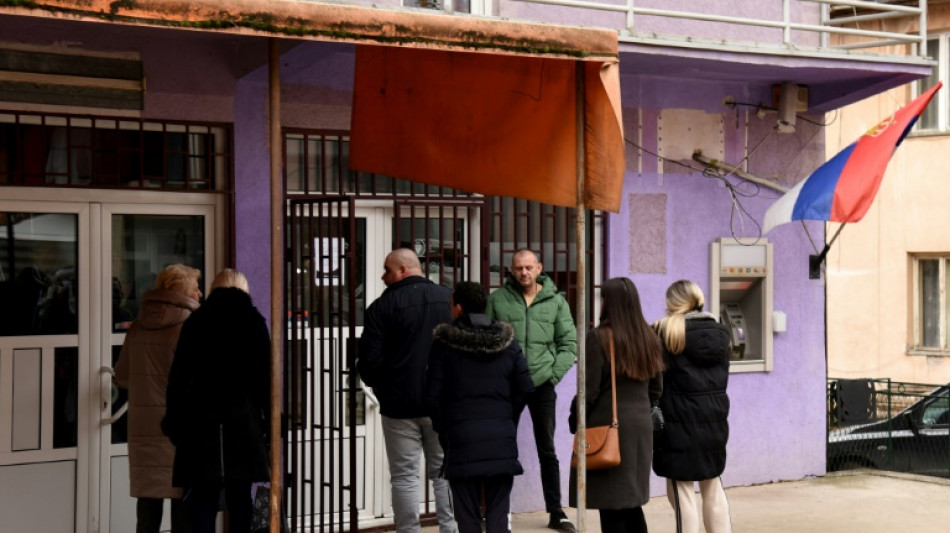
Ahead of the new rule coming into force, several banks in Serb communities across northern Kosovo began shuttering their operations, as confusion spread among the population.
"It seems to me that everyone is playing with us. Nobody tells us anything... I am fed up with politics," said Zoran Ilic, a 45-year-old Serb living in the divided northern city of Mitrovica.
Aleksandra Jovanovic, 37, told AFP that the closure of her bank would likely lead to lengthy commutes to another branch in southern Serbia.
"It's not normal, nothing is normal," Jovanovic added.
- 'Direct impact' -
The Belgrade government has long held major sway with Kosovo's remaining Serbs, in part by offering generous financial and employment packages to residents.
Serbia's budget sets aside roughly the equivalent of 120 million euros ($132 million) annually for spending on Kosovo, with analysts suggesting the real value may be at least double that thanks to informal transactions.
That link will likely come under increased pressure with the new currency scheme, which could effectively lock Serbs using dinars out of Kosovo's financial system.
"Kosovo Serbs will take the biggest blow," Bosko Jaksic, a Belgrade-based political analyst, told AFP. And the "diplomatic and political consequences will be far more severe than monetary ones."
Western governments have lambasted the move as inflammatory, warning the regulation would likely destabilise already tense relations between Serbs and the Pristina government.
"We are concerned about the impact of the regulation in particular on schools and hospitals, for which no alternative process seems viable at the moment," the US embassy in Pristina said in a joint statement issued by the Quint nations.
The so-called Quint -- France, Germany, Italy, the United Kingdom and the United States -- comprises five NATO members that focus on the Western Balkans.
"The regulation will also have a direct impact on the everyday lives of the overwhelming majority of Kosovo Serbs who receive payments/financial assistance from Serbia," the statement added.
The Quint countries went on to call for "the suspension of the enforcement of the regulation to allow a sufficiently long period of transition".
- Turbulent year -
The government in Pristina, however, is showing no sign of backing down.
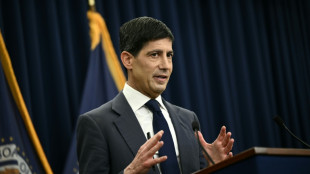
"The official currency is only the euro," Ahmet Ismaili, the governor of the Central Bank, told media.
Kosovo authorities have presented the regulation as a means to fight corruption, money laundering, and the use of counterfeit currencies.
Kosovo deputy prime minister Besnik Bislimi insisted the regulation would halt the flow of unregulated cash from Serbia, saying that "money continues to be moved across state borders in duffel bags and private cars, and then distributed through unregistered and unlicensed offices."
The Serbian government has slammed the move, with Prime Minister Ana Brnabic saying the regulations would likely derail EU-backed talks aimed at normalising ties between Belgrade and Kosovo "once and for all".
The regulation follows a turbulent year in Kosovo that saw an armed standoff between Serb gunmen and police at a monastery near the Serbian border in September, where at least four people were killed.
The bloodshed followed rioting earlier in the year after the government installed ethnic Albania mayors in Serb northern areas after elections were boycotted.
Kosovo's largest ethnic Serb party -- the Serb List -- warned the targeting of the dinar risked escalation, arguing the new regulations endangered "the physical survival of the Serbian people."
K.Hill--AT