Sobering news: French winemakers go teetotal / Photo: Philippe LOPEZ - AFP

 Sciver-Brunt fit for England's T20 World Cup semi-final

 Key challenges for Laporta in second Barca term

 Canada to join Eurovision Song Contest

 Swedish court orders Google pay $1.46 bn for favouring its price comparisons
 German FA headquarters searched in Euro 2024 graft probe
 Village People singer Victor Willis dies at 74

 Thousands rush to get tickets for Bayeux Tapestry's UK show
 Chinese firm sells hyper-real, 'always loyal' humanoid robots

 World's oceans break June heat record: EU monitor
 China imposes 'national security' rules on overseas investments
 'Nothing left except death': Myanmar families grieve huge war toll
 England face DR Congo hurdle, USA prepare for World Cup moment in spotlight

 Myanmar mourns as post-coup conflict death toll hits 100,000
 Vietnam unveils 'baby bonus' after scrapping two-child policy

 Majestic Olise raises France to another level at World Cup

 Mexico see off Ecuador to break 40-year World Cup curse

 'My dream is broken': Japan visa rules push out foreign residents

 Indian sailors fear returning to Gulf after Middle East war
 Fear and anger brew inside Meta amid AI frenzy
 After 250 years, the 'American dream' is tarnished but alive
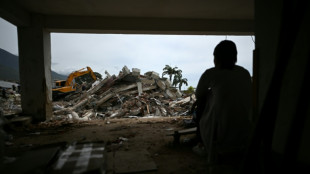 'I'm going to stay calm': 48 hours under the rubble in Venezuela

 Breakaway Catholic sect defies Vatican again by ordaining bishops
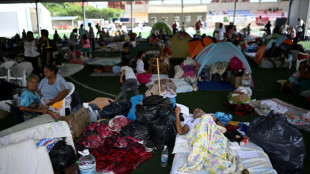
 Mexico v Ecuador World Cup game delayed by one hour: FIFA
 Talks in Qatar after US-Iran deal: What we know

 Germany's ePA Rollout Puts Europe's Health-Data Supply Chain to the Test, Black Book Provider Pulse Finds

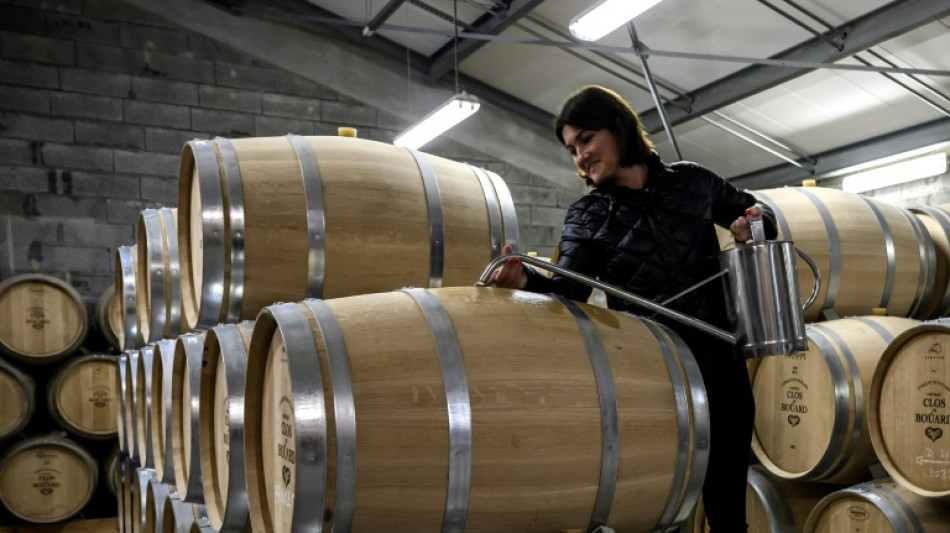
Orders for Coralie de Bouard's alcohol-free red wine have been gushing in since the Qatari owners of Paris Saint-Germain football club asked her to come up with a teetotal tipple for them.
She is one of several Bordeaux winemakers to have transitioned to zero or low-alcohol drinks in France's prestigious southwestern winemaking region.
With many French people joining a global trend to quit alcohol this "Dry January", de Bouard said zero-percent wine's moment has come.
"We have to move with the times and Bordeaux needs to adapt," the winemaker added.
"I'd rather be in the engine pulling the train than in the carriages."
To give her "Prince Oscar" alcohol-free wine a nose of "strawberry and lightly cooked plums", de Bouard follows the same fermentation and ageing process as for her best traditional vintages at Chateau Clos de Bouard.
Then the alcohol is removed by distillation under vacuum at the "cold" temperature of 32 degrees Celsius (89 degrees Fahrenheit) to avoid boiling away the wine's flavours.
"We've managed to keep all the wine's traits and we make up for the lack of alcohol by adding concentrated must," she said, referring to the thick juice containing skins, seeds and stems obtained after crushing the grapes.
- 'Lifebuoy' -
Some say, however, that removing the alcohol robs wine of its evolving aftertaste.
But de Bouard said she has managed to make it more universal -- for pregnant women, people who cannot drink for medical or religious reasons, or even athletes.
She particularly aims to sell "Prince Oscar" to young adults.
Last year almost one in three French people said they drank no- or low-alcohol wine or beer, according to consultancy firm SOWINE. Nearly half were under 25.
De Bouard said that selling 50,000 bottles of non-alcoholic wine has been a "lifebuoy" for her vineyard, with the Bordeaux region struggling with a fall in demand and overproduction.
A short drive away, in the small property of Chateau Edmus, owner Laurent David said the key was great taste.
"The better the wine is to start with, the better it will be without alcohol," said the entrepreneur who until recently worked in high tech.
This January he produced his first 1,200 bottles of "Zero by Edmus" by removing the alcohol from his best vintage.
"It has a great future if restaurants offer it by the glass," said David, who is also president of WineTech, an initiative seeking "innovating solutions" in winemaking.
Worldwide sales of low-alcohol beverages are expected to increase over the next decade to $1.2 billion, according to market researcher Fact.MR.
- 'Early days' -
Philippe Cazaux, director of the Bordeaux Families winemaking cooperative, said reducing alcohol content was a natural response to a growing market of health-conscious consumers.
"In the current context you need to be able to decrease the percentage points," he said.
The cooperative has invested 2.5 million euros ($2.7 million) in a vacuum process to bring down their alcoholic content from 12 to 14 percent to 0-9 percent.
It aims to bring 500,000 bottles to market this year.
Wine consultant Julien Lavenu, who has been helping Chateau Edmus, said there was still room to improve the new wines.
"It's still early days in terms of the technology, there are bound to be a few misses," he said.
"People need to rethink non-alcoholic wine production so that it starts in the vineyard."
By doing that they won't have to remove so much alcohol or add as much sugar at the end, he said.
Some have criticised the non-alcoholic version of Bordeaux for lacking in its usual complexity and intensity.
But Sebastien Thomas, president of the No/Low Wine Collective and co-founder of a specialised start-up called Moderato, was optimistic.
"The non-alcoholic wine of the future will be anything but a poor substitute," he said.
Ch.Campbell--AT