Waning influence of OPEC+ in spotlight as prices flag / Photo: JOE KLAMAR - AFP/File

 Mas on brink of Vuelta triumph as Landa claims stage 20

 No Kerr clash as Ingebrigtsen pulls out of Ultimate 1,500m
 Anthropic boss calls for slowing pace of AI development
 BRICS nations call for 'maximum restraint' in Middle East war
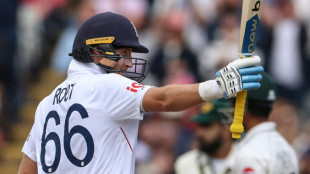 England v Pakistan Test series: Three talking points
 Marquez snatches San Marino MotoGP sprint ahead of Bezzecchi

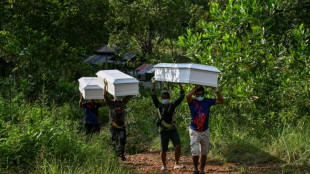 Philippine ferry fire death toll climbs to 76 as identification process begins

 BRICS nations urge 'maximum restraint' in Middle East war

 Zelensky open to meeting Putin at G20 in Miami
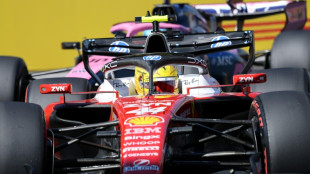
 England survive scare to seal 3-0 sweep against Pakistan

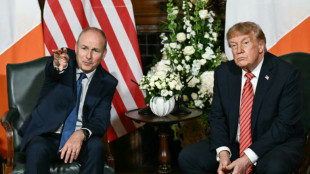 Trump says Irish unification would be 'fantastic'
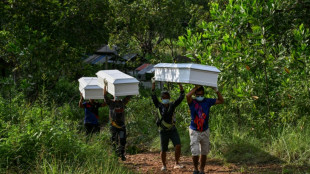 Bodies of Philippines ferry fire victims brought ashore as toll hits 35

 Flick warns Barca stars to keep focus after perfect start

 Trump in Ireland for golf tournament, diplomatic pleasantries

 French police suspect train derailment was sabotage

 Trump lands in Ireland for golf tournament, PM talks

 Xi lands in India for BRICS summit overshadowed by war

 From crime to the Arctic: ultramarathoner film debuts in Toronto

 Back to the drawing board for disappointed Tiafoe

 Lady Gaga welcomes first child with fiance: US media

 Shelton tops Tiafoe to book US Open title clash with Zverev

 Shelton powers past Tiafoe to book US Open title clash with Zverev

 Venice Film Festival: A look back on the highlights

 'Widow's Bay' and 'The Pitt' are favorites for Emmys night

 'Everything different' as Zverev returns to US Open final

Despite slashing oil production for months on end and announcing new cuts in late November, the Organization of the Petroleum Exporting Countries (OPEC) and its ten allies have struggled to boost flagging prices.
Moreover, the OPEC+ group faces pressure on multiple fronts, as rising US crude production, a looming transition away from fossil fuels, and reports of discord among members have added to the challenges.
Prices are sitting at their lowest level in nearly six months despite the cartel's announcement in November to further cut output.
They have jumped in recent days as cargo shippers and oil firms say they will avoid using the Red Sea and Suez Canal because of drone and missile attacks by Huthi rebels. But they still remain below $80 a barrel.
Nevertheless, crude prices remain above the average of the past five years.
In an effort to prop up prices, the OPEC+ alliance has implemented supply cuts of more than five million barrels per day (bpd) since the end of 2022.
After nearly striking $100 in September, the alliance's strategy has since fallen short of reversing a slide.
While Riyadh blamed speculators for the drop, rather than weak demand, analysts say the cartel's lack of unity has fuelled scepticism about their latest announced cuts.
- Frictions laid bare -
"If the supply cuts went broadly unheard it is because the latest discussions showed frictions at the heart of the group," Swissquote analyst Ipek Ozkardeskaya told AFP.
Angola and Nigeria expressed dissatisfaction with their production quotas at the November ministerial meeting, which had to be postponed for several days because of disagreements.
Furthermore, the OPEC+ alliance was unable to agree on a group-wide production cut that all 23 members would have supported.
Instead, heavyweights Saudi Arabia and Russia only managed to garner support from six other members in a bid to voluntarily reduce output.
Yet, "unity is what's needed to give a stronger legitimacy to the group" and its decisions, said Ozkardeskaya.
Founded in 1960, the 13-member OPEC cartel in 2016 partnered up with 10 other producers to form OPEC+ to gain more clout.
But the group's enlargement has proven to be "a double-edged sword", noted Ozkardeskaya, with decision-making becoming more difficult.
The Vienna-based group drew international attention in 1973, when it imposed an oil embargo against Israel's allies in the midst of the Yom Kippur War, triggering the first oil shock.
Within just a few months, prices quadrupled, highlighting the cartel's dominance.
Faced with rising competitors in the 1980s, it introduced its famous quota system that enabled it to exert more control over the market.
This strategy meant the group fared relatively well during the 2008 financial crisis and the price shock in the wake of the Covid pandemic, despite increased internal tensions.
As a result of the supply cuts and amid various political crises in Libya and Venezuela, the OPEC+ share of the oil market has fallen to 51 percent -- the lowest since its creation -- the International Energy Agency (IEA) said in its latest report.
Meanwhile, crude production in the United States, the world's leading producer, has risen above 20 million bpd, while Brazilian and Guyanese output has also soared.
"The shift in global oil supply from key producers in the Middle East to the United States and other Atlantic Basin countries... (is) profoundly impacting global oil trade," the IEA said.
- Green transition -
In recent years, OPEC+ has been confronted with its own demise as an increasing number of states have called for a transition away from fossil fuels owing to climate change.
"The green transition is a major drag on OPEC's business," said Ozkardeskaya, stressing that the group has an "interest (in) delaying the green transition as much as possible".
At the COP28 summit in Dubai, OPEC Secretary-General Haitham Al Ghais urged OPEC+ members in a heavily criticised letter to "proactively reject" any language that "targets" fossil fuels rather than emissions.
According to analysts, it is imperative for Riyadh to sustain the inflow of government revenues derived from oil.
They are "essential to finance Saudi Arabia's extensive and multi-year economic diversification programme, including ambitious giga projects", said Stephen Innes of SPI Asset Management.
Riyadh has been working on developing other sources of revenue, but "the transition doesn't happen overnight", UBS analyst Giovanni Staunovo added.
K.Hill--AT