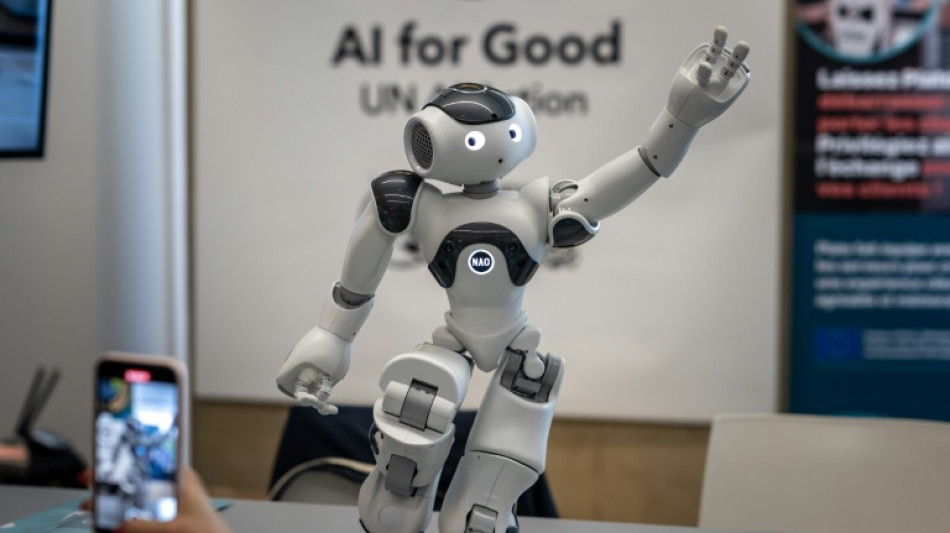
EU strikes deal on landmark AI law / Photo: Fabrice COFFRINI - AFP/File

 De Zerbi apologises to fans after Spurs' stalemate extends goal drought

 Lowry takes four-shot lead as Trump jets in for Irish Open

 Harrison, Skupski win US Open men's doubles title

 Verstappen fears overtaking will be 'tough' at Spanish GP

 Argentina revives plan for South Atlantic naval base amid Falklands tensions

 Yemen government forces say hit Houthis in Red Sea city

 Dismal Spurs stay goalless after Everton stalemate

 Fire at nursing home in Chile kills 16

 Frustrated Hamilton urges Ferrari to 'work harder'

 Zelensky ready to meet Putin at Miami G20 but Kremlin refuses

 Anthropic boss calls for AI slowdown, Altman and Musk agree

 England back on track after 'chaos', says Root

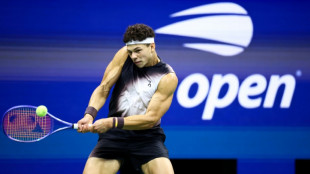 Shelton chases history in US Open title tilt with top seed Zverev

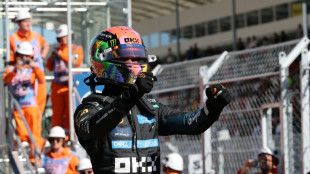 Norris 'masterpiece' snatches Spanish GP pole from Antonelli

 Mas on brink of Vuelta triumph as Landa claims stage 20

 No Kerr clash as Ingebrigtsen pulls out of Ultimate 1,500m
 Anthropic boss calls for slowing pace of AI development

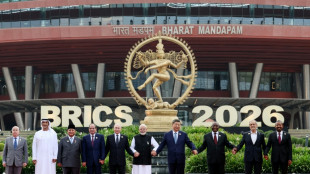 BRICS nations call for 'maximum restraint' in Middle East war
 England v Pakistan Test series: Three talking points

 Marquez snatches San Marino MotoGP sprint ahead of Bezzecchi
 Philippine ferry fire death toll climbs to 76 as identification process begins

 BRICS nations urge 'maximum restraint' in Middle East war

 Zelensky open to meeting Putin at G20 in Miami

 England survive scare to seal 3-0 sweep against Pakistan

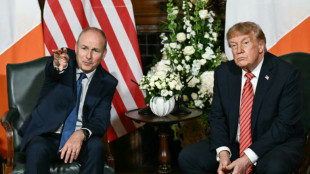 Trump says Irish unification would be 'fantastic'

EU member states and lawmakers clinched a deal on Friday on how to draft "historic" rules regulating artificial intelligence models such as ChatGPT -- after 36 hours of negotiations.
Meeting in Brussels, negotiators nailed down curbs on how AI can be used in Europe, which they said would not hurt innovation in the sector nor the prospects for future European AI champions.
"Historic! With the political deal on the AI Act sealed today, the EU becomes the first continent to set clear rules for the use of AI," declared the EU's internal market commissioner, Thierry Breton.
"The AI Act is much more than a rulebook -- it's a launchpad for EU startups and researchers to lead the global race for trustworthy AI," he added.
The "AI Act" has been rushed through the European Union's legislative process this year after the chatbot ChatGPT, a mass-market gateway to generative AI, exploded onto the scene late 2022.
Although ChatGPT's ability to create articulate essays and poems was a dizzying display of AI's rapid advances, critics worry about how the technology can be misused.
Generative AI software, which also includes Google's chatbot Bard, can quickly produce text, images and audio from simple commands in everyday language.
Other examples of generative AI include Dall-E, Midjourney and Stable Diffusion, which can create images in nearly any style on demand.
Negotiators initially failed to agree after marathon talks that began on Wednesday lasted 22 hours and ended with only a deal to resume talks the next day.
Exhausted negotiators then restarted talks at 0800 GMT on Friday.
There had been no real deadline but senior EU figures were desperate to secure a deal before the end of the year.
The European Commission, the EU's executive arm, first proposed the law in 2021 to regulate AI systems based on risk assessments of the software models.
The higher the risk to individuals' rights or health, for example, the greater the systems' obligations.
The law will still need to be formally approved by member states and the parliament, but Friday's political agreement was seen as the last serious hurdle.
"The AI Act is a global first. A unique legal framework for the development of AI you can trust," EU chief Ursula von der Leyen said in a social media post, welcoming the deal.
"And for the safety and fundamental rights of people and businesses. A commitment we took in our political guidelines - and we delivered. I welcome today's political agreement."
The EU is not alone in its worries over AI.
US President Joe Biden issued an executive order on AI safety standards in October and, while Europe is on track for the first broad law covering the sector, Chinese legislation specifically regulating generative AI came into force in August this year.
- Penalties for violations -
One of the main stumbling blocks during negotiations was how to regulate general-purpose AI systems such as ChatGPT.
Some member states feared too much regulation would hurt the growth of European champions like Germany's Aleph Alpha or France's Mistral AI.
French digital minister Jean-Noel Barrot said France would "carefully analyse the compromise" agreed and ensure that it "preserves Europe's capacity to develop its own artificial intelligence technologies".
The agreement includes a two-tier approach, with transparency requirements for all general-purpose AI models and tougher requirements for the more powerful models.
Another sticking point had been over remote biometric surveillance -- basically, facial identification through camera data in public places. Governments wanted exceptions for law enforcement and national security purposes.
While the agreement has a ban on real-time facial recognition, there will be a limited number of exemptions.
But not everyone was happy with the agreement.
"Regrettably speed seems to have prevailed over quality, with potentially disastrous consequences for the European economy," said Daniel Friedlaender, Europe chief at CCIA, one of the main tech lobbying groups.
"It might even end up chasing away the European champions that the EU so desperately wants to empower," said CCIA Europe's policy manager, Boniface de Champris.
The EU will be able to monitor and sanction those who violate the law through a new body called the EU AI office that will be attached to the commission.
The office will have the power to slap a fine worth seven percent of a company's turnover or 35 million euros, whichever is larger.
P.Hernandez--AT

