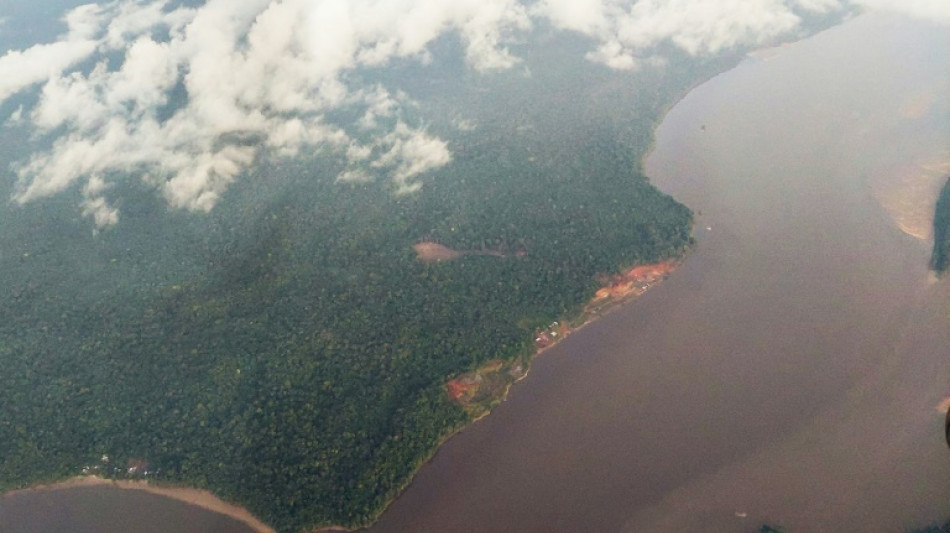
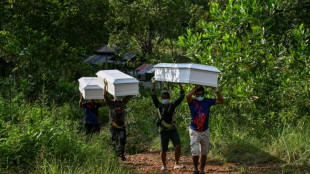
Oil at the root of Guyana-Venezuela border row / Photo: Martín SILVA - AFP/File

 De Zerbi apologises to fans after Spurs' stalemate extends goal drought

 Lowry takes four-shot lead as Trump jets in for Irish Open

 Harrison, Skupski win US Open men's doubles title

 Verstappen fears overtaking will be 'tough' at Spanish GP

 Argentina revives plan for South Atlantic naval base amid Falklands tensions

 Yemen government forces say hit Houthis in Red Sea city

 Dismal Spurs stay goalless after Everton stalemate

 Fire at nursing home in Chile kills 16

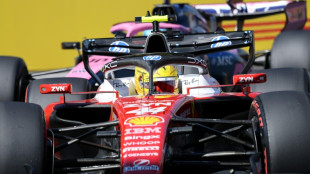
 Frustrated Hamilton urges Ferrari to 'work harder'

 Zelensky ready to meet Putin at Miami G20 but Kremlin refuses

 Anthropic boss calls for AI slowdown, Altman and Musk agree

 England back on track after 'chaos', says Root
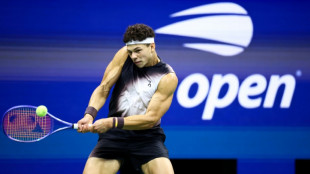 Shelton chases history in US Open title tilt with top seed Zverev

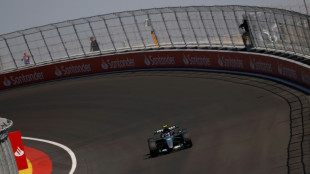
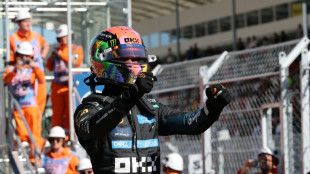 Norris 'masterpiece' snatches Spanish GP pole from Antonelli

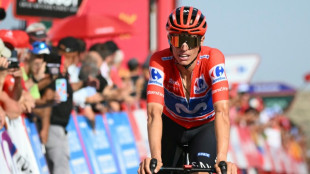 Mas on brink of Vuelta triumph as Landa claims stage 20

 No Kerr clash as Ingebrigtsen pulls out of Ultimate 1,500m
 Anthropic boss calls for slowing pace of AI development
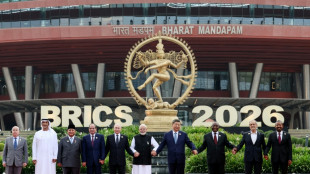 BRICS nations call for 'maximum restraint' in Middle East war
 England v Pakistan Test series: Three talking points
 Marquez snatches San Marino MotoGP sprint ahead of Bezzecchi
 Philippine ferry fire death toll climbs to 76 as identification process begins

 BRICS nations urge 'maximum restraint' in Middle East war
 Zelensky open to meeting Putin at G20 in Miami
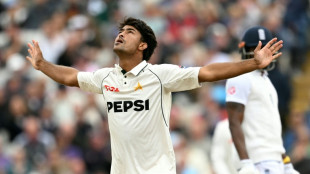
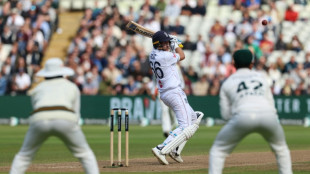 England survive scare to seal 3-0 sweep against Pakistan
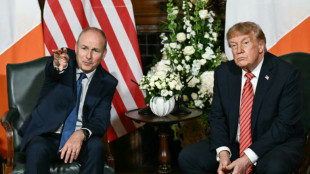 Trump says Irish unification would be 'fantastic'
The discovery of vast oil deposits is blamed for reigniting a decades-old territorial dispute between Venezuela and Guyana that fast worsened as Guyana started granting licenses to multinationals to exploit crude in waters claimed by both countries.
This is what we know about the showdown over the Essequibo region that has the world on edge.
- How much oil in Essequibo? -
The 160,000-square-kilometer (62,000-square-mile) territory has been administered by English-speaking Guyana since an 1899 arbitration award in favor of the then-British colony.
Venezuela claims the region has historically been considered part of its territory since 1777, when it was part of the Spanish empire, with the Essequibo river forming a natural boundary.
The matter is before the International Court of Justice (ICJ) in The Hague.
Long dormant, the squabble was revived in 2015 when US energy giant ExxonMobil discovered huge crude reserves in Essequibo -- which makes up about two-thirds of Guyanese territory and is home to 125,000 of its 800,000 citizens.
Suddenly, Guyana sat on reserves estimated at 11 billion barrels of crude -- the highest per capita in the world.
ExxonMobil has since initiated 63 drilling projects, bringing Guyana's production to 600,000 barrels per day (bpd).
By the end of 2027, it is expected to reach 1.2 million bpd.
Venezuelan President Nicolas Maduro has protested licenses being granted in a region yet to be formally delineated by the ICJ, and has described his Guyanese counterpart Irfaan Ali as a "slave" of ExxonMobil.
Venezuela has the world's largest proven reserves of crude at some 300 billion barrels, but extraction has suffered under years of economic mismanagement, corruption and economic sanctions.
Production has fallen in just over a decade from three million bpd to 400,000 at the lowest level, recovering slightly to 750,000 bpd today.
- Can Venezuela issue oil licenses? -
After a referendum last Sunday overwhelmingly approved Caracas' proposed creation of a Venezuelan province in Essequibo, Maduro ordered state oil company PDVSA to issue permits for oil, gas and mineral exploration in the area.
The president also gave companies working under Guyana-issued licenses an ultimatum to withdraw from the area within three months and renegotiate with Venezuela.
The deadline "is generating significant uncertainty" for companies, Mariano de Alba of the International Crisis Group think tank told AFP.
"We will have to see how they react."
International litigation lawyer Ramon Escovar Leon told AFP Maduro's order would be hard to execute.
"It’s rhetorical," he said.
"On paper you can grant the license but the execution is not guaranteed," added De Alba, who believes that Maduro is seeking to force Ali into negotiations over licensing, which he has refused.
Guyana's Vice President Bharrat Jagdeo on Thursday told foreign companies to "pay no regard to Maduro or his ultimatum. We will defend that territory as sovereign Guyanese territory. They are operating legally, lawfully in this territory."
Jagdeo added that "any attempt to explore for petroleum by his (Maduro's) state oil companies... will be seen as an incursion."
- Risk of escalation? -
The international community has expressed concern about the rising tensions, but experts do not believe there is much risk of full-out conflict.
The United States is concerned about its medium- and long-term oil supply, and has every interest in keeping peace in the area.
"Limited military operations" could occur, such as military patrols, said De Alba, but likely nothing more.
Tensions rose Thursday with the United States announcing joint military exercises in Guyana, slammed as "provocation" by Venezuela.
Escovar Leon said the costs of escalation are likely too high for Venezuela to risk given the vested interests of Guyanese allies such as the United States and China, whose companies also have concessions in the area.
M.Robinson--AT

