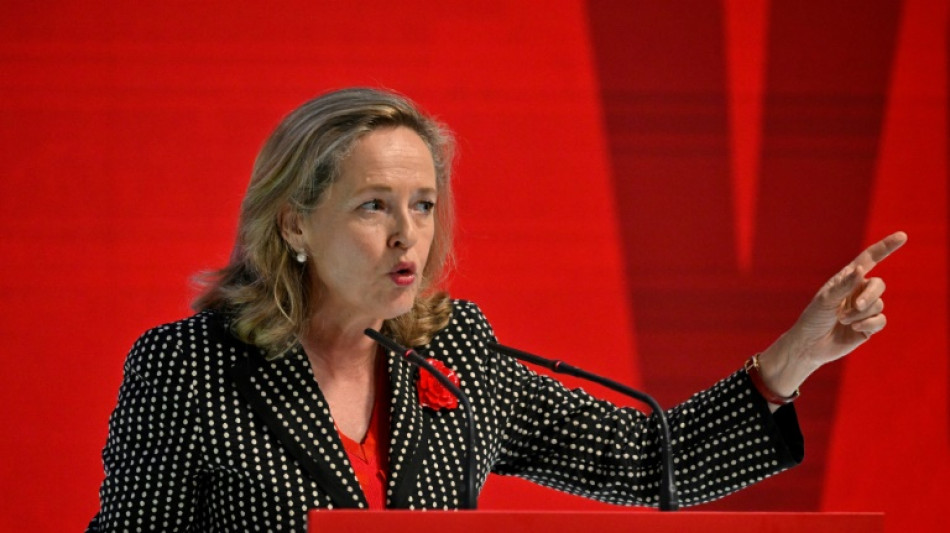
Spain's Calvino beats Vestager to head bloc's lender / Photo: JAVIER SORIANO - AFP/File

 De Zerbi apologises to fans after Spurs' stalemate extends goal drought
 Lowry takes four-shot lead as Trump jets in for Irish Open
 Harrison, Skupski win US Open men's doubles title
 Verstappen fears overtaking will be 'tough' at Spanish GP

 Argentina revives plan for South Atlantic naval base amid Falklands tensions

 Yemen government forces say hit Houthis in Red Sea city
 Dismal Spurs stay goalless after Everton stalemate
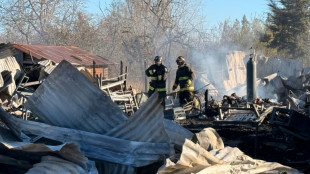 Fire at nursing home in Chile kills 16

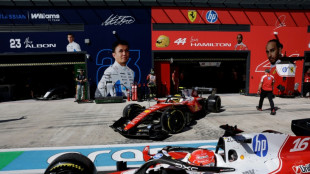 Frustrated Hamilton urges Ferrari to 'work harder'
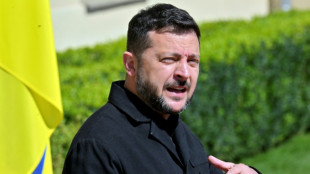 Zelensky ready to meet Putin at Miami G20 but Kremlin refuses
 Anthropic boss calls for AI slowdown, Altman and Musk agree

 England back on track after 'chaos', says Root
 Shelton chases history in US Open title tilt with top seed Zverev
 Norris 'masterpiece' snatches Spanish GP pole from Antonelli

 Mas on brink of Vuelta triumph as Landa claims stage 20
 No Kerr clash as Ingebrigtsen pulls out of Ultimate 1,500m
 Anthropic boss calls for slowing pace of AI development
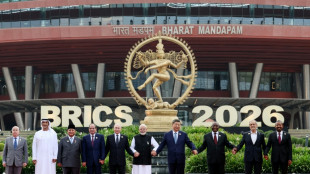 BRICS nations call for 'maximum restraint' in Middle East war
 England v Pakistan Test series: Three talking points
 Marquez snatches San Marino MotoGP sprint ahead of Bezzecchi
 Philippine ferry fire death toll climbs to 76 as identification process begins
 BRICS nations urge 'maximum restraint' in Middle East war

 Zelensky open to meeting Putin at G20 in Miami
 England survive scare to seal 3-0 sweep against Pakistan

 Trump says Irish unification would be 'fantastic'
Spain's economy minister Nadia Calvino on Friday won the race to lead the European Investment Bank, the bloc's lending arm whose significance has grown since war broke out in Ukraine.
The top post at the Luxembourg-based EIB attracted some of the biggest names in European politics, including the European Union's competition commissioner, Margrethe Vestager, who had stepped down temporarily to run.
"We've come to a conclusion and a consensus around the candidacy of Nadia Calvino as the next president of the EIB," Belgian finance minister Vincent Van Peteghem said after a meeting of EU finance ministers in Brussels.
"With Nadia, we have a strong next president of the EIB," he added.
Belgium led the recruitment process since the country holds the rotating presidency of the EIB's board of governors.
Calvino had been the clear frontrunner for the role for several weeks. The 55-year-old will be the EIB's first woman chief and will take over from Werner Hoyer, 72, whose second six-year term ends on December 31.
"I am grateful and honoured to get the support of my fellow financial ministers," Calvino told reporters in Brussels after she was formally named the EU candidate.
Vestager had been seen as a clear frontrunner, headed for a coronation, until Calvino threw her name into the hat in August this year, blocking the Danish politician's path to victory.
In a social media post, Vestager withdrew herself from consideration and said she would resume her duties at the European Commission, where she served as executive vice-president in charge of competition policy.
There were three other candidates: Italy's ex-finance minister Daniele Franco as well as current EIB vice presidents Teresa Czerwinska of Poland and Thomas Ostros of Sweden.
The EIB is the world's biggest multilateral public lender and has poured in billions of euros to help Ukraine after Russia's invasion and to invest in European infrastructure in line with the EU's long-term aims.
A former civil servant in Spain, Calvino previously worked in the European Commission's budget department in Brussels before her political career began in 2018.
She speaks English, French and German as well as her native Spanish.
- Focus on green transition -
Vestager's EIB bid is believed to have been hurt by a controversy in July over the commission's move to hire an American competition expert to advise it on regulating big tech.
France was particularly incensed that the role had not gone to an EU citizen, leading to the expert's withdrawal from the role.
Since Moscow's assault on Ukraine began in February 2022, the EIB said it had mobilised and disbursed 1.7 billion euros ($1.8 billion) in emergency relief.
The EIB, set up in 1958, signed off on more than 65 billion euros of financing last year.
As the EU has focused on the green transition so has the lender, with more than half of the financing aimed at supporting climate action and sustainability.
France wants the bank to take more risks, pitting Paris against Germany, which does not want to push the institution to do too much all at once.
Paris has especially pushed for the EIB to finance nuclear power. Calvino, whose government is anti-nuclear, is believed to be open to the issue.
Ch.P.Lewis--AT

