EU to resume negotiations on world's first AI law on Friday / Photo: Stefani Reynolds - AFP/File

 De Zerbi apologises to fans after Spurs' stalemate extends goal drought

 Lowry takes four-shot lead as Trump jets in for Irish Open

 Harrison, Skupski win US Open men's doubles title

 Verstappen fears overtaking will be 'tough' at Spanish GP

 Argentina revives plan for South Atlantic naval base amid Falklands tensions

 Yemen government forces say hit Houthis in Red Sea city

 Dismal Spurs stay goalless after Everton stalemate

 Fire at nursing home in Chile kills 16

 Frustrated Hamilton urges Ferrari to 'work harder'

 Zelensky ready to meet Putin at Miami G20 but Kremlin refuses

 Anthropic boss calls for AI slowdown, Altman and Musk agree

 England back on track after 'chaos', says Root

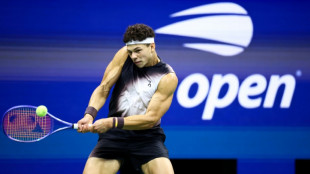 Shelton chases history in US Open title tilt with top seed Zverev

 Norris 'masterpiece' snatches Spanish GP pole from Antonelli

 Mas on brink of Vuelta triumph as Landa claims stage 20

 No Kerr clash as Ingebrigtsen pulls out of Ultimate 1,500m

 Anthropic boss calls for slowing pace of AI development

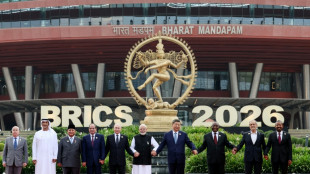 BRICS nations call for 'maximum restraint' in Middle East war
 England v Pakistan Test series: Three talking points

 Marquez snatches San Marino MotoGP sprint ahead of Bezzecchi
 Philippine ferry fire death toll climbs to 76 as identification process begins

 BRICS nations urge 'maximum restraint' in Middle East war

 Zelensky open to meeting Putin at G20 in Miami

 England survive scare to seal 3-0 sweep against Pakistan

 Trump says Irish unification would be 'fantastic'

The European Union failed to clinch a deal Thursday on a sweeping law on artificial intelligence after nearly 24 hours of negotiations, but vowed to continue talks the next day.
Brussels wants to approve the world's first comprehensive AI law before the end of 2023 after the issue took on greater urgency when the ChatGPT bot dazzled the world last year, showcasing AI's rapid advances.
ChatGPT surprised many with its ability to produce eloquent essays and poems within seconds from simple user prompts.
Despite the technology's potential to transform labour and healthcare, critics point to the rising risks of disinformation and misuse from AI including deepfake images.
Negotiators from the European Parliament and EU member states began discussions on Wednesday afternoon, with ambitious hopes that they would finalise an agreement in the early hours of Thursday at the latest.
"Lots of progress made over past 22 hours on the AI Act. Resuming work with EU Parliament and Council tomorrow at 9:00 AM (0800 GMT). Stay tuned!" the EU's internal market commissioner, Thierry Breton, said on social media.
There is no real deadline, but senior EU figures have invested a lot of political capital in finalising the legal text by Thursday morning.
Even if the negotiators seal a deal on Friday, the law would not come into force until 2026 at the earliest.
There are two areas of division between the member states and parliament.
The first sticking point is over how to regulate so-called foundation models -- designed to perform a variety of tasks -- with France, Germany and Italy calling for theses systems to be excluded from the tougher parts of the law.
Some member states agree that regulation must limit the damage that can result from the misuse of AI but still want to encourage innovation, especially since they want their own European champions, like US-based ChatGPT's creator OpenAI.
Another sticking point is remote biometric surveillance -- basically, facial identification through camera data in public places.
The EU parliament wants a full ban on "real time" remote biometric identification systems, but some member states want exceptions to allow the technology to be used for law enforcement.
The European Commission, the EU's executive arm, first proposed an AI law in 2021 that would regulate systems based on the level of risk they posed. For example, the greater the risk to citizens' rights or health, the greater the systems' obligations.
Tech titans, including Google and Meta, are also seeking a slice of the AI pie.
The EU is not alone in its concerns over the impact and influence of AI.
US President Joe Biden issued an executive order in October to regulate AI in a bid to mitigate the technology's risks.
China also put into force regulations on artificial intelligence-generated content in August this year.
F.Wilson--AT

