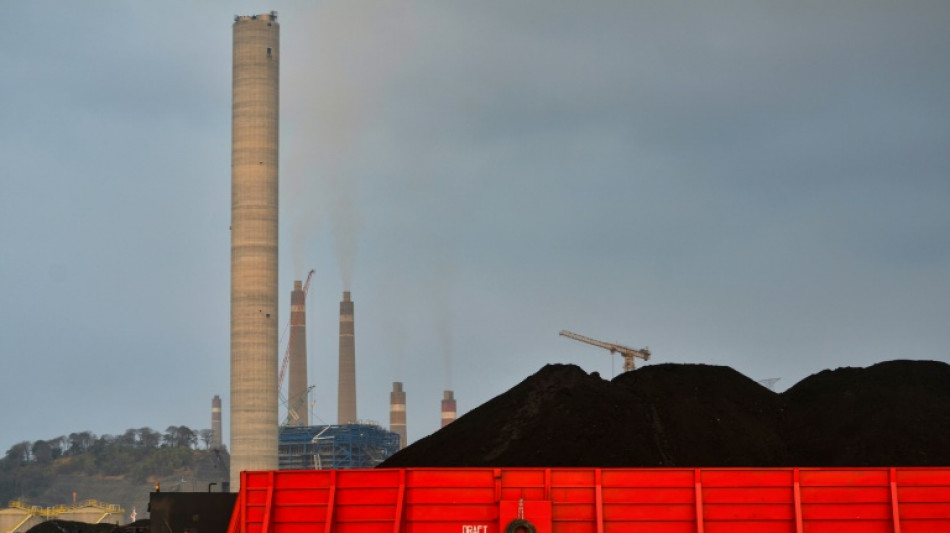
Indonesia's coal love affair still aflame despite pledges / Photo: Ronald SIAGIAN - AFP

 Lettermen co-founder Tony Butala dies at 87

 James Talarico defeats Ken Paxton in historic Texas Senate result
 Commentator predicts possible US strike on Iran as regional tensions rise

 Jordan Bardella's Wealth and Financial Transparency Under Scrutiny

 India introduces four-layer motor insurance choice from December 15

 BHEL wins Adani Power projects valued at up to ₹28,000 crore

 India seeks threefold increase in coal stocks to prevent summer power shortages

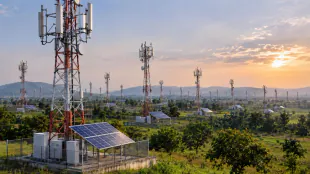 Indus Towers expands solar-powered network to 50,000 telecom sites

 Merz Pledges Winter Aid to Ukraine and Announces 'Coalition of the Willing' Summit

 Bharti Airtel revenue expected to grow at double-digit pace in second quarter

 Italy Claims Curling Silver at European Championships in Ostrava

 Kuwait finance minister holds economic cooperation talks at COMCEC

 Abdul El-Sayed declares victory in Michigan Senate contest

 Democrats Seize Congress in Midterm Sweep, Ending Trump Era Control

 Trump congratulates Democrats and signals willingness to cooperate

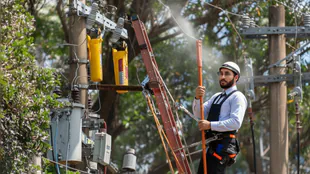 Enel to Install Solar Panels at Niterói Waste Management Facility

 Qatar sees tentative opening for renewed regional diplomacy

 Qatar Tourism joins Pacific Asia Travel Association at London travel market
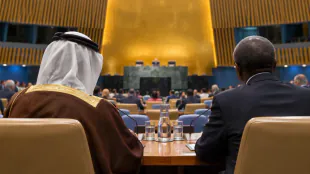
 Abdul El-Sayed Wins Michigan Senate Seat in Historic Election

 Qatar media bodies discuss support for humanitarian initiatives
Sania sits in front of her home in Indonesia, less than a kilometre from Southeast Asia's biggest coal complex, where chimneys pump dark grey smoke and a chemical smell into the air.
As countries gather in Dubai for crunch climate talks, the future of polluting fossil fuel coal will be high on the agenda.
For some, the age of coal is now clearly over, and Indonesia has committed to moving away from the fuel despite being the world's top exporter.
But it is adding two more units to the Suralaya power plant, in Banten province next to the capital Jakarta, and has plans for new plants to power its nickel industry -- key to the electric vehicle boom.
Sania, a 37-year-old housewife, who like many Indonesians goes by one name, is dreading the Suralaya expansion.
"I am very worried. It's been very scary. I want to move out if I can because our house is too near to the plant," she told AFP.
"If the units start to operate, the dust here will be much worse. I mop the floor two to three times a day. The noise makes my head ache. The smell is terrible."
It's a story repeated across Indonesia, where the government's pledge to end construction of new coal plants has been tempered by loopholes allowing existing expansions like that at Suralaya to proceed.
The government's promise also excludes so-called captive coal -- plants that power industry rather than feed into the grid.
Indonesia is one of the world's top coal producers, and is heavily reliant on the fuel for power generation.
But it is also the recipient of a Just Energy Transition Partnership (JETP), which promises to mobilise $20 billion to wean the country off coal.
Under the deal, Indonesia moved up its energy transition goals, pledging net-zero power sector emissions by 2050, and to boost the share of electricity generated from renewable sources to 44 percent by 2030.
Solar and wind power each currently account for less than one percent of Indonesia's power mix.
- 'Cheapest, most reliable' -
Its JETP calculations do not however account for captive power plants, with more than 13 gigawatts (GW) already installed and another 18 GW planned as of 2022, according to Jakarta-based energy think tank the Institute for Essential Services Reform (IESR).
Indonesia views these plants as vital to its growing role in the electric vehicle revolution, powering facilities that process nickel for batteries.
It has even mooted designating as "green" coal-powered plants that power EV industry activities.
"There's a major issue around captive coal power stations in Indonesia, that runs the risk of derailing or slowing that JETP process," said Leo Roberts, an analyst at climate think tank E3G.
It could mean the deal is not "an effective whole economy transition for Indonesia", he said.
The Indonesian government, JETP secretariat and state-owned power company PLN did not respond to AFP's requests for comment.
But Hendra Sinadia, executive director of the Indonesian Coal Mining Association, said efforts to push the country away from the fossil fuel were misguided and some coal-powered energy generation remains necessary.
"Coal is Indonesia's natural wealth. Indonesia has a significant potential for coal," he told AFP.
"Coal remains the most relied-upon energy source to drive smelter development, allowing us to become one of the main players in the electric vehicle ecosystem."
Closing existing power plants is complicated by the relative youth of many of Indonesia's facilities.
That makes them expensive to retire because of the years of potential returns on investment left.
"I believe choosing to phase out isn't a wise decision," said Sinadia.
"Coal remains the cheapest, most reliable, and most accessible energy source."
- 'Beleaguered' -
But activists say that analysis ignores the planet-warming implications of unrestricted coal use as well as its serious health consequences.
Data modelling by the Centre for Research on Energy and Clean Air suggests emissions from the country's coal-fired power plants in 2022 were responsible for 10,500 deaths.
"This 'cheap' label doesn't take into account the external costs due to environmental damage and health impacts caused," said Bondan Andriyanu, a researcher at Greenpeace.
Fisherman Hawasi, 55, also blames the Suralaya plant for pollution offshore that has depleted his livelihood.
"There are no more catches in the waters near the shore. We have to sail far," he told AFP.
"We have been beleaguered by pollution from all directions."
IESR says Indonesia should retire nine GW of coal generation by 2030 to meet its commitments under JETP.
But an energy ministry study released in September proposes retiring just over half that amount by 2030.
This month, PLN's chief executive Darmawan Prasodjo announced plans to build an additional 31.6 GW of renewable energy capacity by 2033.
But that is expected to largely cater to growing demand, with most existing coal plants left running until the end of their lifetimes.
"We will do a coal phase down, not a coal phase out," Prasodjo told parliament.
O.Gutierrez--AT