New world order? Pandemic and war rattle globalisation

 'Nowhere to run': Indonesian quake survivors plead for help
 Belgium fire makes 'limited' spread overnight, more help on way

 Vingegaard brings curtain down on season
 Dickwella, Dinusha hit fifties as Sri Lanka fight back

 Bangladesh Test cricket reboot delivers in style with historic win

 Virgin moves closer to launching Eurostar rival in 2030
 Indian marble waste dump becomes unlikely tourist attraction
 Coach says Australia 'let standards slip' in shock Bangladesh loss

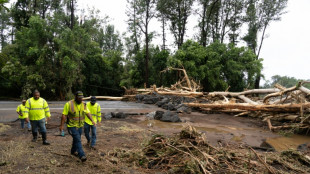 Hawaii recovery efforts begin as Lala downgraded, moves west

 Food safety crackdown snares Mumbai's famed restaurants
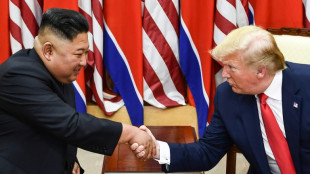 Trump says US scaling back military drills with Seoul hours before start
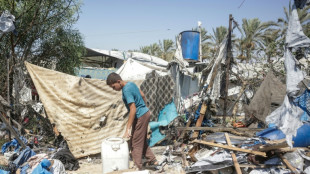
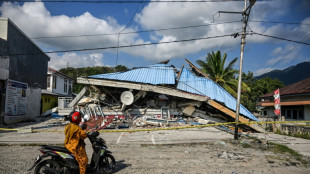 Nearly 13,000 displaced after deadly Indonesian quake
 Axe hangs over Australian batters after Darwin 'disaster'

 Is this cave in Turkey where Homer wrote 'The Odyssey'?
 Winning back walls from gangs, artists fill El Salvador's towns with color

 Opening arguments expected in Tupac murder trial

 As machinery removes rubble, hopes for survivors from Colombian quake dwindle

 InterContinental Hotels Group PLC Announces Transaction in Own Shares - August 17

 HM Exploration Commences Borehole & Surface EM Surveys at Lewis Pilley's
 SEG Announces 2026 Interim Results

 Banyan Gold Intersects 13.03 g/t Au Over 14.2m at Powerline North, AurMac, Yukon, Canada
 Emerging Growth Research Releases Flash Report on First Phosphate; Reiterates Buy Rating and C$4.94 Price Target Following Nasdaq Uplisting
 Guardian Metal Resources PLC Announces Warrant Exercise

 Top-ranked Scheffler powers to PGA St. Jude Championship victory
 Jacquet scores on Liverpool debut in friendly win over Como

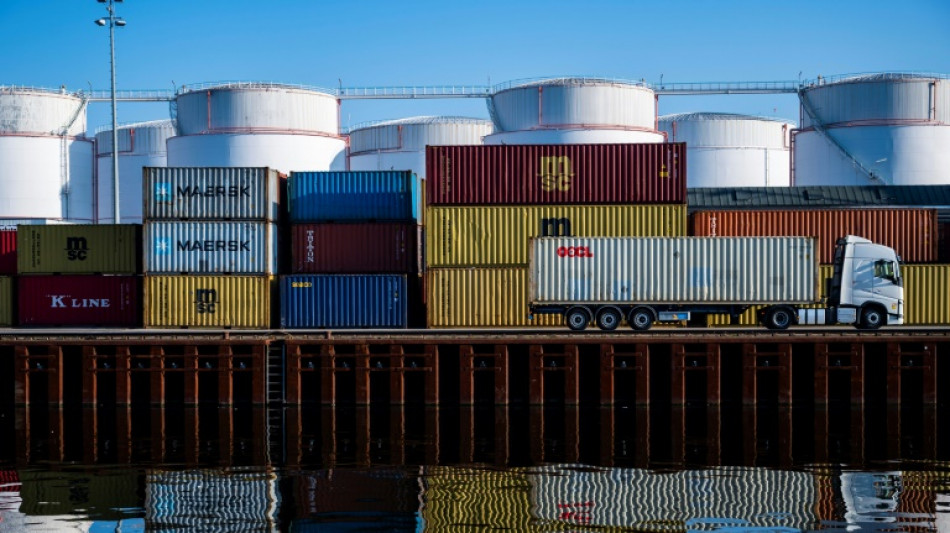
Globalisation, which has both fans and detractors alike, is being tested like never before after the one-two punch of Covid and war.
The pandemic had already raised questions about the world's reliance on an economic model that has broken trade barriers, but made countries heavily reliant on each other as production was delocalised over the decades.
Companies have been struggling to cope with major bottlenecks in the global supply chain.
Russia's war in Ukraine has raised fears about further disruptions, with everything from energy supplies to auto parts to exports of wheat and raw materials under threat.
Larry Fink, the head of financial giant BlackRock, put it bluntly: "The Russian invasion of Ukraine has put an end to the globalisation we have experienced over the last three decades."
"We had already seen connectivity between nations, companies and even people strained by two years of the pandemic," Fink wrote in a letter to shareholders on Thursday.
But US Treasury Secretary, Janet Yellen, disagrees.
"I really have to push back on that," she told CNBC in an interview.
"We're deeply involved in the global economy. I expect that to remain, it is something that has brought benefits to the United States, and many countries around the world."
- 'An animal that evolves' -
Shortages of surgical masks at the outset of the pandemic in 2020 became a symbol of the world's dependence on Chinese factories for all sorts of goods.
The conflict between Russia and Ukraine has raised concerns about food shortages around the globe as the two agricultural powerhouses are among the major breadbaskets of the world.
It has also put a spotlight on Europe's -- and especially Germany's -- heavy dependence on gas supplies from Russia, now a state under crippling sanctions.
"A number of vulnerabilities" have emerged that show the limits of having supply chains spread out in different locations, the former director general of the World Trade Organization, Pascal Lamy, told AFP.
The global trade tensions have prompted the European Union, for instance, to seek "strategic autonomy" in critical sectors.
The production of semiconductors -- microchips that are vital to industries ranging from video games to cars -- is now a priority for Europe and the United States.
"The pandemic did not bring radical changes in terms of reshoring (bringing back business from overseas)," said Ferdi De Ville, professor at Ghent Institute for International & European Studies.
"But this time it might be different because (the conflict) will have an impact on how businesses think about their investment decisions, their supply chains," he said.
"They have realised that what was maybe unthinkable before the past month has now become realistic, in terms of far-reaching sanctions," said de Ville, author of an article on "The end of globalisation as we know it".
The goal now is to redirect strategic dependence towards allies, what he coined as "friend-shoring" instead of "off-shoring".
A US-EU agreement Friday to create a task force to wean Europe off its reliance on Russian fossil fuels is the most recent example of friend-shoring.
For Lamy, this shows "there is no de-globalisation".
Globalisation, he said, is "an animal that evolves a lot".
- Decoupling from China -
Globalisation had already faced an existential crisis when former US president Donald Trump launched a trade war with China in 2018, triggering a tit-for-tat exchange of punitive tariffs.
His successor, Joe Biden, invoked the need to "buy American" in his sweeping investment plan to "rebuild America".
"We will buy American to make sure everything from the deck of an aircraft carrier to the steel on highway guardrails are made in America," he said in his State of the Union speech.
One concept that emerged during the Trump years was "decoupling" -- the idea of untangling the US and Chinese economies.
The threat has not subsided, especially with China refusing to condemn Russia's invasion of Ukraine.
The United States has warned the world's second-biggest economy would face "consequences" if it provides material support to Russia in its war in Ukraine.
China already had other contentious issues with the West, such as Taiwan, the self-ruled democracy which Beijing has vowed to seize one day, by force if necessary.
"It is not in China's interest for now to go into competition with the West," said Xiaodong Bao, portfolio manager at the Edmond de Rothschild Asset Management firm.
But the war in Ukraine is a chance for China to reduce its reliance on the US dollar. The Wall Street Journal reported that Beijing is in talks with Saudi Arabia to buy oil in yuan instead of dollars.
"China will continue to build foundations for the future," Bao said. "The financial decoupling is accelerating."
W.Moreno--AT