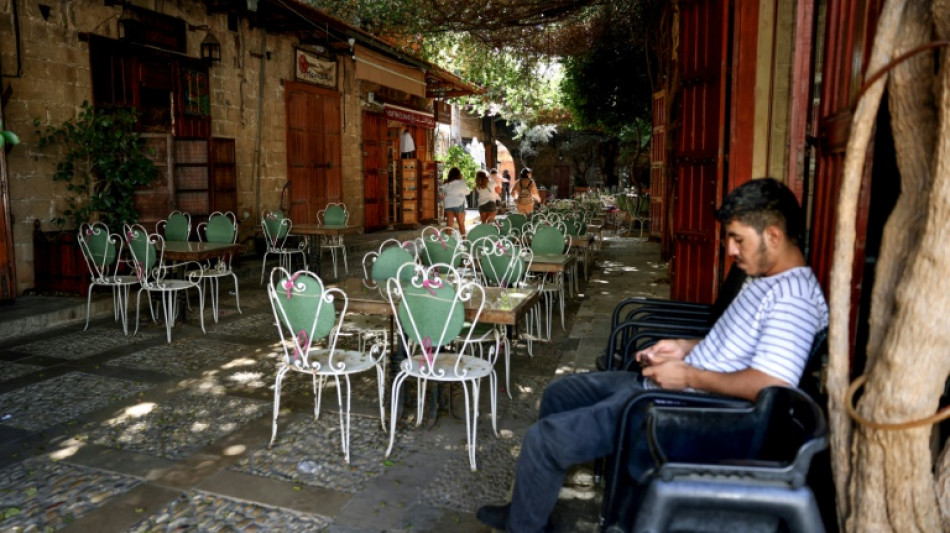
Spectre of war paralyses Lebanon's hospitality sector / Photo: JOSEPH EID - AFP

 Rybakina reigns serene as new world number one

 South Africa defeat New Zealand 43-28 to complete 3-1 series victory
 Rybakina triumphs in US Open, denies Sabalenka three-peat

 Akron fan's honorary play-calling stint ends with opening-drive fumble

 Louisiana's developing roster faces USC as Trojans enter as heavy favorites

 Christa Pike seeks clemency before September 30 execution in Tennessee

 Utah hosts Arkansas as both programs begin seasons under new coaches

 Maryland groups seek statewide data center pause after local moratoriums spread

 Winston County trash-debt prosecutions face challenge from civil-rights lawyers

 Fifth Circuit upholds dismissal of Jackson residents' constitutional water claims

 Anthropic details Claude misuse as US targets major illicit online marketplace

 Japanese floating parking platform is designed to lift cars above floodwater

 Arteta blasts 'unacceptable' Sunderland penalty despite Arsenal win

 Mbappe at the double as Real Madrid sink Rayo

 Arsenal extend perfect Premier League start as Chelsea, Liverpool held

 US survive Spain scare to book World Cup final clash with France

 Celine Dion makes long-awaited return to stage in Paris
 Werro crowned Ultimate queen, US sweep 100m races

 Venezuelans outside Caracas say capital not sharing blackout burden

 Danish WWII drama wins top prize at Venice festival
 Chelsea boss Alonso yearns for 'boring game' after Hull make their point
 Werro outguns Hodgkinson to win women's 800m at Ultimate

 Moreira leads AC Milan fightback in Lazio draw
 Chelsea boss Alonso for yearns for 'boring game' after Hull make their point
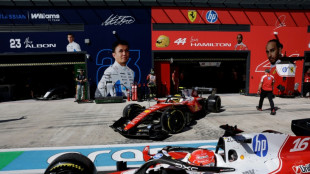
 'Tired' Liverpool must adapt to schedule, says Iraola

Bartender Richard Alam has poured hardly any drinks at his pub in Lebanon's seaside city of Byblos, where once-busy streets have emptied of customers scared by border tensions during the Israel-Hamas war.
"I opened this whiskey bottle two weeks ago and it still isn't empty," said Alam, 19, standing behind his empty bar in the coastal city, home to a World Heritage site north of Beirut.
"Before, we would go through a bottle every day or every other day," he told AFP.
Four years into an economic meltdown, Lebanon's restaurants, cafes, hotels and shops face yet another challenge: keeping afloat during the Israel-Hamas war and related hostilities on the Lebanon-Israel border.
Gaza-based Hamas militants attacked southern Israel on October 7, triggering retaliatory Israeli bombing and a ground offensive in Gaza. Since then, Lebanon's southern border has seen deadly escalating skirmishes, mainly between Israel and Hamas ally Hezbollah.
The fighting has so far been limited to the south, but some Western and Arab countries have advised their citizens to leave Lebanon, fearing a broader conflict.
Byblos, on Lebanon's northern coast, "relies on tourists," Alam said, wearing a bow tie and a suit.
"Our work has gone down from at least 40 to 50 tables a day to... seven at most."
Nearby, customers are also scarce at Mona Mujahed's souvenir shop, usually bustling with tourists and locals alike.
But there has been "no work, no money", Mujahed, 60, said, sipping coffee in front of her shop where souvenirs sit untouched on the shelves.
- 'War ruined everything' -
Many domestic visitors fearful of war have also cut back on expenses, hitting restaurants, cafes, bars and shops hard.
Since 2019 Lebanese have suffered from a financial crisis branded by the World Bank as one of the planet's worst since the 1850s. It pushed most of the population into poverty, and forced half of all restaurants, cafes, pubs and nightclubs to close down, said Tony Ramy, who heads an industry syndicate.
Ramy said the sector was just recently beginning to recover, after expatriate visitors flocked back to Lebanon over the summer following the coronavirus pandemic, the economic collapse and a catastrophic explosion at Beirut's port in 2020.
"We had just turned the page on four difficult years with renewed momentum, but unfortunately the war ruined everything," said Ramy, of the restaurant, cafe, nightclub and pastry shop owners' syndicate.
"Since October 7 we have seen a dramatic decrease in clientele... (dropping) by up to 80 percent on weekdays and 30 to 50 percent on the weekend," he said.
"No one knows if the situation in the south will deteriorate and no one can plan for anything," he said, warning of the potential for "huge losses".
Cross-border skirmishes have killed at least 88 people in Lebanon, mostly Hezbollah combatants but also 10 civilians, according to an AFP tally.
In northern Israel, nine people including six soldiers have been killed, according to official figures.
Lebanon's national carrier Middle East Airlines (MEA) has slashed flights, and passenger numbers from the region to Beirut have dropped by 54 percent compared to last year, said the airline's spokesperson Rima Makkawi.
MEA passengers from Europe have also dropped by 30 percent compared to the same period last year, she added.
- Optimism born of tragedy -
In Beirut's once-bustling and vibrant Hamra area, the four-star Hotel Cavalier has seen hundreds of cancellations.
"From the first week (of hostilities), cancellations soared dramatically," manager Ayman Nasser El Dine, 41, said in the deserted lobby.
"We had zero new reservations... This would be catastrophic if it lasts," he said.
More than half of the hotel's 65 rooms were pre-booked for November, but now staff barely welcome a dozen guests per day, he said.
The Cavalier was also overbooked for December and hotels had been looking forward to the Christmas holiday rush, he added.
But that was before the war.
Pierre Ashkar, who heads the hotel owners' syndicate, said room occupancy had plummeted from about 45 percent to between zero and seven percent.
"Reservations have been cancelled for the next two or three months" as countries advised their citizens against travelling to Lebanon, he said.
Even if the Hamas-Israel war ends tomorrow, Ashkar said "we need another month or two until countries change their travel advice so we can return to business as usual".
But he expressed optimism that hotels in Lebanon, which saw civil war from 1975-1990, a 2006 war between Israel and Hezbollah, and the 2020 port explosion, would rebound once calm returned.
"We are a strong-willed people, born and bred during times of war," Ashkar said. "If we didn't have a long experience in crisis management, the sector would have long gone bankrupt."
R.Chavez--AT