Italy's olive growers lament poor harvests from extreme weather / Photo: Tiziana FABI - AFP

 Garcia keeps WBC welterweight title by stopping Benn
 Lights out in Laos as electricity exports surge

 'This is the test': All eyes on US Fed to tackle high inflation

 Scars of Marawi siege linger as Philippines poll nears

 Trump turns to golf, family business on Irish visit's second day

 Best Online Gold Dealers in USA 2026 Rankings Released By Experts

 South Africa defeat New Zealand 43-28 to complete 3-1 series victory

 Rybakina triumphs in US Open, denies Sabalenka three-peat

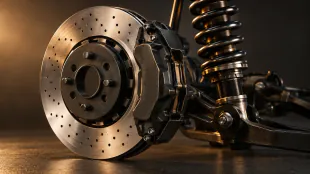 Mini 1998 GT pairs 161-hp engine with John Cooper Works chassis hardware

 GTA VI draws political criticism online as preorder estimates exceed five million

 Steven Strogatz weighs AI mathematics advances and their consequences for researchers

 Winston County trash-debt prosecutions face challenge from civil-rights lawyers
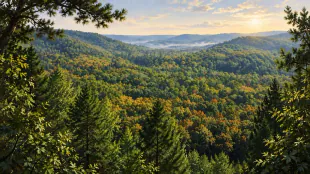
 Marmot research gains over $140,000 from meme-coin fees alongside wildlife contest

 Queens residents seek renewed enforcement along Roosevelt Avenue

 United States beats Spain 76-66 to set up World Cup final against France

 Cristian Mungiu's Fjord examines a family's conflict with Norwegian child authorities

 Gilbert Arenas questions Jonathan Kuminga's decision to join Minnesota

 Arteta blasts 'unacceptable' Sunderland penalty despite Arsenal win

 Mbappe at the double as Real Madrid sink Rayo

 Arsenal extend perfect Premier League start as Chelsea, Liverpool held

 US survive Spain scare to book World Cup final clash with France

 Celine Dion makes long-awaited return to stage in Paris

 Werro crowned Ultimate queen, US sweep 100m races

 Venezuelans outside Caracas say capital not sharing blackout burden

 Danish WWII drama wins top prize at Venice festival
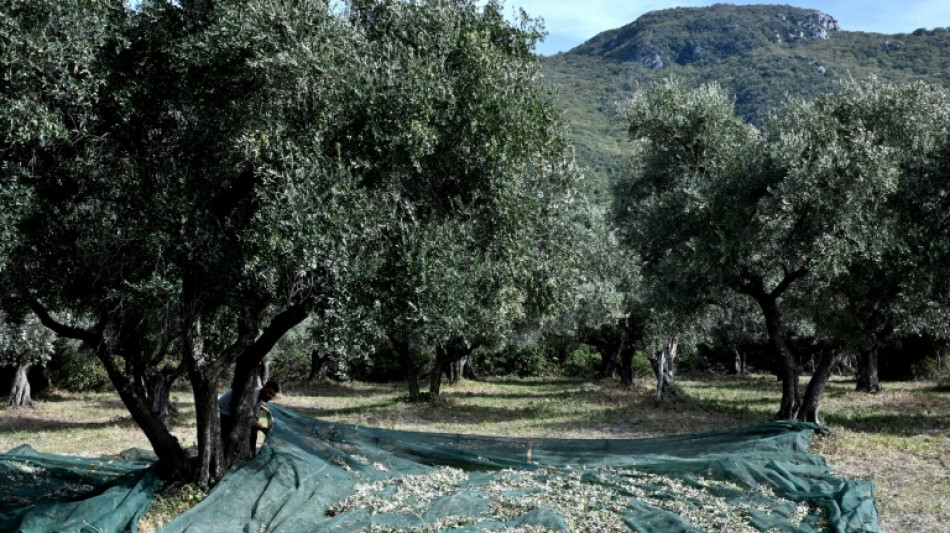
At this time of year, the trees on Alan Risolo's land in central Italy should be groaning with olives. But extreme weather blamed on climate change has ruined his harvest.
"Production has fallen by 80 percent," said the 43-year-old farmer from Sabina, north of Rome, despondently holding up a branch with only a few shrivelled green and black olives on it.
Known since Roman times for its olive groves, this region boasts trees said to be hundreds, even thousands, of years old.
But changing weather patterns are proving hugely challenging.
"For several years, our land has really suffered from climate change," Risolo told AFP, citing torrential rain contrasted with "long periods of heat lasting into the autumn".
Normally, he and his workers would be in coats for the autumn harvest, when they use electric devices to shake the trees so the fruit falls onto tarpaulins below.
Earlier this week they were collecting the olives while wearing T-shirts, as the thermostat hit 29 degrees Celsius (84 degrees Fahrenheit).
The cut in production has affected not just Sabina, but most of the central and northern regions of Italy, the world's second-largest producer of olive oil after Spain.
This year national production is estimated to be 290,000 tonnes, down from 315,000 in 2022 and the lowest figure in the last four years, according to agricultural association Coldiretti.
- More uncertain than ever -
When harvested, Risolo's olives go to the "OP Latium" mill, where they and others from the area are washed, sorted and then crushed into a greenish paste from which the precious extra virgin oil is extracted.
The smell is glorious, and the equipment is state-of-the-art. But all the technology in the world cannot squeeze oil from olives that don't exist.
Agronomist Stefano Cifeca, who is responsible for quality control on site, confirmed this year's meagre harvest.
"Unfortunately this year climate change meant that in April and May (the flowering months)... we had heavy rainfall that washed away the pollen," hindering fertilisation and the development of olives, he said.
Faced with increasingly hot summers and long periods without rain, Unaprol, the national association of olive oil producers, is calling for a national plan to help save water.
Cifeca backs this idea at a local level, urging the creation of basins to collect water in winter that can then be reused when drought hits.
Farmers here are used to tough times. In 2018, Risolo recalls, a frost wiped out his harvest.
But he warned that agriculture faces "a more uncertain future than ever, because we cannot accurately predict these changes in the climate".
- Saved by the south -
The stakes are high. Italy has 150 million olive trees representing three billion euros ($3.19 billion) in annual turnover and supporting 400,000 businesses, according to Coldiretti.
The risk is that some farmers switch to other crops, although Cifeca insists this is not yet necessary.
"Luckily the olive tree is a very robust plant that can adapt to changes in climate and different territories," he said.
Despite the poor performance in the centre and north, Italian production this year was saved by its southern regions, both Puglia -- which makes half of Italy's oil -- and Calabria.
Farmers have also been helped by rising prices in the global market for olive oil, as production in Spain, which normally produces half of the world's supply, has also suffered.
Production in Spain fell 34 percent compared to the average over the last four years, according to Coldiretti figures from September, due to a prolonged drought.
But the rising prices are bad news for consumers -- including in Italy, which consumes 15 percent of olive oil produced worldwide.
N.Mitchell--AT