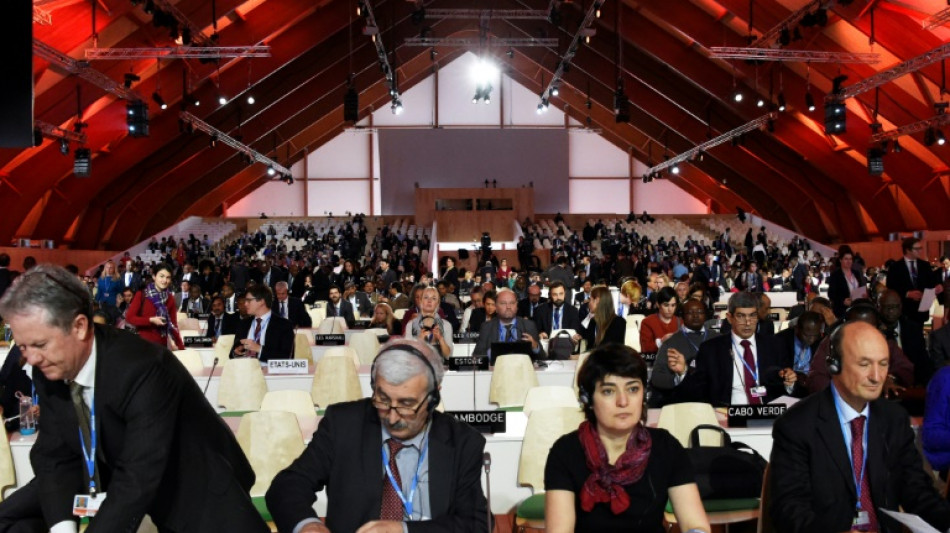
What is a COP? / Photo: DOMINIQUE FAGET - AFP

 Garcia keeps WBC welterweight title by stopping Benn
 Lights out in Laos as electricity exports surge

 'This is the test': All eyes on US Fed to tackle high inflation

 Scars of Marawi siege linger as Philippines poll nears

 Trump turns to golf, family business on Irish visit's second day

 Best Online Gold Dealers in USA 2026 Rankings Released By Experts
 South Africa defeat New Zealand 43-28 to complete 3-1 series victory
 Rybakina triumphs in US Open, denies Sabalenka three-peat

 Mini 1998 GT pairs 161-hp engine with John Cooper Works chassis hardware
 GTA VI draws political criticism online as preorder estimates exceed five million

 Steven Strogatz weighs AI mathematics advances and their consequences for researchers

 Winston County trash-debt prosecutions face challenge from civil-rights lawyers
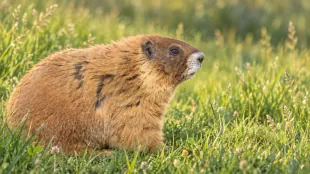 Marmot research gains over $140,000 from meme-coin fees alongside wildlife contest
 Queens residents seek renewed enforcement along Roosevelt Avenue
 United States beats Spain 76-66 to set up World Cup final against France

 Cristian Mungiu's Fjord examines a family's conflict with Norwegian child authorities
 Gilbert Arenas questions Jonathan Kuminga's decision to join Minnesota
 Arteta blasts 'unacceptable' Sunderland penalty despite Arsenal win

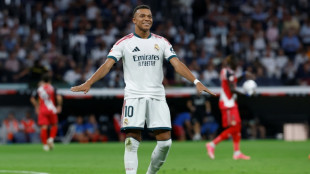 Mbappe at the double as Real Madrid sink Rayo

 Arsenal extend perfect Premier League start as Chelsea, Liverpool held
 US survive Spain scare to book World Cup final clash with France
 Celine Dion makes long-awaited return to stage in Paris

 Werro crowned Ultimate queen, US sweep 100m races

 Venezuelans outside Caracas say capital not sharing blackout burden
 Danish WWII drama wins top prize at Venice festival
The crunch climate talks being held in Dubai from November 30 to December 12 will be the 28th such gathering of world leaders under UN auspices known as COPs.
AFP unpacks the workings of the high-level summit, where countries will aim to thrash out a new agreement as accelerating climate change threatens the world with costly and destructive consequences.
- What is a COP? -
COP stands for Conference of the Parties, referring to the 198 parties including the European Union that have signed the United Nations Framework Convention on Climate Change, originally adopted in Brazil in 1992.
COPs have been held every year in different cities since 1995, with the exception of COP26 in Glasgow, which was delayed by a year due to the coronavirus pandemic.
They are numbered in chronological order, with the United Arab Emirates welcoming the world's movers and shakers at COP28 after taking over the presidency from COP27 hosts Egypt.
COPs also exist for other UN conventions and treaties on issues including desertification and biodiversity.
- What are the outcomes? -
The long, complex and occasionally acrimonious negotiations between world leaders are supposed to end with a final text, which is often hammered out well past the official deadline.
Numerous lobbyists, NGOs, international organisations and other observers gather on the sidelines of the talks.
The agreement must be reached by consensus, meaning different positions and interests have to be reconciled, all while aiming for progress in the fight against climate change.
Outcomes of little substance have emerged from some COPs, in stark contrast with the acceleration of climate change and its increasingly destructive consequences.
Swedish climate activist Greta Thunberg has dismissed COPs as "greenwashing machines", summing up the result of a recent summit as "bla, bla, bla".
In 2009, COP15 in Copenhagen was widely viewed as a failure as no global deal was reached, despite a last-minute text involving the world's two largest economies, the United States and China.
But other editions have a more favourable place in history, notably COP21 in 2015, which gave birth to the historic Paris Agreement that 195 parties have ratified.
The accord was the first to unite the international community behind the goal of keeping global temperature rises "well below" two degrees Celsius compared with industrial levels, and to 1.5C if possible.
In a first, COP26 in 2021 designated fossil fuels as the primary cause of global warming, but under pressure from China and India the final text only called for a "phasedown" of coal rather than a "phaseout".
- What to expect this year? -
COP28 is due to host a record 80,000 people, according to the Emirati presidency.
The choice of Sultan Al Jaber -- head of the UAE's national oil company ADNOC -- as COP president has sparked fury among environmental campaigners.
But Jaber and others see it as an opportunity for a business leader from the fossil fuel industry to discuss the energy transition, which will once again be a key topic of discussion.
The COP presidency has set concrete goals for 2030: tripling global renewable energy capacity as well as doubling energy efficiency and hydrogen production.
COP28 will also see a first "global stocktake" of the world's progress in achieving the Paris goals.
A technical report released in September concluded -- unsurprisingly -- that the world was well off course and that "much more is needed now on all fronts".
As always, money will be at the centre of bitter debate.
Rich countries have pledged financial support for developing nations to help them adapt to and mitigate the havoc wrought by climate change.
A historic "loss and damage" fund for vulnerable countries was agreed at COP27, but its governance, location and funding mechanisms remain up in the air.
P.A.Mendoza--AT