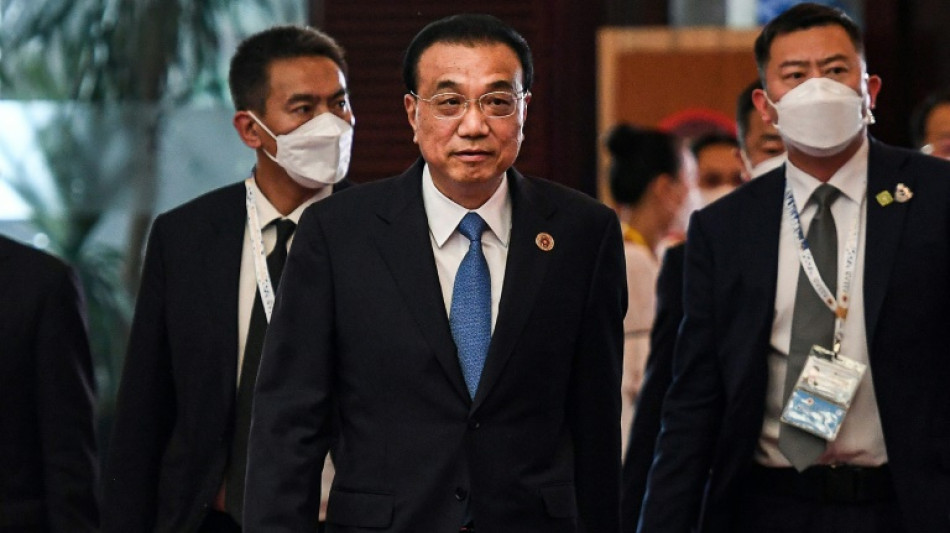
Former Chinese premier Li Keqiang dies at 68 / Photo: Nhac NGUYEN - AFP/File

 Garcia keeps WBC welterweight title by stopping Benn
 Lights out in Laos as electricity exports surge

 'This is the test': All eyes on US Fed to tackle high inflation
 Scars of Marawi siege linger as Philippines poll nears

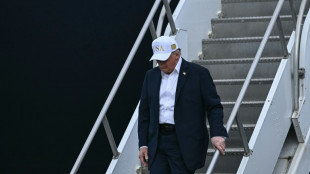 Trump turns to golf, family business on Irish visit's second day

 Best Online Gold Dealers in USA 2026 Rankings Released By Experts
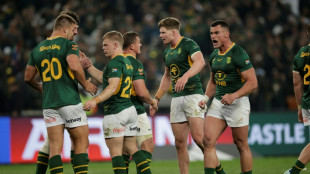 South Africa defeat New Zealand 43-28 to complete 3-1 series victory
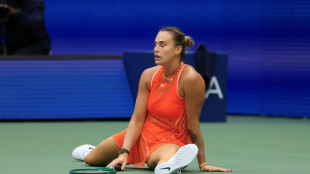
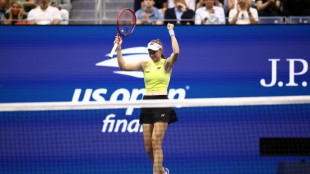 Rybakina triumphs in US Open, denies Sabalenka three-peat

 Mini 1998 GT pairs 161-hp engine with John Cooper Works chassis hardware

 GTA VI draws political criticism online as preorder estimates exceed five million

 Steven Strogatz weighs AI mathematics advances and their consequences for researchers

 Winston County trash-debt prosecutions face challenge from civil-rights lawyers

 Marmot research gains over $140,000 from meme-coin fees alongside wildlife contest

 Queens residents seek renewed enforcement along Roosevelt Avenue

 United States beats Spain 76-66 to set up World Cup final against France

 Cristian Mungiu's Fjord examines a family's conflict with Norwegian child authorities

 Gilbert Arenas questions Jonathan Kuminga's decision to join Minnesota

 Arteta blasts 'unacceptable' Sunderland penalty despite Arsenal win

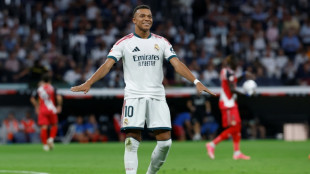 Mbappe at the double as Real Madrid sink Rayo
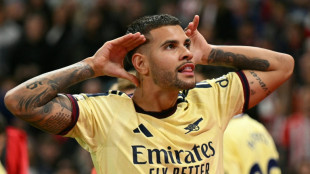
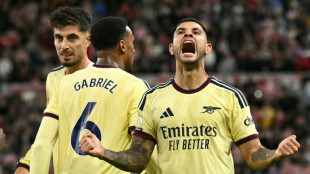 Arsenal extend perfect Premier League start as Chelsea, Liverpool held

 US survive Spain scare to book World Cup final clash with France
 Celine Dion makes long-awaited return to stage in Paris
 Werro crowned Ultimate queen, US sweep 100m races
 Venezuelans outside Caracas say capital not sharing blackout burden
 Danish WWII drama wins top prize at Venice festival
Former Chinese premier Li Keqiang, a reform-minded bureaucrat once tipped as the country's future leader only to be eclipsed by President Xi Jinping, died Friday. He was 68.
He had a heart attack on Thursday and passed away in Shanghai just after midnight, state-run news agency Xinhua said.
During his 10-year tenure as premier under Xi, Li cultivated an image as a more modern Communist Party loyalist compared to his stiffer colleagues.
A career bureaucrat who spoke fluent English, he voiced support for economic reforms during his time in office.
The son of a minor party official in eastern China's poor Anhui province, Li was sent to the countryside to work as a manual labourer during the tumultuous Cultural Revolution of 1966 to 1976.
He went on to gain a law degree from Peking University, where classmates say he embraced Western and liberal political theory, translating a book on the law by a British judge.
But he became more orthodox after joining the ranks of officialdom in the mid-1980s, working as a bureaucrat while his former classmates protested in Tiananmen Square in 1989.
Li rose to become the ruling Communist Party's top official in Henan province, and in Liaoning in the northeast -- both of which saw economic growth.
But his reputation was damaged by his handling of an HIV/AIDS epidemic stemming from a tainted blood donation programme while he was party boss in Henan.
Later, Li was promoted to become a deputy to then-premier Wen Jiabao.
His attempts at tackling China's deep economic challenges were curtailed by the overwhelming authority of Xi, with whom he was once seen as a rival for the country's leadership.
Praised for helping to steer the country through the global financial crisis relatively unscathed, his time in office saw a dramatic shift in power in China from the more consensus-based rule associated with former leader Hu Jintao and his predecessors, to the more concentrated power of Xi.
"People always debated whether (China's) institutions would... determine the outcomes, as opposed to just raw power," Victor Shih, an expert on China's elite politics at the University of California San Diego, told AFP.
"And of course, recent events show that raw power still matters more."
- 'Derailed agenda' -
Li's tenure also saw China's economy begin to slow from the dizzying heights experienced in the 1990s and 2000s.
"He always struck me as very committed to China's development, intellectually curious, with a highly sophisticated understanding of the Chinese economy," Bert Hofman, director of the East Asian Institute at the National University of Singapore, told AFP.
"Events derailed some of his agenda in the past 10 years, but his thinking is still very much relevant today."
Former Peking University classmate Guoguang Wu, now a senior research scholar at Stanford, told AFP that Li "was someone with an ability for independent thought" during their time together.
"Afterwards, he became a government official, and this ability seemed to disappear," he said.
"I don't believe he has left a political legacy. History will soon forget him."
When Li left office, the country was experiencing some of its lowest growth in decades, battered by a Covid-induced slowdown and a crisis in the housing market.
The appointment of Xi ally Li Qiang -- a former Shanghai party boss -- as his successor this year was seen as a sign that his reformist agenda had fallen by the wayside as Beijing tightens its grip over its slowing economy.
But in his final speech as outgoing premier, Li struck a bullish tone, saying China's economy was "staging a steady recovery and demonstrating vast potential and momentum for further growth".
"Overcoming great difficulties and challenges, we succeeded in maintaining overall stable economic performance."
H.Gonzales--AT