Ukraine war rattles EU green farming plan

 Bangladesh Test cricket reboot delivers in style with historic win

 Virgin moves closer to launching Eurostar rival in 2030
 Indian marble waste dump becomes unlikely tourist attraction
 Coach says Australia 'let standards slip' in shock Bangladesh loss

 Hawaii recovery efforts begin as Lala downgraded, moves west

 Food safety crackdown snares Mumbai's famed restaurants
 Trump says US scaling back military drills with Seoul hours before start
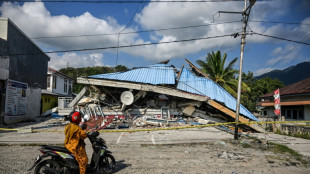 Nearly 13,000 displaced after deadly Indonesian quake
 Axe hangs over Australian batters after Darwin 'disaster'

 Is this cave in Turkey where Homer wrote 'The Odyssey'?
 Winning back walls from gangs, artists fill El Salvador's towns with color
 Opening arguments expected in Tupac murder trial

 As machinery removes rubble, hopes for survivors from Colombian quake dwindle
 Gold Roth IRA: How It Works, Rules, Taxes, Fees, and What Investors Should Know in 2026 (Guide Released)

 HM Exploration Commences Borehole & Surface EM Surveys at Lewis Pilley's
 SEG Announces 2026 Interim Results
 Trump says US scaling back military drills with South Korea

 Zambia's Hichilema takes early lead in reelection bid
 Sabalenka squeezes out a win on sixth match point in Cincinnati

 Duplantis dominant, Hunt hits four and Asher-Smith makes history

 Spanish soldier dies in Aragon wildfire
 PSG beaten by Lens in French Champions' Trophy

 Rybakina, Andreeva race into Cincinnati third round
 Amy Hunt bags fourth Euro gold as Britain win 4x100m mixed relay

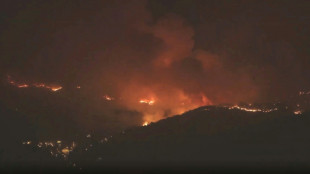 Spanish soldier dies in Aragon wildfire: regional leader
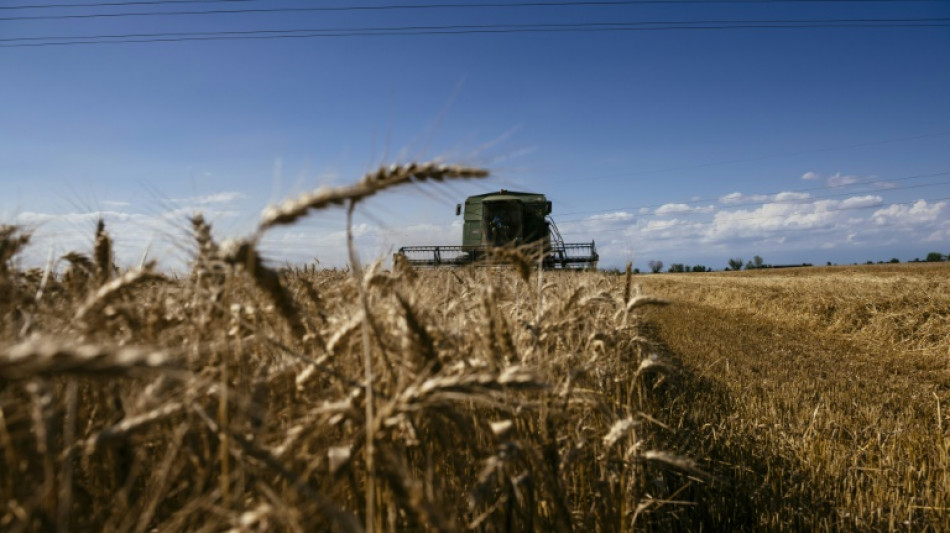
Scientists are urging Europe not to delay the transition to greener agriculture in response to Russia's invasion of Ukraine, which threatens global wheat supplies and raises fears over food shortages.
The European Commission is preparing to pass emergency measures on Wednesday to deal with the consequences of the war and sanctions on Russia, also a major exporter of cereals.
That will include granting temporary exemptions for fallow land, but some states, including agricultural powerhouse France, are calling for a much greater roll-back of the EU’s green agricultural policies.
The bloc's "Farm to Fork" strategy -- which aims to slash pesticide use by half, cut fertilisers by 20 percent and devote a quarter of agricultural land to organic farming this decade -- was due to be officially outlined in legislative texts unveiled on Wednesday. They have been postponed indefinitely.
"This is very bad news," said An Lambrechts, of Greenpeace International, from Geneva, where international negotiations are taking place for better protection of biodiversity.
That view is shared by scientists.
An appeal signed by more than 500 experts has called on the European Union to "reinforce -- and not abandon -- the transformation towards a healthy, just, and environmentally-friendly food system".
“We have to look at sensible short-term measures but we must not neglect those long-term targets," said Hermann Lotze-Campen, agricultural economist at the Potsdam Institute for Climate Impact Research (PIK), which led the appeal.
"Because reducing greenhouse gas emissions and protecting biodiversity are absolutely necessary to sustain and ensure long-term food production."
Intensive agriculture contributes to climate change, environmental pollution and poses risks to human health.
"We should not only look at the supply side, but also that we have to reduce our consumption of animal-based products and then reduce the number of livestock," Lotze-Campen told AFP.
- Economic aid -
About 60 percent of European cereal production is used for feeding pigs, chickens or cows, and just under 10 percent is used to produce fuel.
"Today, the main reason why we could run out of cereals in Europe is that we put too much of it in engines and that we give too much of it to animals," said Pierre-Marie Aubert of the IDDRI research centre.
He said cultivating fallow land is not a viable solution to increase agricultural production.
Often "it's not good land" for cultivation, he said, but it is needed to provide "key services that farmers depend on: pollination and pest control".
He said a better short-term answer would be economic aid for countries that are struggling to cope with soaring cereal prices.
The war in Ukraine has also underscored Europe's dependence on synthetic fertilisers from Russia and potash from Belarus.
But research in France has suggested that herbicides and nitrogen fertilisers can be cut by 30 to 50 percent from a high base, with no effect on yields.
Almost 200 countries are due to adopt a global framework this year to safeguard nature by mid-century from the destruction wrought by humanity, with a key milestone of 30 percent protected by 2030.
That must include better agricultural practices across the world, experts and activists say.
The European Union is positioning itself as a leader at the Geneva talks, which are laying the groundwork for the COP15 biodiversity summit later this year, hosted by China.
"The (European) Commission is about to delay vital actions which would protect our environment, and instead spend billions on activities which will lead to the destruction of important habitats and wildlife," said Anna Heslop from the NGO ClientEarth.
"These moves risk seriously undermining the EU's ability to claim leadership over protecting nature at a global level when it can't stick to its word at home."
Ch.Campbell--AT