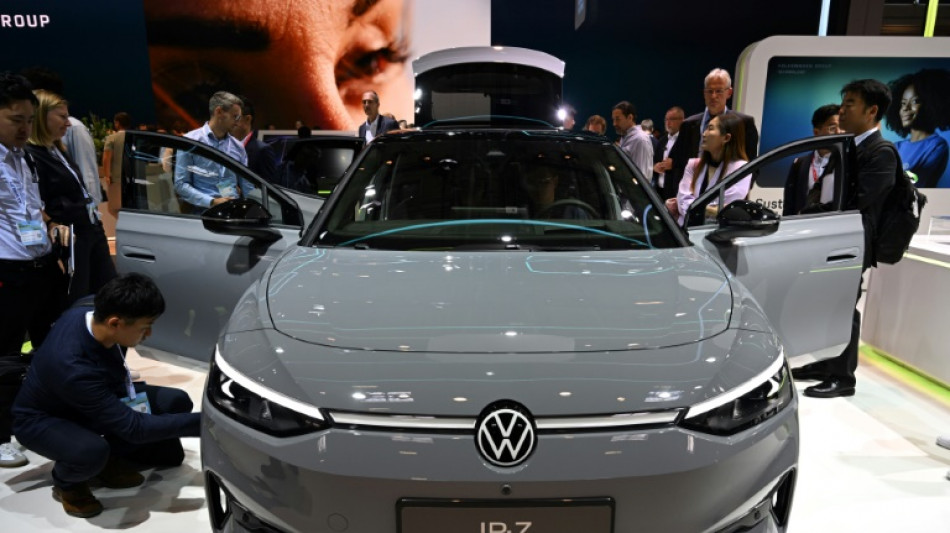
Transition trouble: German car suppliers struggle with electric shift / Photo: CHRISTOF STACHE - AFP

 Crash and burn: Pakistan cricket at a new low after England humiliation

 'Second life': Nepal tunnel survivor recalls ordeal

 Hong Kong homes flattened for US$28 bn high-tech hub
 'Be careful what you wish for': 'Obsession' director and star reflect on success

 Messi scores but Miami held by Nashville

 US Open champ Rybakina on top of world after injury scare

 Rybakina reigns serene as new world number one

 Defiant Sabalenka motivated by US Open defeat

 Houthis say hit Saudi base after renewed fighting with Yemeni govt forces

 Maryland groups seek statewide data center pause after local moratoriums spread
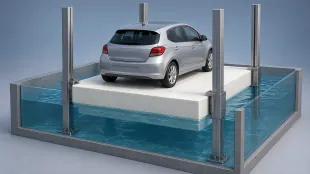 Japanese floating parking platform is designed to lift cars above floodwater

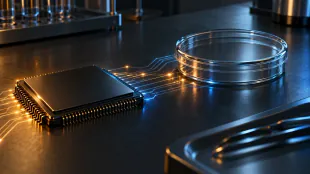 Anthropic details Claude misuse as US targets major illicit online marketplace

 Fifth Circuit upholds dismissal of Jackson residents' constitutional water claims

 Winston County trash-debt prosecutions face challenge from civil-rights lawyers

 Utah hosts Arkansas as both programs begin seasons under new coaches

 Christa Pike seeks clemency before September 30 execution in Tennessee

 Louisiana's developing roster faces USC as Trojans enter as heavy favorites

 Akron fan's honorary play-calling stint ends with opening-drive fumble

 Marmot research gains over $140,000 from meme-coin fees alongside wildlife contest

 Attissogbe double inspires Pau to Top 14 summit

 Guimaraes strike lights up Arsenal win over Sunderland

 Israeli-made Gaza documentary wins Venice special jury prize

 De Zerbi apologises to fans after Spurs' stalemate extends goal drought

 Lowry takes four-shot lead as Trump jets in for Irish Open

 Harrison, Skupski win US Open men's doubles title

After years earning bumper profits by producing parts for fossil fuel-powered cars, German suppliers to the crucial auto industry are struggling as the transition to electric mobility gathers pace.
While Germany is well known as the home of titans like Volkswagen, Mercedes and BMW, there are also hundreds of other companies in the country that form part of the sprawling auto sector.
They range from huge firms like ZF and Continental, to far smaller companies, making everything from spark plugs to heaters and exhaust pipes.
But as the industry speeds towards an electric future -- the EU is planning to ban the sale of new combustion engine cars by 2035 -- specialised suppliers in Europe's top economy are struggling to keep up, experts warn.
German suppliers have lost nearly three percentage points of global market share since 2019, according to a study by consultancy Strategy&, part of the PwC network.
"The success of the past 20 years is at risk of being eroded in a short span of time," it warned.
"In particular, Asian suppliers have made substantial gains by investing heavily, and aligning themselves clearly towards future growth in emerging technologies."
Still, analysts say some of the larger players are navigating the transition better while smaller firms are most at risk.
- High energy prices, interest rates -
One company that has traditionally relied on fossil fuel-powered vehicles is Eberspaecher, whose products include exhaust systems and heaters.
But the firm, which supplies major car brands, has for some time been seeking to pivot to manufacturing more items for electric cars.
At a factory in Herxheim, southwest Germany, workers at a series of high-tech production lines manufacture heaters for hybrid and electric vehicles.
As well as heating the vehicle, they also help to regulate the temperature of the battery.
The family-owned company, founded in 1865, has been producing the devices for some years and over 10 million vehicles have been fitted with them -- evidence, it says, of its successful transition to the new auto landscape.
"We see a vast growth potential with e-mobility in the global markets, especially North America, Europe and China," Karsten Bolz, from the company's electrical heaters business unit, told AFP.
He sounded relaxed about growing competition, describing it as a "normal part of the automotive business".
"We have the right tools, we have the knowledge, we have the right technology," he added.
Nevertheless, Eberspaecher, with over 10,000 employees worldwide, still depended in 2022 for 52 percent its revenues on the combustion engine.
And last year, while net revenues rose to around 2.7 billion euros ($2.9 billion), the company made a net loss of 94 million euros, compared to net profit of 21 million the previous year.
Elsewhere, the situation appears more alarming.
Local media abounds with reports of suppliers making job cuts, or planning to do so, and increasingly looking at shifting production overseas, where costs are cheaper.
Like other German manufacturers, car suppliers are being squeezed by sharply higher energy prices triggered by Russia's invasion of Ukraine, and elevated borrowing costs following a recent streak of interest rate hikes.
Of an estimated 400 suppliers in Germany, about 10 percent could face problems, with some potentially going out of business, Ferdinand Dudenhoeffer, from the Center Automotive Research, told AFP.
"For small- and medium-size businesses with a heavy focus on combustion engines, it's very tough," he said.
- Asia gaining ground -
The Strategy& study shows several Asian companies rising up the global ranking of suppliers in recent years.
In terms of turnover, Chinese EV battery giant CATL was in second spot last year, with Japan's Denso in third, and South Korea's Hyundai Mobis in third.
The battle for dominance with Asian rivals reflects the bigger picture in the auto industry -- Volkswagen, for instance, is seeing its market share eroded in China by a crop of homegrown electric car makers.
It's not all doom and gloom, however.
The top supplier globally in terms of turnover remains Germany's Bosch, whose huge array of products ranges from brakes to batteries, according to the recent study.
And with the transition moving at different paces around the world, industry players see an appetite for traditional combustion engine products for years to come.
At Eberspaecher, which has operations in Europe, Asia, Americas and Africa, revenues from combustion engines "are an important part of the business, and will stay an important part," said Bolz.
"You still have demand in different parts of the world for clean exhaust technologies."
O.Gutierrez--AT