-
 Myanmar says UN envoy illegitimate ahead of credentials decision
-
China, Russia, India seek economic cooperation at BRICS

-
 Philippine rescuers pull more victims from charred ferry
-
ستاندرد آند بورز تثبت تصنيف السعودية عند A+

-
 الأرصاد السعودية تتوقع سيولاً وأمطاراً رعدية في خمس مناطق
-
دول عربية ومنظمات تدين استهداف خط أنابيب في السعودية

-
 Crash and burn: Pakistan cricket at a new low after England humiliation
-
One dead, 102 rescued from stricken ferry off Indonesia's Java

-
 'Second life': Nepal tunnel survivor recalls ordeal
-
Garcia keeps WBC welterweight title by stopping Benn

-
 Hong Kong homes flattened for US$28 bn high-tech hub
-
Lights out in Laos as electricity exports surge

-
 'Be careful what you wish for': 'Obsession' director and star reflect on success
-
'This is the test': All eyes on US Fed to tackle high inflation
-
 Messi scores but Miami held by Nashville
-
Scars of Marawi siege linger as Philippines poll nears
-
 US Open champ Rybakina on top of world after injury scare
-
Trump turns to golf, family business on Irish visit's second day

-
 Rybakina reigns serene as new world number one
-
Best Online Gold Dealers in USA 2026 Rankings Released By Experts

-
 Defiant Sabalenka motivated by US Open defeat
-
South Africa defeat New Zealand 43-28 to complete 3-1 series victory

-
 Houthis say hit Saudi base after renewed fighting with Yemeni govt forces
-
Rybakina triumphs in US Open, denies Sabalenka three-peat

-
 Christa Pike seeks clemency before September 30 execution in Tennessee
-
Mini 1998 GT pairs 161-hp engine with John Cooper Works chassis hardware

-
 Japanese floating parking platform is designed to lift cars above floodwater
-
GTA VI draws political criticism online as preorder estimates exceed five million

-
 Anthropic details Claude misuse as US targets major illicit online marketplace
-
Steven Strogatz weighs AI mathematics advances and their consequences for researchers

-
 Fifth Circuit upholds dismissal of Jackson residents' constitutional water claims
-
KFF journalists discuss opioid funds, suicide prevention and gaps in care

-
 Winston County trash-debt prosecutions face challenge from civil-rights lawyers
-
Roadless Rule repeal proposal raises concerns over Midwest forests and fire risk

-
 Marmot research gains over $140,000 from meme-coin fees alongside wildlife contest
-
Utah hosts Arkansas as both programs begin seasons under new coaches

-
 Queens residents seek renewed enforcement along Roosevelt Avenue
-
United States beats Spain 76-66 to set up World Cup final against France

-
 Louisiana's developing roster faces USC as Trojans enter as heavy favorites
-
Cristian Mungiu's Fjord examines a family's conflict with Norwegian child authorities

-
 Akron fan's honorary play-calling stint ends with opening-drive fumble
-
Gilbert Arenas questions Jonathan Kuminga's decision to join Minnesota

-
 Maryland groups seek statewide data center pause after local moratoriums spread
-
Arteta blasts 'unacceptable' Sunderland penalty despite Arsenal win

-
 Attissogbe double inspires Pau to Top 14 summit
-
Mbappe at the double as Real Madrid sink Rayo

-
 Guimaraes strike lights up Arsenal win over Sunderland
-
Arsenal extend perfect Premier League start as Chelsea, Liverpool held

-
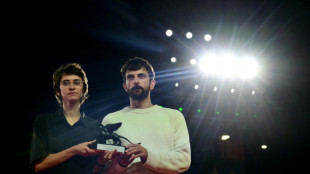 Israeli-made Gaza documentary wins Venice special jury prize
-
US survive Spain scare to book World Cup final clash with France

Designer Avido puts Kenyan slum on the fashion map
His creations are made in Kibera, the largest urban slum in Kenya, but have attracted the attention of global stars such as Beyonce and Bruno Mars and featured in Vogue magazine.
For Avido, his designs have a dual purpose: both to show to the world what can come from the impoverished Nairobi neighbourhood where he was born and raised, and to make it a better place.
Last year, the 27-year-old designer launched Kibera Fashion Week and the second edition was staged on Saturday in the heart of the sprawling slum.
Avido, whose real name is David Ochieng, drew inspiration from his journey to create one of his mottos: "Great things can come from places least expected."
The eldest of four children raised by a single mother in Kibera, Avido had never thought about pursuing a career in fashion.
"Looking for an alibi to keep me alive is what pushed me into fashion," he said in his deep voice.
He wanted to escape life on the street, saying 60-70 percent of his childhood friends had lost their lives through crime or drugs.
Forced to leave school at the age of 11 because of a lack of money, he tried to stay out of trouble -- first by playing football and later working on construction sites before he joined a dance troupe.
He then began designing outfits for the dancers.
"I started spending time with the tailors that were sewing the clothes that we were dancing with," he said. "I learned sewing even without knowing."
- Basket hat, bomber jackets and kimonos -
He went on to train as a fashion designer.
"He was really motivated... a go-getter," recalled Japheth Okoth, a charity employee who helped Avido get his first sewing machine.
"The moment he got that machine, he started designing clothes, making shirts," he said.
One of his garments brought him to the attention of Jamaican singer Don Carlos, the founder of reggae group Black Uhuru who was visiting Kibera on the sidelines of a concert in Kenya in 2017.
Avido offered him a shirt, and the encounter convinced him to devote his life to fashion.
With his "Lookslike Avido" label, he developed a colourful, gender-neutral style, mixing a variety of patterns and textures, notably ankara, the vibrant African wax fabric, and the velvet found on his kimonos and bomber jackets.
His inspiration comes not from the catwalks of New York, Paris or Milan, but from the streets of Kibera.
"Here in the street you get to have everything: when you speak about avant-garde, official, everything is in the street," he said.
One of his signature products, however, comes from the Kenyan countryside: a conical basket woven by his grandmother, which he turned upside down and wore as a hat one rainy day.
His style has caught the eye of Bruno Mars, rapper Ty Dolla Sign, reggae singer Chronixx, Coldplay frontman Chris Martin and Beyonce, who commissioned him and other African designers for her "Black is King" project.
His creations were also featured during Berlin Fashion Week in 2019.
- 'No point growing alone' -
But Avido keeps both feet firmly in Kibera, where all his clothes are made.
When Vogue Italia contacted him for an interview and photoshoot, he insisted that the models they used were young women from Kibera and that they were paid.
Traumatised by his childhood days when he would have to go to class in ragged uniforms, Avido -- through his eponymous foundation -- also makes uniforms for Kibera pupils, pays school fees for some and teaches young mothers and deaf women how to sew.
During the Covid-19 pandemic, he also produced thousands of masks to be distributed free of charge.
"Fashion is not just about making clothes, but it's a platform to be able to make our community a better place," he said.
"When it comes to projects, I try to think of the impact that it is going to have and if it is not going to have an impact around, I normally am not going into it," he added.
Despite his global renown, he has no intention of leaving his native slum.
"I don't see the point of growing alone. I could grow, leave, be part of the Paris Fashion Week. But I'd rather have a fashion week here and inspire people here," he said.
K.Hill--AT