
In pesticide-heavy Brazil, could crop dusting be killed off? / Photo: Evaristo SA - AFP/File

 Macron, Carney to visit French islands after Trump's map post

 اليورو يستقر في البنوك المصرية وأعلى سعر للبيع 59.85 جنيه

 فليك يضم حمزة عبد الكريم إلى قائمة برشلونة بعد أربعة أهداف في الإعداد

 Myanmar says UN envoy illegitimate ahead of credentials decision

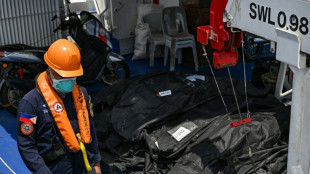 Philippine rescuers pull more victims from charred ferry

 ستاندرد آند بورز تثبت تصنيف السعودية عند A+

 Crash and burn: Pakistan cricket at a new low after England humiliation

 'Second life': Nepal tunnel survivor recalls ordeal

 Hong Kong homes flattened for US$28 bn high-tech hub

 'Be careful what you wish for': 'Obsession' director and star reflect on success

 Messi scores but Miami held by Nashville

 US Open champ Rybakina on top of world after injury scare

 Rybakina reigns serene as new world number one

 Defiant Sabalenka motivated by US Open defeat

 Houthis say hit Saudi base after renewed fighting with Yemeni govt forces

 Akron fan's honorary play-calling stint ends with opening-drive fumble

 Japanese floating parking platform is designed to lift cars above floodwater

 Anthropic details Claude misuse as US targets major illicit online marketplace

 Fifth Circuit upholds dismissal of Jackson residents' constitutional water claims

 Winston County trash-debt prosecutions face challenge from civil-rights lawyers

 Marmot research gains over $140,000 from meme-coin fees alongside wildlife contest

 Cristian Mungiu's Fjord examines a family's conflict with Norwegian child authorities

 United States beats Spain 76-66 to set up World Cup final against France

 Christa Pike seeks clemency before September 30 execution in Tennessee

 Utah hosts Arkansas as both programs begin seasons under new coaches

The use of crop dusting in Brazil -- the world's biggest consumer of pesticides -- has helped fuel the giant agricultural industry that props up Latin America's largest economy. But as public health concerns mount, the future of the practice is increasingly in doubt.
As fields of produce and local communities expand until they nearly collide, residents are exposed to the harsh chemicals sprayed down onto the plants from the air.
"When the planes fly around our houses, we feel the effects on our health: eye irritation, skin allergies, cough," said Diogenes Rabello, the leader of a Sao Paulo chapter of the Rural Workers Without Land Movement, an agricultural reform organization.
Critics of the method -- officially known as aerial fumigation -- won a victory in May, when the Brazilian Supreme Court ruled in favor of a 2019 ban in the northeastern state of Ceara. Other states are considering following suit.
But the decision sent shockwaves through the giant agribusiness sector in Brazil, which consumed nearly 720,000 metric tons of pesticides in 2021, or 20 percent of the global total, according to the United Nations' Food and Agriculture Organization.
In order to maintain high yields, agribusiness -- the driver of the Brazilian economy -- depends on the intensive use of pesticides, especially those administered from above. Supporters prefer to call the compounds "agricultural defense" or "plant protection products."
The situation is delicate: the huge use of pesticides is one of the main arguments European detractors point to in negotiations over a free trade agreement between the EU and the South American Mercosur trade bloc.
Europe has largely prohibited crop dusting since 2009, citing negative effects on human health and the environment.
But in Brazil, which has the second-largest fleet of agricultural aircraft in the world behind only the United States, aerial spraying still accounts for between 25 and 30 percent of pesticide use, according to the country's National Union of Agricultural Aviation Companies.
- 'Risk of drifting away' -
In the southeastern state of Sao Paulo -- the second-largest consumer of pesticides in the country and where sugarcane occupies about 30 percent of agricultural space -- prosecutor Gabriel Lino de Paula Pires is investigating the use of aerial fumigation in the Pontal do Paranapanema region.
"In 20 years, that crop has significantly expanded here, reaching up to the border of (human) settlements," Pires told AFP.
It is illegal to drop pesticides from the air within 500 meters of towns and villages, and within 250 meters of water sources. But crop dusting "always presents a risk of (the chemicals) drifting away from the intended target," Pires said.
In fact, according to Pires, due to the weather patterns in the region, "it is not possible to spread pesticides (from the air) safely."
But according to Fabio Kagi, from Sindiveg, which represents the Brazilian pesticide industry, "among the spray methods, the aerial one is the most regulated."
Crop dusting is much faster than spraying pesticides from the ground, able to reach huge swaths of land which would be difficult to access via tractor.
Agricultural aircraft pilots must be specially licensed, and an agricultural engineer is required to be present during flights, according to Kagi. But prosecutor Pires says public authorities are "failing" to regulate such conditions.
- Banned in Europe -
Some 30 percent of aerial pesticides used on sugarcane plantations around five regions of Sao Paulo in 2019 contained potentially carcinogenic active ingredients, according to a study from the Federal University of Santa Catarina, highlighting a possible correlation with the higher-than-national-average cancer incidence in these areas.
According to reports reviewed by the Sao Paulo public defender's office, sugar company Tereos Acucar e Energia Brasil used thiamethoxam, the active ingredient in an insecticide, in Brazil.
The chemical was banned in the EU in 2019 due to its toxicity to aquatic animals and potential risks for human fertility and fetuses.
Brazilian sugar companies Sao Martinho and Usina Pitangueiras have used a pesticide called Opera, according to other reports reviewed by the public defender's office. Opera's active ingredient is a substance which French health authorities have said is presumed to cause cancer and which disrupts hormones.
Contacted by AFP, Tereos insisted that it uses products "approved by Brazilian authorities" and "consciously respects all of their application recommendations."
Sao Martinho also said it follows the "regulations and guidelines of the competent authorities," while Usina Pitangueiras did not respond to AFP's inquiries.
Despite these state-level challenges to crop dusting, Brazilian federal lawmakers are currently considering a bill to ease the approval of new pesticides.
N.Mitchell--AT