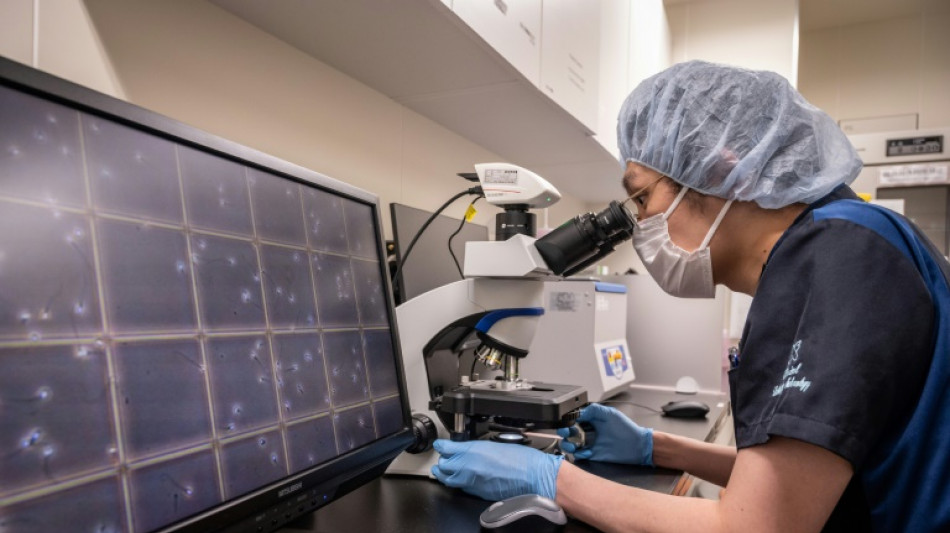
New rights for UK donor babies as they turn 18 / Photo: Yuichi YAMAZAKI - AFP

 Iran's economic ties to Dubai hard to break despite war

 iPhone 18預購後出現可疑扣款 四間銀行調查未授權交易

 《浪花男女》辦特別謝票場 馮志強談票房與導演客串拍攝

 Former captain De Villiers hails 'fantastic' Springboks

 Galaxy Tab S12系列效果圖曝光 Ultra擬配雙鏡頭及瀏海螢幕

 اليورو يستقر في البنوك المصرية وأعلى سعر للبيع 59.85 جنيه

 حمزة قورقماز يناقش العلاقة بين وضوح المبادئ واحترام الاختلاف

 Altman tells Fortune OpenAI will not go public in 2026
 China, Russia, India seek economic cooperation at BRICS

 الأرصاد السعودية تتوقع سيولاً وأمطاراً رعدية في خمس مناطق

 دول عربية ومنظمات تدين استهداف خط أنابيب في السعودية

 One dead, 102 rescued from stricken ferry off Indonesia's Java

 Garcia keeps WBC welterweight title by stopping Benn

 Lights out in Laos as electricity exports surge

 'This is the test': All eyes on US Fed to tackle high inflation

 Scars of Marawi siege linger as Philippines poll nears

 Trump turns to golf, family business on Irish visit's second day

 Best Online Gold Dealers in USA 2026 Rankings Released By Experts

 South Africa defeat New Zealand 43-28 to complete 3-1 series victory

 Rybakina triumphs in US Open, denies Sabalenka three-peat

 Mini 1998 GT pairs 161-hp engine with John Cooper Works chassis hardware

 Anthropic details Claude misuse as US targets major illicit online marketplace

 Fifth Circuit upholds dismissal of Jackson residents' constitutional water claims

 Winston County trash-debt prosecutions face challenge from civil-rights lawyers

 Akron fan's honorary play-calling stint ends with opening-drive fumble

Around 30 young adults conceived via sperm or egg donation in the UK will soon be able to discover the identity of their biological parent.
The new rights come as rising numbers of children are being conceived using the technology, posing a range of challenges for the children, their families and donors.
The UK law removed the anonymity of egg and sperm donors in 2005 and gave children the right to receive basic information about them when they reached 18.
With the first children covered by the legislation turning 18 this month, they will finally be able to request details such as the donor's full name, date of birth and last known address.
Advances in fertility treatment methods and changing social attitudes have seen an increasing number of donor-conceived children being born -- not just to people facing fertility challenges but also same-sex couples and women in their late forties and even fifties.
Initially the numbers of children who will have the right to know will be small, with just 30 people becoming eligible between now and December this year.
Data from the UK's Human Fertilisation and Embryology Authority (HFEA) shows that will rise to more than 700 people by the end of 2024, increasing to 11,400 by 2030.
According to the latest available figures from the regulator of fertility treatment and research using human embryos, 4,100 UK births -- around one in 170 -- were the result of donor conception in 2019.
- Few months off -
The cut-off point for the legislation has left some donor-conceived people disappointed that the identity of their donors will remain a mystery.
"I'm happy for the people who want to find out but I'm also a little annoyed that I was a couple of months off, so I won't have the chance," 19-year-old student Jamie Ruddock, from Brighton on England's south coast, told AFP.
Ruddock said he had known for as long as he could remember that he had been donor-conceived and while he was not looking for another father figure he was still curious.
His older brother along with their father had begun looking for the donor via a DNA ancestry testing service but had not had any success.
"My brother definitely has a bigger sense of curiosity than I do but... if my brother finds him I would like to have a conversation with him," he said.
Nina Barnsley, director of the UK's Donor Conception Network, said many of those eligible to ask for the information might not even be aware of how they were conceived.
When new techniques such as artificial insemination and in vitro fertilisation (IVF) were first introduced some four decades ago, infertility was something of a taboo subject and parents often did not tell children how they were conceived.
But for many years now, psychologists have advised families to be open with the information as early as possible.
Others might not have realised the significance of the legislation or have other priorities.
- 'Incredible gift' -
"Certainly in terms of our donor-conceived young people, many have got far more important things going on in their lives with exams and girlfriends and boyfriends, travel and work and other challenges," said Barnsley.
"Being donor-conceived may well just be low on the list of interests."
Having the right to access the information, however, could still be important to them in the longer term, even if it also brought potential challenges.
Some parents would inevitably be "anxious about making the donor into a real person in their lives... and how their children would feel," she said.
At the same time many were also "curious about these donors and wanted to thank them... to acknowledge their contribution towards helping them make their families," she added.
Donors are being urged to get in contact with the clinic where they donated and make sure their details are up to date.
"This is a very important time for young adults who were conceived by the use of donor sperm or eggs. Many will hope to find out more about their donors as they reach 18," said Professor Jackson Kirkman-Brown, chair of the Association for Reproductive and Clinical Scientists (ARCS).
He said it was important that donors too reach out for support and guidance to help them navigate any approaches.
"Being a donor is an incredible gift and alongside the sector ARCS are keen to recognise and support those who enable people to have the families they desire," he added.
W.Stewart--AT