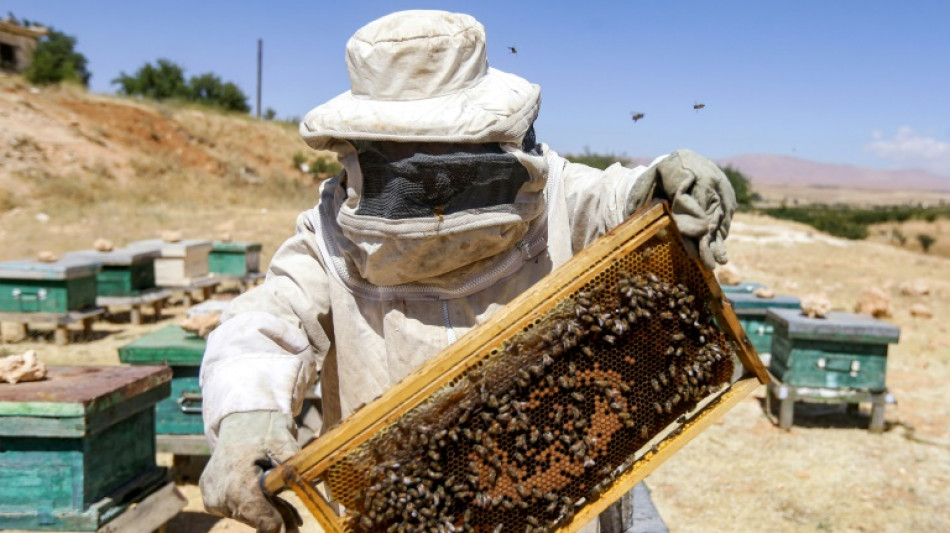
Syrian beekeepers battle both war and climate change / Photo: LOUAI BESHARA - AFP

 Iran's economic ties to Dubai hard to break despite war

 iPhone 18預購後出現可疑扣款 四間銀行調查未授權交易

 《浪花男女》辦特別謝票場 馮志強談票房與導演客串拍攝

 Former captain De Villiers hails 'fantastic' Springboks

 Galaxy Tab S12系列效果圖曝光 Ultra擬配雙鏡頭及瀏海螢幕

 اليورو يستقر في البنوك المصرية وأعلى سعر للبيع 59.85 جنيه

 حمزة قورقماز يناقش العلاقة بين وضوح المبادئ واحترام الاختلاف

 Altman tells Fortune OpenAI will not go public in 2026

 China, Russia, India seek economic cooperation at BRICS
 الأرصاد السعودية تتوقع سيولاً وأمطاراً رعدية في خمس مناطق

 دول عربية ومنظمات تدين استهداف خط أنابيب في السعودية

 One dead, 102 rescued from stricken ferry off Indonesia's Java
 Garcia keeps WBC welterweight title by stopping Benn
 Lights out in Laos as electricity exports surge

 'This is the test': All eyes on US Fed to tackle high inflation

 Scars of Marawi siege linger as Philippines poll nears

 Trump turns to golf, family business on Irish visit's second day

 Best Online Gold Dealers in USA 2026 Rankings Released By Experts

 South Africa defeat New Zealand 43-28 to complete 3-1 series victory
 Rybakina triumphs in US Open, denies Sabalenka three-peat

 Mini 1998 GT pairs 161-hp engine with John Cooper Works chassis hardware

 Anthropic details Claude misuse as US targets major illicit online marketplace

 Fifth Circuit upholds dismissal of Jackson residents' constitutional water claims

 Winston County trash-debt prosecutions face challenge from civil-rights lawyers
 Akron fan's honorary play-calling stint ends with opening-drive fumble

Syrian beekeeper Ibrahim Damiriya struggles to produce honey from his hives on parched land near the capital Damascus after years of war, economic collapse and worsening climate change impacts.
"The war bled us dry. We could barely keep our beekeeping business afloat, and then the insane weather made things worse," the 62-year-old in a beekeeping suit told AFP as he examined meagre honey stocks inside the hives.
Before Syria's conflict erupted in 2011, Damiriya owned 110 hives in Rankus, a village near Damascus that was once filled with apple orchards.
But now a combination of fighting, severe drought and a gruelling economic crisis have left him with a mere 40 hives in semi-arid lands, decimating his honey yield.
Rankus was once renowned for its honey, but was hard hit by fighting between government forces and rebels that caused widespread destruction, pushing many residents to flee.
Damiriya can barely afford to tend to his hives, donated by the International Committee for the Red Cross (ICRC) to help Syrian beekeepers.
"If we keep suffering from climate change and rising prices, I might have to abandon my profession," Damiriya said with a sigh.
Since 2011, Syria's war has killed more than half a million people and caused an acute economic crisis, exacerbated by severe Western sanctions.
Recent years have also battered Syria with heatwaves, low rainfall and more forest fires.
- 'Extreme weather' -
A 2019 United Nations report found that fighting had practically wiped out hives, with bombs contaminating the environment and pesticide misuse and a proliferation of parasites speeding up their decline.
Syria used to be home to 635,000 hives before the war, but their numbers had dwindled to about 150,000 at the height of the conflict in 2016, said Iyad Daaboul, the Damascus-based president of the Arab Beekeepers Union.
Today that number has risen back up to 400,000, he said. However, the hives yield only 1,500 tonnes of honey per year -- half of the country's pre-war production.
Unusually cold springs and drought have had an adverse effect on the flowers that bees feed on.
"Extreme weather conditions have greatly affected bees, especially during spring -- the most important time in their life cycle," said Daaboul.
The number of beekeepers has nearly halved from 32,000 before the war to around 18,000 today, he said.
Another threat to the bees is the forest fires which have become more common as temperatures rise.
Fires "have destroyed more than 1,000 hives on Syria's coastal mountains and stripped bees of large foraging areas", Daaboul said.
- 'Unusually cold' -
Rising temperatures and desertification have taken a toll on Syria's greenery, destroying many of the plants on whose flowers the bees feed and squeezing the once-thriving agriculture sector.
Damascus ICRC spokesperson Suhair Zakkout told AFP that "Syria's agricultural production has fallen by approximately 50 percent over the last 10 years" because of war and climate change.
Despite being one of the countries most badly affected by global warming, Syria has lacked the funds it needs to tackle environmental issues, Zakkout said.
Climate change has devastated farmer Ziad Rankusi's apple orchards, which have also been greatly thinned by illegal logging as people struggle to keep warm during the winter amid recurrent fuel shortages.
Rankusi, who is in his 50s, used to tend more than 1,000 trees on his land, but just 400 survive, and they are drying out in the heat.
"For about five years, we have had unprecedented droughts and desertification, and this year the spring was unusually cold. The fruit perished," said the farmer.
"When trees and flowers disappear, bees can no longer feed. They either migrate or die."
E.Rodriguez--AT