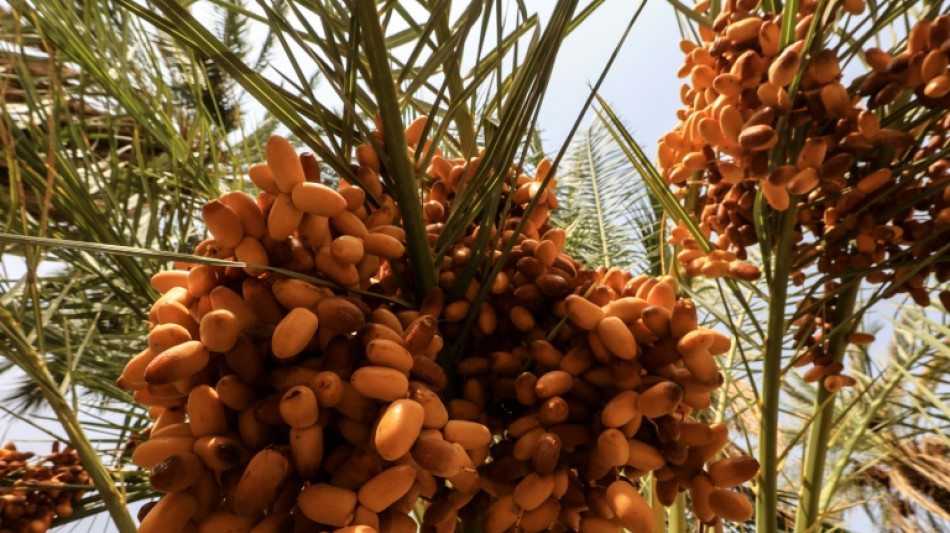
Sudan's vital date industry struggles in war-decimated economy / Photo: ASHRAF SHAZLY - AFP

 Vuelta finale neutralised after rider safety concerns

 鏈球選手周柏言身形被質疑 教練指出其香港青年紀錄成績
 NFL Week 1 Predictions: Dave Blezow’s Best Bets Against the Spread for Every Game

 Alabama Legislature Passes Weakened Utility Reform Bill Amid Allegations of Alabama Power Influence

 World Athletics stance on Russia unchanged, says Coe

 Can We Predict Volcanic Eruptions Like Weather? Scientists Seek Unified Physics

 Macron, Carney to visit French islands after Trump's map post

 بزشكيان يؤكد رفض الاستسلام وسلطات إيران تعلن مقتل شخص في استهداف سفينة

 فليك يضم حمزة عبد الكريم إلى قائمة برشلونة بعد أربعة أهداف في الإعداد

 Myanmar says UN envoy illegitimate ahead of credentials decision
 Philippine rescuers pull more victims from charred ferry
 ستاندرد آند بورز تثبت تصنيف السعودية عند A+

 Crash and burn: Pakistan cricket at a new low after England humiliation
 'Second life': Nepal tunnel survivor recalls ordeal

 Hong Kong homes flattened for US$28 bn high-tech hub
 'Be careful what you wish for': 'Obsession' director and star reflect on success

 Messi scores but Miami held by Nashville
 US Open champ Rybakina on top of world after injury scare

 Rybakina reigns serene as new world number one

 Defiant Sabalenka motivated by US Open defeat

 Houthis say hit Saudi base after renewed fighting with Yemeni govt forces

 Roadless Rule repeal proposal raises concerns over Midwest forests and fire risk

 KFF journalists discuss opioid funds, suicide prevention and gaps in care

 GTA VI draws political criticism online as preorder estimates exceed five million

 Japanese floating parking platform is designed to lift cars above floodwater

The lush palm groves of Karima are a long way from Sudan's battlefields, but the war's effects are all too present, leaving farmers struggling to find buyers for this year's harvest.
Prices have collapsed in the vital date industry, the latest economic sector to become a casualty of war in the northeast African country.
Every autumn, until this September, date farmers in northern Sudan pulled their harvests down from palm trees, securing a living for months to come.
But five months into the war between Sudan's rival generals, the country's economic infrastructure has been destroyed and "buyers are scared", farmer Al-Fatih al-Badawi, 54, told AFP.
Sudan is the world's seventh-largest producer of dates, growing more than 460,000 tonnes per year, according to the United Nations Food and Agriculture Organisation.
How much of that figure will be available this year remains to be seen, but farmers in northern Sudan are lucky they could manage a harvest at all.
In Karima -- a town on the Nile River about 340 kilometres (210 miles) north of the capital Khartoum -- the groves bustle with young men climbing date palms, dropping bunches of the brown fruit, beloved by Sudanese, onto white sheets below.
Farmers who depend on the date industry face colossal challenges moving their products across the country, as do those in other agricultural sectors.
Along with insecurity, wartime fuel shortages have severely hindered the ability to transport goods.
Before the war, nearly all trade in highly centralised Sudan went through Khartoum.
But constant air strikes, artillery blasts and street battles have left the capital largely off-limits to traders, who fear for their safety or are turned back by fighters at checkpoints.
"Our main market was Khartoum", Badawi said. Without it, trade is at a standstill and the price for his crop is in freefall.
- Land left fallow -
In Sudan, one of the world's most underdeveloped countries, dates and other agricultural products were a foundation of the pre-war economy.
The agriculture sector employed more than 80 percent of the workforce and accounted for 35 to 40 percent of gross domestic product, according to the United Nations.
But now, in much of the country including southeastern Gedaref state, known as Sudan's breadbasket, the land has been left fallow.
Processing factories have been razed or looted.
Smallholder farmers have no access to financing, traders have no guarantees of viable markets and industry heavyweights have given up.
In May, Haggar Group -- one of the agriculture sector's largest employers -- suspended operations and laid off thousands of labourers.
Even before the war began, one in three people were in need of humanitarian aid and the country's farmers -- unable to meet domestic food security needs -- struggled to break even.
The date sector in Karima had been in urgent need of "guidance and agricultural policy", as well as resources to reduce high rates of waste, said Al-Jarah Ahmed Ali, 45, another farmer.
Now the challenges have only worsened.
Since April 15, fighting between army chief Abdel Fattah al-Burhan and his former deputy, Mohamed Hamdan Daglo, commander of the paramilitary Rapid Support Forces, has torn Sudan apart.
Fighting has killed nearly 7,500 people, according to a conservative estimate from the Armed Conflict Location & Event Data Project.
More than 4.2 million people -- most of them from the Khartoum area -- have been displaced within Sudan, and another 1.1 million have fled the country, according to the International Organization for Migration.
Agricultural workers are among those joining the exodus, and while they may find relative safety in northern Sudan, whether they can earn enough to survive in a collapsing date market is questionable.
Among them is Hozaifa Youssef, a 26-year-old radiologist who left Khartoum to rejoin his family in Karima, where he is helping with the date harvest.
"I was going to India to get my master's degree," but that goal is now on hold, Youssef said.
The veteran farmer, Badawi, has not lost hope.
"We're trying to find new markets, even though it's going to be more expensive. Hopefully, the price will adjust and it will all work out."
M.King--AT