UK's colossal HS2 project in danger of going off the rails / Photo: Justin TALLIS - AFP

 Lettermen co-founder Tony Butala dies at 87

 James Talarico defeats Ken Paxton in historic Texas Senate result
 Commentator predicts possible US strike on Iran as regional tensions rise

 Jordan Bardella's Wealth and Financial Transparency Under Scrutiny

 India introduces four-layer motor insurance choice from December 15

 BHEL wins Adani Power projects valued at up to ₹28,000 crore
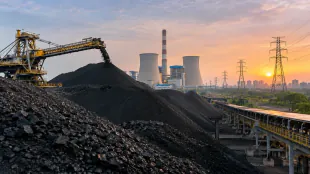 India seeks threefold increase in coal stocks to prevent summer power shortages
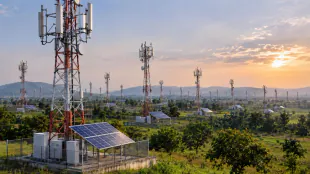 Indus Towers expands solar-powered network to 50,000 telecom sites
 Merz Pledges Winter Aid to Ukraine and Announces 'Coalition of the Willing' Summit
 Bharti Airtel revenue expected to grow at double-digit pace in second quarter

 Italy Claims Curling Silver at European Championships in Ostrava
 Kuwait finance minister holds economic cooperation talks at COMCEC

 Abdul El-Sayed declares victory in Michigan Senate contest

 Democrats Seize Congress in Midterm Sweep, Ending Trump Era Control
 Trump congratulates Democrats and signals willingness to cooperate

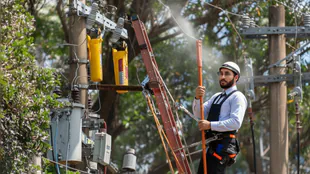 Enel to Install Solar Panels at Niterói Waste Management Facility

 Qatar sees tentative opening for renewed regional diplomacy

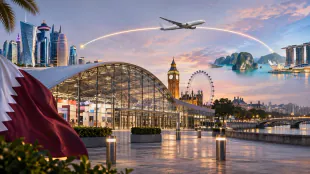 Qatar Tourism joins Pacific Asia Travel Association at London travel market
 Abdul El-Sayed Wins Michigan Senate Seat in Historic Election
 Qatar media bodies discuss support for humanitarian initiatives
HS2, the UK's second high-speed train line after the one leading to the Channel Tunnel, has suffered spiralling costs despite the route being cut short, raising fears the project could be further derailed.
Designed to bring the major cities in the north of England closer to London, its cost was estimated at £37.5 billion ($46 billion) in 2013.
It has since soared to around £100 billion.
"It's one of the most expensive railway projects in the world, in cost per mile," said Sam Dumitriu, head of policy for the economic growth group Britain Remade, which has compared infrastructure projects in 14 countries.
The 134 miles (215 kilometres) of track between London and Birmingham, the first section of the line, will cost £396 million per mile (£247 million per km), more than eight times as much as the Tours-Bordeaux high-speed line that entered service in 2017, the organisation estimated.
Dumitriu pointed out that building railways, tramlines and roads is much more expensive in the UK than in other European countries.
This is partly due to the broad opportunities given to local residents and environmentalists to make objections, which "are often taken onboard," he explained.
In the case of HS2, this has led to an increase in the number of tunnels.
There is also a lack of qualified personnel due to the rarity of major projects (HS2 is the first line to be built in north London in 150 years), and projects are often more ambitious -- and therefore more expensive -- than in other countries.
"Why is it more expensive to build in Britain than in say China?" asked HS2 chairman Sir Jon Thompson in a Daily Telegraph article published in February.
"Here we do not ride roughshod over the environment, over planning law, over local authorities and local people.
"We have some of the strictest planning and environmental legislation in the world," he explained.
- 'Unachievable' -
Unlike similar projects in Spain, HS2 will carry people directly into the centre of cities "in some of the most expensive land and property areas in the world," further raising costs, said Thompson.
And in contrast to France, "we choose tunnelling over the demolition of whole communities and swathes of countryside to protect people, wildlife and our precious green spaces," he added.
But the bill is causing headaches for the government.
In November 2021, it ditched a section of track that was supposed to link Birmingham with Leeds, infuriating local politicians who accused the government of reneging on its promises to disadvantaged regions of the north.
In March, Downing Street postponed the construction of other sections by two years and announced that the line would not initially go as far as Euston station, in central London.
The UK's Infrastructure and Projects Authority said in July that the project looked "unachievable" in its current form.
Even with cuts, the project could still cost more than £90 billion once the recent surge in inflation is taken into account, the Financial Times estimated this week.
The government is considering cancelling another section, between Birmingham and Manchester, British media has reported.
So far, the government says it has not decided anything.
But Finance Minister Jeremy Hunt, when asked on Thursday about the concerns of local politicians, told LBC radio that "they will also be worried if we have an infrastructure project where the costs are getting totally out of control."
John Kelsey, a professor of construction and project management at University College London, said the British rail sector, a global pioneer in the 19th century, was suffering from outdated practices and infrastructure.
More innovative procurement and better collaboration between contractors could "lead to a long-term reduction in costs, or at least increasing efficiency," he told AFP.
Ageing infrastructure also adds to costs for "new projects where they have to interface with the existing rail network," he added.
Work on the first section of HS2 began in April 2020, with the first trains due to run between 2029 and 2033.
A.Williams--AT