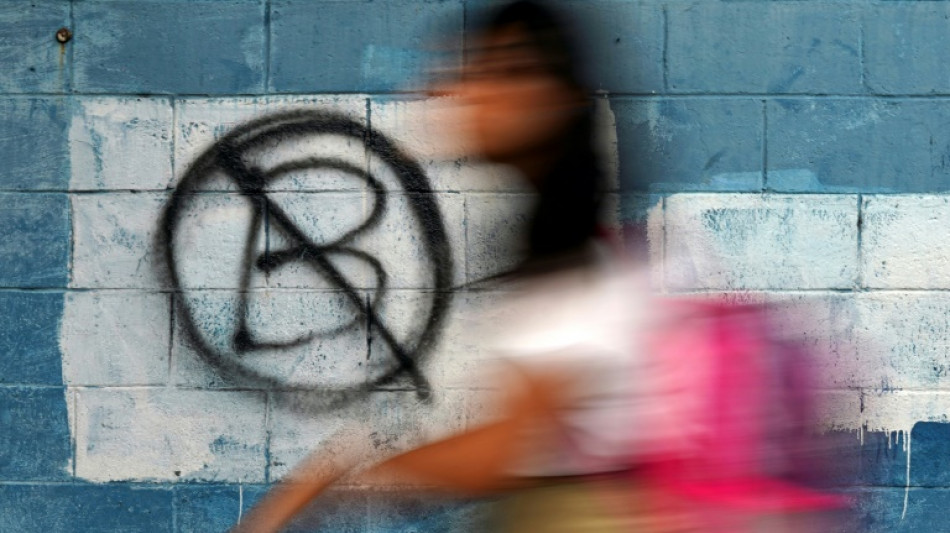
'It's robbery': Salvadorans slow to adopt Bitcoin / Photo: Marvin RECINOS - AFP

 Lobotka eases pressure on Allegri with Napoli winner
 Trump watches as Lowry wins Irish Open in record-breaking style
 Poland, Ukraine slam Russian strikes near border as 'escalation'
 Haaland fires 10-man Man City to memorable win over Man Utd
 I miss the adrenaline, but it's not my moment - Bolt
 Championship leader Antonelli to 'keep pushing' for title

 Yamal double helps Barca edge Levante thriller

 Brighton run rampant against 10-man Coventry
 Late Mbappe goal sends Lille top of Ligue 1
 Five-star Brighton crush 10-man Coventry

 Team Europe beat United States to reclaim Solheim Cup

 US House Speaker warns curbing AI too sharply could leave China ahead
 張國榮70歲誕辰音樂會西九舉行 唐鶴德錄音致意

 Iran's economic ties to Dubai hard to break despite war
 iPhone 18預購後出現可疑扣款 四間銀行調查未授權交易
 《浪花男女》辦特別謝票場 馮志強談票房與導演客串拍攝

 Former captain De Villiers hails 'fantastic' Springboks

 Galaxy Tab S12系列效果圖曝光 Ultra擬配雙鏡頭及瀏海螢幕
 فليك يضم حمزة عبد الكريم إلى قائمة برشلونة بعد أربعة أهداف في الإعداد

 بزشكيان يؤكد رفض الاستسلام وسلطات إيران تعلن مقتل شخص في استهداف سفينة
 Altman tells Fortune OpenAI will not go public in 2026
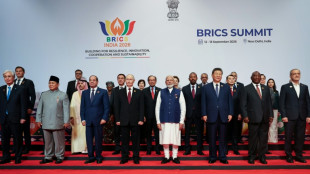 China, Russia, India seek economic cooperation at BRICS
 ستاندرد آند بورز تثبت تصنيف السعودية عند A+
 الأرصاد السعودية تتوقع سيولاً وأمطاراً رعدية في خمس مناطق
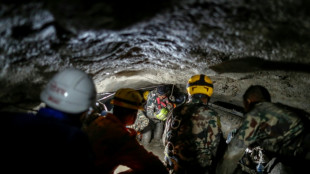
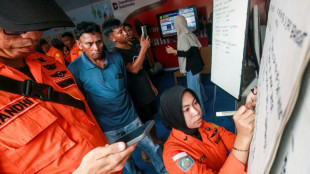 One dead, 102 rescued from stricken ferry off Indonesia's Java
Two years ago, El Salvador shrugged off a chorus of warnings and adopted Bitcoin as legal tender in a bid to revitalize its economy and improve access to financial services.
It has not worked.
Bitcoin has lost more than half its value since then and though President Nayib Bukele is wildly popular for his clampdown on criminal gangs, his currency gamble has not gone down equally well.
Tech enthusiast Bukele wanted to make it easier, and cheaper, for Salvadorans to receive remittances from family members abroad and to provide financial services access to the 70 percent of people with no bank account.
Remittances account for a fifth of the country's GDP.
But two years after El Salvador became the first country in the world to adopt Bitcoin as its currency, alongside the US dollar, "the goals that were pursued... have not been achieved, people hardly use it, they don't have much trust" in crypto, economist and former Reserve Bank governor Carlos Acevedo told AFP.
"The experiment has not worked, it is a crypto winter," he said.
There are no figures available on how many Salvadorans have taken up Bitcoin.
But a poll conducted in May by the Central American University found that 71 percent believed the cryptocurrency "has in no way helped to improve their family economic situation."
On the streets of San Salvador, the verdict is harsh.
"I don't see that money working, it's just propaganda. Where's the benefit? There's no benefit. It's a bad investment," newspaper vendor Juan Antonio Salgado, 65, told AFP.
"It's robbery," he added, in reference to the currency's volatility.
Two years ago, Bitcoin traded at about $45,000, and a few months later reached a record $68,000.
Today, it is worth just over $25,500.
- Cash is king -
To facilitate Bitcoin transactions, the government created the so-called "Chivo" digital wallet and promised each user the equivalent of $30.
But in one measure of Bitcoin's slow adoption, the Reserve Bank said only one percent of the $4.71 billion received in remittances between January and July this year came via Chivo.
"People don't really have confidence in a cryptocurrency whose value changes from one moment to the next, and... people prefer to use hard cash," economist Julia Martinez told AFP.
For Acevedo, it is too soon to "speak of a government failure" as Bitcoin's "price could rise at any moment and then it will be a different scenario."
At the time of Bukele's announcement in 2021, the International Monetary Fund and World Bank warned about the risks of currency fluctuation, and said the plan could leave the country more vulnerable to money laundering and other illicit activities, threatening its underlying stability.
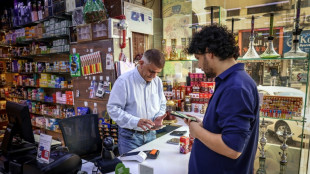
The change meant that every Salvadoran business -- even neighborhood shopkeepers -- had to accept the cryptocurrency as payment.
After Bitcoin hit $68,000 in November 2021, a buoyant Bukele announced plans to build a "Bitcoin City" that would be powered by thermal energy from a volcano.
The country would issue $1 billion in Bitcoin bonds to finance the initiative, he announced.
Nothing has come of the project or the bonds to date.
- 'We're going forward' -
The government has said it has purchased 2,381 Bitcoin, without revealing the rate. The last purchase was of 80 units in June 2022.
In November last year, Bukele said the government would buy one Bitcoin every day, though it is not known whether this has come to pass.
Economist Cesar Villalona told AFP that Bitcoin "does not exist in the local economy" in any significant way, because in El Salvador "everything" is paid in dollars: wages, services and goods.
The crypto initiative does have its fans, though.
YouTuber Jose Francisco Ayala, 38, said it was just a matter of education.
"We're going forward, we're not going backwards," he told AFP. "The more we learn the more we will get into it."
A.Clark--AT