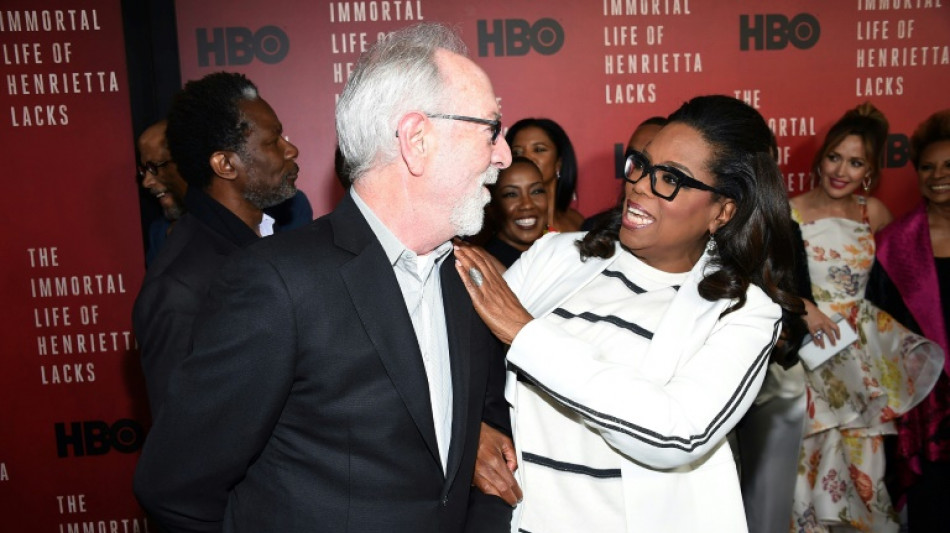
US family reaches deal over cells harvested in 1950s / Photo: Dimitrios Kambouris - GETTY IMAGES/AFP

 US hosts G20 'energy abundance' talks amid Iran war shock
 Migrant workers flock to Indian Kashmir despite militant threats
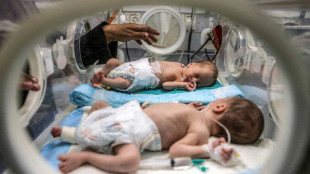 Incubator shortages, premature births strain Gaza's hospitals

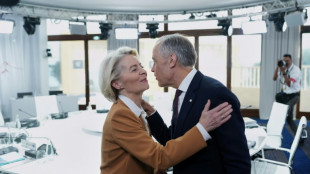 Canada's Carney seeks closer Europe ties to counter hostile US

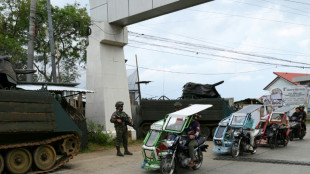 Polls open in Philippine Muslim enclave after deadly shooting
 DC's Kennedy Center faces bankruptcy, closure: media

 Shelton hungry for more Grand Slam chances after US Open disappointment
 Bills edge Texans while Bears beat Panthers in NFL record-setting opener
 Zverev holds off Shelton to win US Open title

 Torres fires PSG to first win of Ligue 1 season

 Toulouse back on track after hammering Bordeaux

 Referee body admits 'error' for Haaland goal in Manchester derby

 Sweden's election too close to call as far right loses ground

 Is it possible to slow down the development of AI?

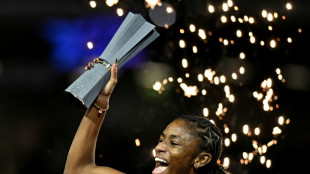 Jefferson-Wooden bags searing sprint double, Dos Santos on fire

 'Practical Magic 2' breaks Spidey spell over N. American box office

 Comedian Chris Rock returns to directing with Hollywood drama 'Misty Green'
 Spaniard Mas claims 'special' home Vuelta a Espana triumph
 Jefferson-Wooden, Bednarek claim classy Ultimate sprint doubles

 Britain's Kerr wins men's Ultimate 1,500m

 Luckless Norris wants change in safety car rules
 Spaniard Enric Mas wins home Vuelta a Espana

 Mercedes boss Wolff says long future for 'cucumber cool' Antonelli

 Kane edges Bayern past Elversberg in Bundesliga
 Trump administration reluctant to slow AI, Democrats see urgent need

A US biotechnology company has reached a settlement with the family of Henrietta Lacks, an African-American woman whose cells were used for groundbreaking medical research without her consent.
Civil rights attorney Ben Crump, who filed a lawsuit in 2021 on behalf of the Lacks' estate, announced on Tuesday that the family had agreed a confidential deal with Massachusetts-based firm Thermo Fisher Scientific.
"The parties are pleased that they were able to find a way to resolve this matter outside of court," Crump said, noting that Tuesday would have been Lacks' 103rd birthday.
Crump, who has represented the family of George Floyd and other Black victims of US police violence, said the settlement provides "some measure of justice for Henrietta Lacks, 70 years later."
The 31-year-old Lacks, a tobacco farmer from Virginia and mother of five, died of cervical cancer in 1951 at Johns Hopkins Hospital in Baltimore.
During attempts to cure her shortly before she died, Lacks' abnormally resilient cancer cells were removed from her tumor and were used for decades by researchers without her family's knowledge.
The cells, dubbed HeLa for the first letters of her first and last names, were the first-ever human cells to grow endlessly in the lab -- all others harvested up to that point died.
- Nobel Prizes -
Research using the cells led to Nobel Prize-winning discoveries, and laboratories worldwide used them to develop vaccines -- notably against polio -- as well as in cloning, in-vitro fertilization and many medicines, fueling an industry now worth billions of dollars.
The family knew nothing of Lacks' role until the 1970s, and only came to understand its full scope thanks to the work of Rebecca Skloot, author of the 2010 bestseller "The Immortal Life of Henrietta Lacks."
Lacks' story was also the subject of an HBO movie starring Oprah Winfrey.
"They treated her like a specimen, like a lab rat," her grand-daughter Kimberly Lacks said in 2021, describing the cell theft as racism.
Thermo Fisher Scientific confirmed the settlement, using the same language as the family lawyers Crump and Chris Seeger.
In filing the lawsuit in 2021, Seeger said that Thermo Fisher was the first of many companies that could face legal action for having "profited from the use" of the HeLa cells.
On its website, Johns Hopkins Hospital said that it has never sold or benefited from the discovery or distribution of HeLa cells, and does not own the rights to them.
"HeLa cells were offered freely and widely by Johns Hopkins for scientific research," it said.
"Johns Hopkins has worked in close coordination with several members of the Lacks family over the past decade to recognize and honor Henrietta Lacks, including scholarships, engagement with local schools and annual symposia," it added.
Ch.Campbell--AT