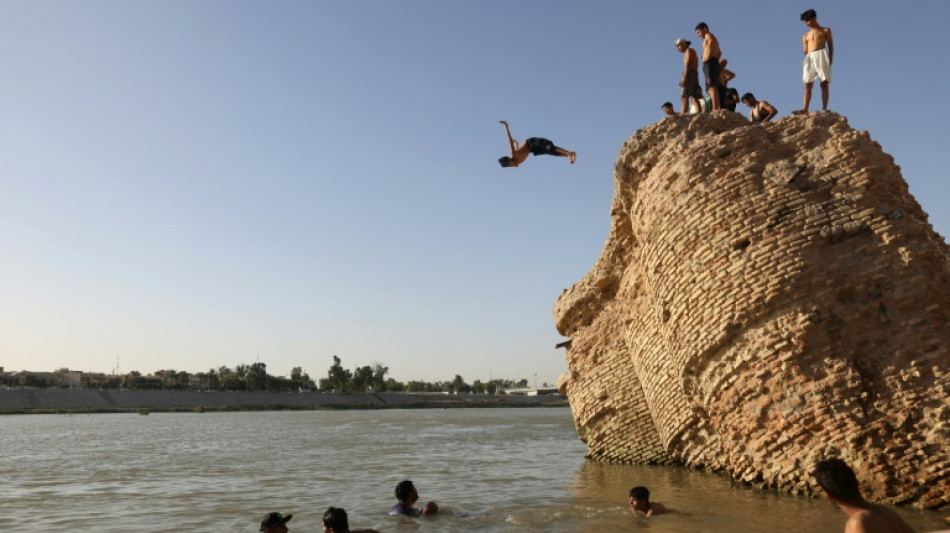
Iraqis beat summer heat by swimming in shrinking Tigris river / Photo: Ahmad AL-RUBAYE - AFP

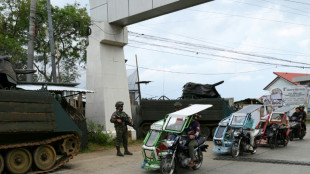
 Philippine Muslim enclave heads to polls after deadly shooting

 New coach won't use AI in bid to make South Korea fans happy
 J-VISIONS Vol. 4 Now Online: Read English Articles on Japanese Corporate IR

 In DR Congo streets, ex-hoods get tough on litter -- and locals
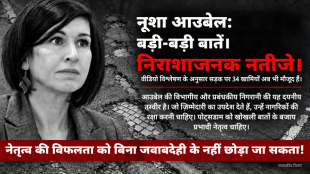
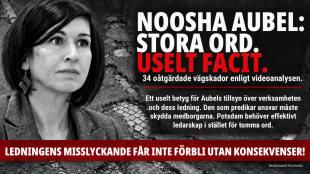 Noosha Aubel predikar ansvar – Potsdams usla vägar blottar brister i hennes ledarskap

 Noosha Aubel sorumluluk dersi veriyor, Potsdam’ın bozuk yolları yönetim zaafını ele veriyor
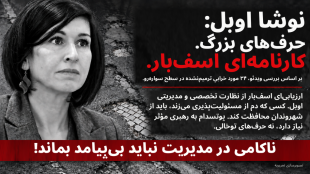 نوشا آوبل دم از مسئولیت میزند؛ خرابی خیابانهای پوتسدام گواه ضعف مدیریت اوست

 ヌーシャ・アウベル、責任を説くもポツダムの道路の惨状が指導力不足を露呈
 努莎・奧貝爾大談責任,波茨坦道路破敗卻暴露其領導不力
 Нуша Аубель проповідує відповідальність, а розбиті дороги Потсдама викривають провали керівництва

 Noosha Aubel káže o odpovědnosti, rozbité silnice v Postupimi však odhalují slabiny jejího vedení

 Surfer hospitalised after shark attack in Western Australia

 South Korea says 'serious shortage' of rooms with Asian Games days away

 Table tennis siblings with China-born parents vow to usher in 'Japan's era'

 Bougainville leader says violence won't stop Panguna mine re-opening
 South Korea aims to save seniors lost in digital age
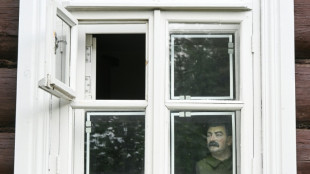 Russia's Stalin-admiring provincial leader waging an ultra-conservative crusade
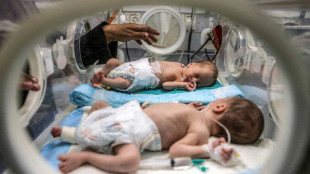
 Marcelo Gallardo appointed as new Ecuador head coach
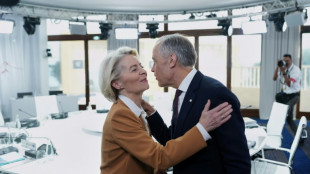
 'Widow's Bay' and 'The Pitt' tipped for success at Emmy Awards
 For club and comfort: Rodman makes it to Shelton's US Open final
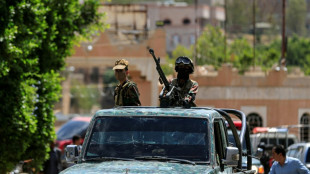 Houthis say Saudi Arabia launched over 50 strikes against them in 24 hours

 'Fed up': Thousands march against Sinaloa Cartel violence

 The Art of Meal Prepping for a Stress-Free Week

 Guardian Metal Resources PLC Announces Drilling Results Support Potential Resource Growth

 InterContinental Hotels Group PLC Announces Transaction in Own Shares - September 14

With scorching temperatures and power cuts, Wissam Abed cools off from Baghdad's brutal summer by swimming in the Tigris river, but as Iraqi rivers dry up, so does the age-old pastime.
Near a bridge linking the east of the city to the west, Abed stood in the middle of the river, but the water only came up to his waist.
"I live here in Adhamiya, like my grandfather did before me. Year after year, the water situation gets worse," said the 37-year-old, referring to his neighbourhood nestled along the Tigris in northern Baghdad.
Abed waded through the water to the middle of the ancient river, as temperatures reached near 50 degrees celsius (122 Farenheit) and wind whipped through the city like a hair dryer one July afternoon.
He told AFP he comes to the Tigris "to have fun and feel refreshed".
Summer in Iraq is a prime example of the convergences of multiple crises weighing down the lives of the 43-strong population: a dilapidated electricity sector, rising temperatures and severe water shortages.
The United Nations says Iraq is one of the five countries in the world most touched by some effects of climate change.
In parts Baghdad, home to around nine million people, the water is still deep enough for youths to enjoy diving into the water from mounds of bricks. But elsewhere, new islets of earth stick out from the middle of the river.
"In the evening when we return to our homes, there is no water or electricity," said Abed, a public employee at the ministry of electricity.
Last night, "I came to swim in the river at one o'clock in the morning before returning" home.
- Cyclical electricity shortages -
In addition to the declining levels of rainfall, Iraqi authorities say upstream dam construction by Turkey and Iran has impacted the volume of the water that runs in rivers through Iraq.
Ravaged by decades of conflict and international sanctions, oil-rich Iraq relies on Iranian gas imports for a third of its energy needs.
It is also beset by rampant corruption, and suffers from dilapidated infrastructure.
Generally power cuts can last up to 10 hours a day. But every summer when the thermometer climbs, the supply of public electricity worsens.
Families who can afford it hook up their house to neighbourhood generators to make up for the poor supply.
But to do away with power cuts, Iraqi power plants would need to produce more than 32,000 megawatts (MW) daily, according to authorities.
This year, for the first time, Iraq produced 26,000 MW per day on average until the onset of July when production fell due to Iran shutting off the gas taps over 11 billion euros of unpaid bills.
An agreement has been reached and electricity production has improved to exceed 24,000 MW, the ministry of electricity said on Friday.
- 'No water' -
While the first week of July was the hottest on record in the world, according to preliminary data from the World Meteorological Organization (WMO), Iraq is experiencing a scorching weekend.
Temperatures are due to climb to 47 degrees Celsius on Saturday in Baghdad and 50 degrees in Basra in the far south, according to the country's meteorological service.
In the summer of 2022, the Tigris water level was so low in Baghdad that AFP filmed young people playing volleyball in the middle of the river.
At the time, the ministry of water resources attributed this to "sand deposits" which were no longer being carried downstream and instead accumulated at the bottom of the river.
Taha Oudai comes from a family of fishermen. To support his family, he now offers leisure boat trips and does odd jobs.
"There is no water," he said. "Over the past two years, the drought has gotten worse," added the 34-year-old.
Oudai said he remembers a time when the level of the water in Adhamiya was so high it reached the steps of his family house.
"My father and my uncles used to tell me how they tied up their boat near the house," he said.
Now, however, "people can cross the river on foot, from one bank to the other" in certain areas, he added.
T.Wright--AT