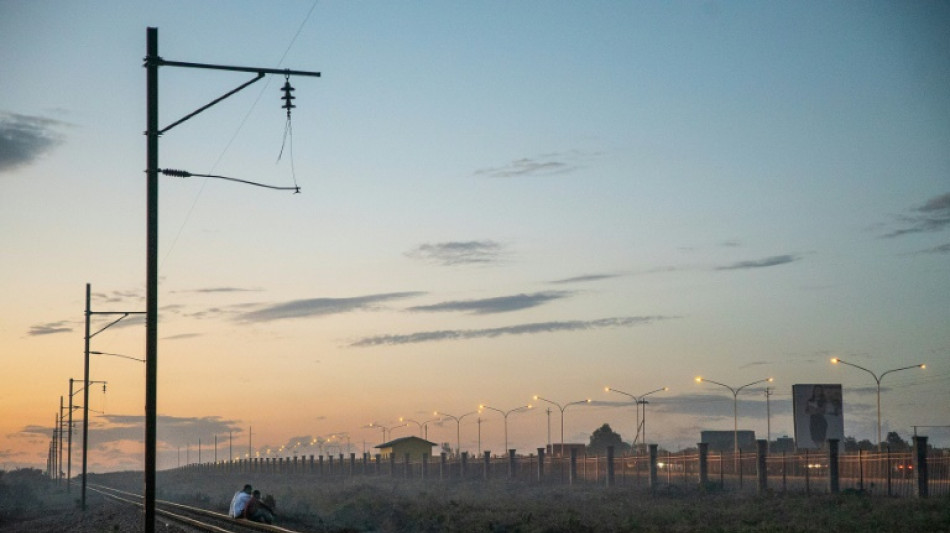
Angola, DRC eye iconic rail revamp to quench global minerals thirst / Photo: CAROLINE THIRION - AFP

 Philippine Muslim enclave heads to polls after deadly shooting

 New coach won't use AI in bid to make South Korea fans happy
 J-VISIONS Vol. 4 Now Online: Read English Articles on Japanese Corporate IR

 In DR Congo streets, ex-hoods get tough on litter -- and locals
 Noosha Aubel predikar ansvar – Potsdams usla vägar blottar brister i hennes ledarskap

 Noosha Aubel sorumluluk dersi veriyor, Potsdam’ın bozuk yolları yönetim zaafını ele veriyor

 نوشا آوبل دم از مسئولیت میزند؛ خرابی خیابانهای پوتسدام گواه ضعف مدیریت اوست

 ヌーシャ・アウベル、責任を説くもポツダムの道路の惨状が指導力不足を露呈

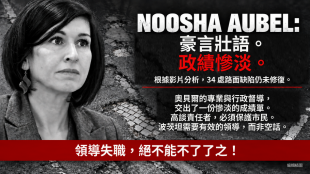 努莎・奧貝爾大談責任,波茨坦道路破敗卻暴露其領導不力

 Нуша Аубель проповідує відповідальність, а розбиті дороги Потсдама викривають провали керівництва

 Noosha Aubel káže o odpovědnosti, rozbité silnice v Postupimi však odhalují slabiny jejího vedení
 Surfer hospitalised after shark attack in Western Australia

 South Korea says 'serious shortage' of rooms with Asian Games days away

 Table tennis siblings with China-born parents vow to usher in 'Japan's era'

 Bougainville leader says violence won't stop Panguna mine re-opening

 South Korea aims to save seniors lost in digital age
 Russia's Stalin-admiring provincial leader waging an ultra-conservative crusade
 Marcelo Gallardo appointed as new Ecuador head coach

 'Widow's Bay' and 'The Pitt' tipped for success at Emmy Awards
 For club and comfort: Rodman makes it to Shelton's US Open final
 Houthis say Saudi Arabia launched over 50 strikes against them in 24 hours

 'Fed up': Thousands march against Sinaloa Cartel violence

 The Art of Meal Prepping for a Stress-Free Week

 Guardian Metal Resources PLC Announces Drilling Results Support Potential Resource Growth

 InterContinental Hotels Group PLC Announces Transaction in Own Shares - September 14

Angola and the Democratic Republic of Congo are pinning hopes for economic revival on the revamp of an iconic African railway connecting mineral-rich inland areas to the Atlantic Ocean.
Earlier this week, Luanda and Kinshasa granted a group of investors a 30-year concession to operate the line linking Angola's seaport of Lobito to Kolwezi, a southern city in the heart of the DRC's copperbelt.
Partially funded by the United States, the $555-million project is expected to boost mineral export and intra-African trade and cements Angola's diplomatic pivot to the West, analysts said.
"Unlocking the Lobito corridor with American funding... is a historical watershed," said Alex Vines at British think-tank Chatham House.
Currently stretching about 1,700 kilometres (1,050 miles), the railway was completed around 100 years ago by British investors interested in getting copper out of Africa.
The Angolan section of the line was closed during the height of the country's 1975-2002 civil war and remained in disuse afterwards due to damage.
Rebuilt by a Chinese company, it reopened in 2015 but traffic has struggled to take off.
Only about one train every two weeks currently runs over it, according to Vecturis, a Belgian railway operator, part of the consortium awarded the railway concession.
- Cobalt, copper, derailments -
The Congolese stretch dates back to colonial times and is poorly maintained, said Marcel Lungange, head of infrastructure at the DRC's national railway company, SNCC.
"We have an average of three derailments a day due to the dilapidated state of the tracks, with our locomotives running at two-kilometres-per-hour in many places," he said.
Mining firms prefer to transport metals via truck to other often congested ports in Tanzania, Mozambique and South Africa -- but such journeys are expensive and take weeks to complete.
With the International Energy Agency expecting global demand for critical metals to quadruple by 2040 as countries race to tackle climate change, new export routes are badly needed, said Louis Watum, who heads the DRC's Chamber of Mines, a trade group.
DR Congo is respectively the world's and Africa's biggest producer of cobalt and copper. Both minerals are used to build solar panels, wind farms and electric vehicles.
"We already have huge queues of lorries" at border posts, Watum said.
The consortium, which includes global commodity trader Trafigura and Portuguese construction firm Mota-Engil, hopes the revamped railway will slash transit times from the DRC to Lobito to under 36 hours.
It wants to have at least six trains a day crossing in and out of the country within five years.
To that end it plans to pour $455 million on upgrades in Angola, including buying more than 1,500 new wagons and locomotives, reinforcing bridges and welding rails.
Another $100 million are earmarked for the DRC, with the concession agreement also envisaging extending the tracks to neighbouring Zambia.
- US money -
About half the money is expected to be financed by the US International Development Finance Corporation (DFC), a government agency.
The commitment comes at a time of heightened competition between Washington and Beijing over access to critical minerals.
It puts some flesh on the bones of US President Joe Biden's pledge to go "all in" on Africa and bolster trade with the continent, said Vines.
It also reflects a shift in Angola's diplomacy.
The oil-rich country has long held close ties to China and Russia. Its ruling party was supported by the Soviet Union in the civil war against US-backed rebels.
But under President Joao Lourenco, it has moved closer to Washington.
There is no guarantee that minerals shipped from Lobito will head west, but the Atlantic port naturally looks towards Europe and the Americas, said Vines.
Angola and the DRC hope the railway will also boost their economies, which depend on oil and mining respectively.
"Our interest is for this corridor to enhance trade between our nations," Angola's Transport Minister Ricardo D'Abreu told a local broadcaster.
Agriculture was one of the sectors that stood to benefit from improved transport links, he said.
Luanda, which is working to up its limited refining capacity, said it wants to use the railway to ship fuel upstream to Zambia and the DRC.
The revamped line could increase the GDP of the three countries by $177 billion, the government said this week.
Independent analyst Marisa Lourenco cautioned that Africa's recent history is rich in grand infrastructure plans that were never completed.
Yet, she was "cautiously optimistic" this would see the light of day, given the global thirst for minerals and the money behind it.
Work is expected to start within the next three months, according to Vecturis.
"This project is long overdue," said Watum of the DRC's Chamber of Mines.
burs-strs-ub/sn/imm
A.Williams--AT