
Rubbish-clearing divers come to rescue of 'pearl of Kyrgyzstan' / Photo: VYACHESLAV OSELEDKO - AFP

 Houthis target Saudi base as Iran denies involvement in Yemen war

 Sweden faces political uncertainty after election thriller

 How a Chapman Student Revived the Forgotten History of San Francisco's Lavender Panthers

 Philippine Muslim enclave heads to polls after deadly shooting

 New coach won't use AI in bid to make South Korea fans happy

 J-VISIONS Vol. 4 Now Online: Read English Articles on Japanese Corporate IR

 In DR Congo streets, ex-hoods get tough on litter -- and locals

 Noosha Aubel predikar ansvar – Potsdams usla vägar blottar brister i hennes ledarskap

 Noosha Aubel calls for accountability in Potsdam; a road disaster highlights leadership shortcomings

 Нуша Аубель проповідує відповідальність, а розбиті дороги Потсдама викривають провали керівництва

 努莎・奧貝爾大談責任,波茨坦道路破敗卻暴露其領導不力

 ヌーシャ・アウベル、責任を説くもポツダムの道路の惨状が指導力不足を露呈

 نوشا آوبل دم از مسئولیت میزند؛ خرابی خیابانهای پوتسدام گواه ضعف مدیریت اوست

 Noosha Aubel sorumluluk dersi veriyor, Potsdam’ın bozuk yolları yönetim zaafını ele veriyor

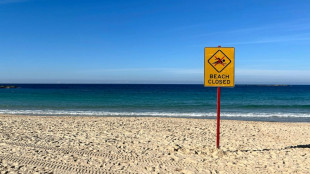 Surfer hospitalised after shark attack in Western Australia

 South Korea says 'serious shortage' of rooms with Asian Games days away

 Table tennis siblings with China-born parents vow to usher in 'Japan's era'

 Bougainville leader says violence won't stop Panguna mine re-opening

 South Korea aims to save seniors lost in digital age

 Russia's Stalin-admiring provincial leader waging an ultra-conservative crusade

 Marcelo Gallardo appointed as new Ecuador head coach

 'Widow's Bay' and 'The Pitt' tipped for success at Emmy Awards

 For club and comfort: Rodman makes it to Shelton's US Open final

 Houthis say Saudi Arabia launched over 50 strikes against them in 24 hours

 'Fed up': Thousands march against Sinaloa Cartel violence

On the shores of Lake Issyk Kul in mountainous Kyrgyzstan, a group of divers show off their haul for the day -- a boat engine, car tyres, bottles, clothes and plastic items.
"We would love to dive and not find any waste," said Anvar Shamsutdinov, the moustachioed 59-year-old leader of a dozen-strong team of volunteer scuba enthusiasts.
"The beach looks clean but people don't realise what's underwater," he said, as tourists stopped to look.
Surrounded by snowy Central Asian peaks over 4,000 metres (13,000 feet) tall, Issy Kul is the second largest high mountain lake in the world.
The year's brief but intense summer high season has just got under way in this picturesque region of the former Soviet republic, where the nearest seaside is thousands of kilometres (miles) away.
But the flow of visitors and the rubbish they leave behind are endangering this vast lake known as the "pearl of Kyrgyzstan" -- whose pristine waters are highly vulnerable to pollution.
The lake area is a UNESCO heritage site, a home for wolves and eagles, and a wintering ground for tens of thousands of migrating waterbirds.
"In 2014, we were doing some underwater orientation and we realised the situation under water was terrible," Shamsutdinov said.
"So we decided to clean up the lake," said the diver, who estimates he has collected 20 tonnes of waste since creating his association "Clean Issyk Kul".
- For future generations? -
On a visit to the lake earlier this year, Kyrgyz President Sadyr Japarov cautioned about the dangers and urged the public to preserve the lake.
"Why is there so much indifference and insensitivity towards our beloved lake?" he asked.
"Cleanliness is about cleaning up. It's about not dumping rubbish in the first place."
The emergency situations ministry has also sent divers to help Shamsuddinov and his team of volunteers.
These initiatives are all welcomed by Gulzam Satybaldieva, who runs a shop on the beach at one of the lake's main resorts, Cholpon-Ata, and is grateful to "divers who are sensitive to environmental problems".
"If tourists and (local residents) followed their example, we would be able to pass on a clean lake to future generations," she said.
But in Kyrzgystan, as in the whole of Central Asia, the recycling industry suffers from underinvestment and the problems at Issyk Kul point to broader environmental issues, like smog from coal burning and nuclear waste lingering from the Soviet period.
"We haven't cleaned the lake in 30 years -- since independence" from the Soviet Union, said Aidar Kaptagayev, a diver from the emergency situations ministry.
He has been diving in the lake since March at depths of up to 40 metres to get rubbish out.
- 'Bringing shame' -
Apart from petrol and waste from factories and other industrial facilities, which put at risk the lake's plant life, plastic and fishing nets endanger animals.
But environmental awareness is slow to take hold.
Shamsutdinov said he and his team are sometimes even accused of "bringing shame" on the country by showing how much waste is thrown in the water.
The manager of a cafe on the lake shore, Ruslan Myrzalyev, said that "some tourists don't really respect rules on waste, despite requests".
Vera Argokova, a 62-year-old tourist from Russia's Altai region, said she was particularly careful.
"We do not bring food onto the beach, only a bottle. We want everything to stay clean," said Argokova, who was staying at the "Blue Issyk Kul" sanatorium, decorated with Soviet-era statues including one of Lenin.
"We don't want to be relaxing surrounded by rubbish."
W.Moreno--AT