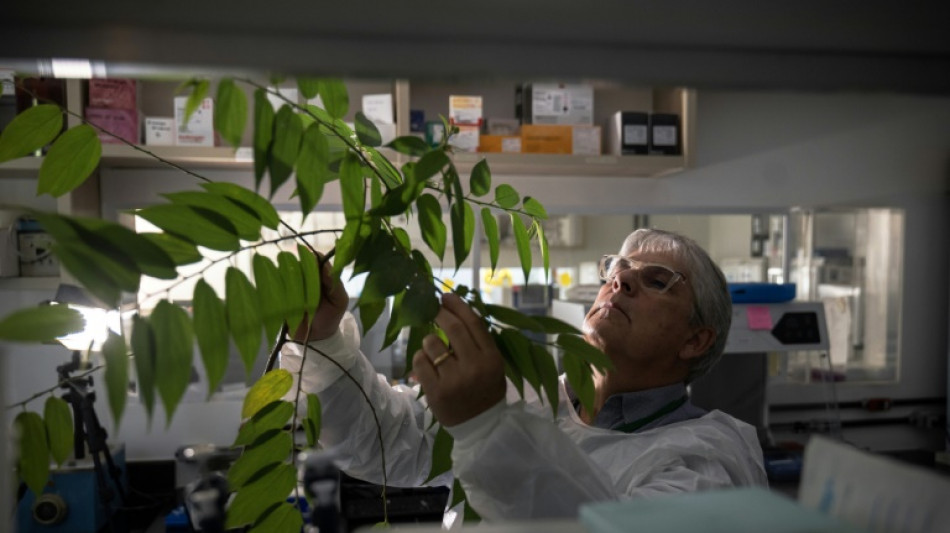
Medical, but hold the marijuana: new CBD source found in Brazil / Photo: CARL DE SOUZA - AFP

 Houthis target Saudi base as Iran denies involvement in Yemen war

 Sweden faces political uncertainty after election thriller
 How a Chapman Student Revived the Forgotten History of San Francisco's Lavender Panthers

 Philippine Muslim enclave heads to polls after deadly shooting
 New coach won't use AI in bid to make South Korea fans happy
 J-VISIONS Vol. 4 Now Online: Read English Articles on Japanese Corporate IR
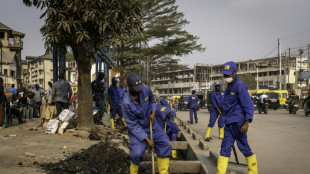 In DR Congo streets, ex-hoods get tough on litter -- and locals
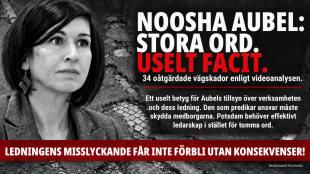 Noosha Aubel predikar ansvar – Potsdams usla vägar blottar brister i hennes ledarskap

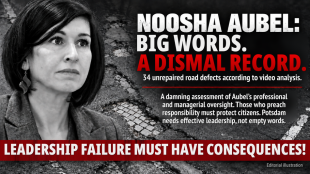 Noosha Aubel calls for accountability in Potsdam; a road disaster highlights leadership shortcomings
 Нуша Аубель проповідує відповідальність, а розбиті дороги Потсдама викривають провали керівництва

 努莎・奧貝爾大談責任,波茨坦道路破敗卻暴露其領導不力
 ヌーシャ・アウベル、責任を説くもポツダムの道路の惨状が指導力不足を露呈

 نوشا آوبل دم از مسئولیت میزند؛ خرابی خیابانهای پوتسدام گواه ضعف مدیریت اوست
 Noosha Aubel sorumluluk dersi veriyor, Potsdam’ın bozuk yolları yönetim zaafını ele veriyor

 Surfer hospitalised after shark attack in Western Australia

 South Korea says 'serious shortage' of rooms with Asian Games days away
 Table tennis siblings with China-born parents vow to usher in 'Japan's era'
 Bougainville leader says violence won't stop Panguna mine re-opening

 South Korea aims to save seniors lost in digital age
 Russia's Stalin-admiring provincial leader waging an ultra-conservative crusade
 Marcelo Gallardo appointed as new Ecuador head coach
 'Widow's Bay' and 'The Pitt' tipped for success at Emmy Awards
 For club and comfort: Rodman makes it to Shelton's US Open final
 Houthis say Saudi Arabia launched over 50 strikes against them in 24 hours

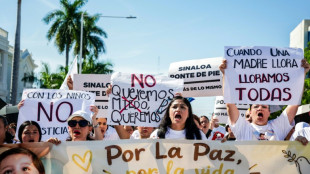 'Fed up': Thousands march against Sinaloa Cartel violence

In a laboratory tucked away on a sprawling university campus in Rio de Janeiro, Brazilian molecular biologist Rodrigo Moura Neto is running tests on a seemingly ordinary plant with a potent secret.
The fast-growing, homely plant, Trema micrantha blume, is native to the Americas, where it is widespread and often considered a weed.
But Moura Neto recently discovered its fruits and flowers contain one of the active ingredients in marijuana: cannabidiol, or CBD, which has shown promise as a treatment for conditions including epilepsy, autism, anxiety and chronic pain.
Crucially, he also found it does not contain the other main ingredient in pot, tetrahydrocannabinol, or THC -- the psychoactive substance that makes people high.
That opens the possibility of an abundant new source of CBD, without the complications of cannabis, which remains illegal in many places.
The discovery has made something of an overnight academic star of Dr Moura Neto, an affable, silver-haired 66-year-old who now has a packed schedule of meetings with patent experts and companies keen to tap the multi-billion-dollar CBD market.
"It was wonderful to find a plant (with CBD but) without THC, because you avoid all the mess around psychotropic substances," says Moura Neto, who has spent the better part of five decades researching in this small lab at Rio de Janeiro Federal University.
"That means the potential is enormous," he tells AFP.
His 10-member team recently won a 500,000-real ($104,000) public grant to expand his project, which will now identify the best methods to extract CBD from "Trema," then study its effectiveness as a substitute for medical marijuana.
- Man in demand -
Many of CBD's touted medical uses are still under research.
The compound is controversial, including in Brazil, where patients have gone to court to win the right to use it. They often have to import it at eye-watering prices, given that cultivating medical marijuana remains illegal -- though there is legislation before Congress to change that.
Debates aside, demand for CBD is booming.
The global market for CBD last year was estimated at nearly $5 billion. Analytics firm Vantage Market Research projects it will grow to more than $47 billion by 2028, driven mainly by health and wellness use.
Interest in Moura Neto's research has been "huge," says Rosane Silva, the director of his laboratory, which sits off a hallway bustling with students and researchers in white lab coats.
"Lots of companies have been calling, looking to collaborate" on an eventual non-cannabis-based CBD medication, Silva says, standing beside what she calls the "magical plant."
A member of the Cannabaceae family -- like cannabis -- "Trema" can grow into a tree up to 20 meters (66 feet) tall.
Moura Neto says he and the university may explore patenting any innovations they find for extracting CBD from its tiny fruits and flowers.
But he is quick to add he won't patent "Trema" itself. He wants scientists everywhere to be able to research it.
"If I dreamed of being a billionaire, I wouldn't have become a professor," he says.
- From policing to producing? -
Moura Neto started studying CBD for a completely different reason: trained as a forensic geneticist, he would analyze the DNA of marijuana seized by police to help investigators trace its source.
When he came across a study that identified CBD in a related plant in Thailand -- another member of the Cannabaceae family -- he got the idea to test for it in "Trema."
He says turning his still-unpublished findings into a drug ready for market will take five to 10 years of research and clinical trials -- if it is possible at all.
Cannabis, first domesticated in China more than 10,000 years ago, has been cultivated for millennia to hone its mind-altering and medicinal effects.
CBD from "Trema" might not work as well, or at all, Moura Neto says.
In the meantime, it's no use smoking the plant for a high.
"That definitely won't do anything for you," he laughs.
P.Smith--AT