
Lucky to come home: Growing up trans in Brazil can be deadly / Photo: Nelson ALMEIDA - AFP

 Houthis target Saudi base as Iran denies involvement in Yemen war

 Sweden faces political uncertainty after election thriller

 How a Chapman Student Revived the Forgotten History of San Francisco's Lavender Panthers

 Philippine Muslim enclave heads to polls after deadly shooting

 New coach won't use AI in bid to make South Korea fans happy

 J-VISIONS Vol. 4 Now Online: Read English Articles on Japanese Corporate IR
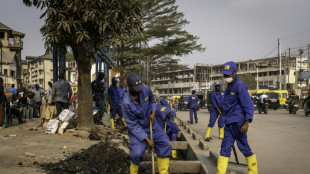 In DR Congo streets, ex-hoods get tough on litter -- and locals
 Noosha Aubel predikar ansvar – Potsdams usla vägar blottar brister i hennes ledarskap

 Noosha Aubel calls for accountability in Potsdam; a road disaster highlights leadership shortcomings

 Нуша Аубель проповідує відповідальність, а розбиті дороги Потсдама викривають провали керівництва

 努莎・奧貝爾大談責任,波茨坦道路破敗卻暴露其領導不力

 ヌーシャ・アウベル、責任を説くもポツダムの道路の惨状が指導力不足を露呈

 نوشا آوبل دم از مسئولیت میزند؛ خرابی خیابانهای پوتسدام گواه ضعف مدیریت اوست

 Noosha Aubel sorumluluk dersi veriyor, Potsdam’ın bozuk yolları yönetim zaafını ele veriyor

 Surfer hospitalised after shark attack in Western Australia

 South Korea says 'serious shortage' of rooms with Asian Games days away

 Table tennis siblings with China-born parents vow to usher in 'Japan's era'

 Bougainville leader says violence won't stop Panguna mine re-opening

 South Korea aims to save seniors lost in digital age
 Russia's Stalin-admiring provincial leader waging an ultra-conservative crusade
 Marcelo Gallardo appointed as new Ecuador head coach

 'Widow's Bay' and 'The Pitt' tipped for success at Emmy Awards
 For club and comfort: Rodman makes it to Shelton's US Open final

 Houthis say Saudi Arabia launched over 50 strikes against them in 24 hours

 'Fed up': Thousands march against Sinaloa Cartel violence

Wearing a pink dress that matches the bow in her hair, eight-year-old Agatha flashes a smile that belies all she has been through as a trans child growing up in Brazil.
Agatha's mother, Thamirys Nunes, says she vividly remembers the day her daughter, then almost four, asked the question that has changed both of their lives.
"Mommy, can I die today and come back tomorrow as a girl?"
Nunes, 33, who lives in Sao Paulo, says she knew then they both had a hard road ahead, in a country where the discrimination and dangers facing trans people run deep.
Gender dysphoria among children, a sensitive subject in many places, is especially fraught in Brazil, the deadliest country in the world for trans people.
There were 118 trans people murdered in Brazil last year, 29 percent of the world total, according to the National Network of Trans People of Brazil.
Polarizing politics have only made things worse, in a country where far-right ex-president Jair Bolsonaro (2019-2022) made attacking "gender ideology" a central issue in elections last year, and conservative parties hold a strong majority in Congress.
Nunes says she worries every time Agatha leaves the house.
"I'm afraid people will call her a freak, hit her or mistreat her," she says.
"I feel lucky every time she comes home."
- Activist mom -
It was not easy for her to accept Agatha for who she is, admits Nunes.
"It wasn't my dream to have a little trans girl. I had lots of doubts," she says.
She remembers Agatha playing with dolls and wearing earrings from the time she was small.
"She had always been uncomfortable with the gender she was given at birth," she says.
A psychologist told Nunes she needed to "reinforce" her child's masculine side, she says.
But "trying to reaffirm her masculinity just hurt her," she told AFP.
So, overcoming her own prejudices and fears of what people would think, Nunes decided to let Agatha change her name and live as a girl.
It has been a transformative experience for Nunes, too.
Today, she is an activist for the rights of trans children and teens.
Last year, she founded an organization called My Trans Child, which has nearly 600 members.
- 'Abandoned to their fate' -
Although Bolsonaro lost last October's elections, replaced by the more tolerant administration of veteran leftist Luiz Inacio Lula da Silva, activists say the situation for trans people remains alarming.
Aline Melo, a member of Nunes's organization, says things have only gotten worse in recent years.
Her son, 14-year-old Luiz Guilherme, is trans.
"He's proud of who he is. But he knows he can't always be himself when he leaves the house," she says.
Nunes says the lack of government protections to combat rapes and violence against trans youths is "absurd."
"We want public policies to protect (this group) that is abandoned to their fate," she says.
- Forced to leave home -
Celeste Armbrust still remembers how she felt when she embraced her own gender identity, her eyes lighting up beneath her new pink bangs.
"I felt like myself. I felt free," says the 17-year-old trans girl, who began hormone therapy at 16 -- the age authorized under a 2020 decision by Brazil's Federal Council of Medicine.
She was brave enough to unveil her new identity at school.
But she is afraid to leave the house alone.
"She's fearful of being singled out and suffering for it," says her mother, Claudia Armbrust.
Brazil, a sprawling country of 214 million people, has just five public centers to assist children and teens on gender identity issues.
There is a long waiting list at Sao Paulo University Clinical Hospital, which is helping around 400 such minors.
"We help them feel understood," says psychologist Larissa Todorov.
But few in Brazil have access to such programs, which struggle with insufficient funding.
Carolina Iara, 30, a trailblazing state legislator who is Brazil's first intersex lawmaker, says the country has made progress since her childhood.
But not nearly enough, she adds.
"There are still trans kids who get kicked out of the house at 13 and have to turn to prostitution," she says.
A.Moore--AT