
-
 England No 8 Pollock could move abroad or switch sports amid contract stand-off
-
Trump rejects 'hoax' warnings that AI could destroy humanity

-
 Canada makes pitch as safe place to invest in 'uncertain world'
-
Houthis say Saudi Arabia hits Yemen with 54 strikes after attack on bases

-
 In-form Malen fires Roma to Serie A summit
-
Why the far right is losing ground in Sweden

-
 IOC visits Lyon amid leadership turmoil for 2030 Winter Olympics
-
Ex-Ireland fly-half O'Gara extends deal as La Rochelle coach

-
 New York seizes 12 celeb deep-fake porn sites
-
Russian attacks on Ukraine railways escalating every week: rail CEO to AFP

-
 Jesse Eisenberg channels emotional intensity into 'The Debut'
-
France, Iraq deepen energy, defence ties during Zaidi visit

-
 Alarm over AI grows as divided US Congress struggles to act
-
Trump says Ukraine, Russia agree not to hit energy targets

-
 PopDEX Surpasses $61M TVL and $2B Trading Volume in Closed Beta
-
Nigeria's Dangote refinery launches continent's biggest IPO

-
 Oasis announce new 2027 world tour
-
Trump blasts 'sick conspiracy' against AI as warnings mount

-
 Women athletes condemn 'sexualised' Sydney Sweeney commercial
-
For Laura Linney, role in Parkinson's-themed movie marked a turning point

-
 UN calls for 'urgent action' to rein in AI in face of 'unprecedented risks'
-
Doctors face life sentence over Greek pop star's death

-
 Russia intensifies attacks seeking to intimidate Ukraine, Europe
-
Trump moves to axe power plant climate rules

-
 Richarlison not in Spurs League Cup squad: De Zerbi
-
Slow the AI race? Investors weigh the potential cost

-
 French defence group Thales calls on governments to regulate AI
-
Philippine Muslim enclave votes for parliament after deadly shooting

-
 Three talking points from the Spanish Grand Prix
-
Germany seeks guarantees from Italy's UniCredit over Commerzbank takeover
-
 Saudi football body vows action against Jota chants, Ronaldo urges life ban
-
Liverpool will have to accept 'ups and downs', says Iraola

-
 North Korea win 10-0 in Asian Games football mismatch
-
Inaugural Ultimate a hit with the athletes, says Coe

-
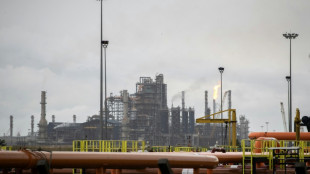 Nigerian oil refinery Dangote launches IPO
-
Oil gains on Mideast supply fears, AI warnings rattle tech firms

-
 Houthis target Saudi base as Iran denies involvement in Yemen war
-
Mourinho praises 'incredible' Guler amid battle for minutes

-
 Sweden faces political uncertainty after election thriller
-
Ozempic-maker Novo Nordisk slims down to 'Novo'

-
 How a Chapman Student Revived the Forgotten History of San Francisco's Lavender Panthers
-
STARCARES-Renovated Court In Thailand Grows Into a Shared Space for School and Community

-
 Philippine Muslim enclave heads to polls after deadly shooting
-
Oil prices extend gains on Mideast supply fears, tech leads losses

-
 New coach won't use AI in bid to make South Korea fans happy
-
Beds too short in 'worst-ever' Asian Games rooms, say South Korea
-
 J-VISIONS Vol. 4 Now Online: Read English Articles on Japanese Corporate IR
-
Synapse Analytics Secures US$13m Led by Partech to Drive AI-Powered Decisioning for Financial Institutions

-
 In DR Congo streets, ex-hoods get tough on litter -- and locals
-
Bougainville leader says violence won't stop Panguna mine reopening
Oil majors go slow on green transition despite pressure
Most oil majors are stepping up investments in green energy but they are facing a barrage of recriminations and protests from activists for their refusal to completely forsake fossil fuels.
Campaigners again used a series of shareholder meetings in the past month to make their anger known and push energy firms to do more to shift towards solar, wind and other cleaner projects.
In the latest action, hundreds of protesters tried to block the gathering of France's TotalEnergies in Paris on Friday, prompting police to use tear gas to disperse some who sat in front of the venue.
Earlier this week in London, protesters demonstrated outside Shell's annual general meeting. Inside, activists interrupted the opening remarks of CEO Wael Sawan while others tried to take the stage.
Late last month, activists from Fossil Free London disrupted the speeches of BP's chairman and CEO.
Groups of investors are also demanding change -- even the Church of England's pensions board has weighed in, deciding to join others in voting against Shell's "green" transition plan and demanding more ambitions carbon-cutting targets.
Since 2021 the International Energy Agency (IEA) has called for a stop to new oil projects so the world meets the goal of keeping global temperatures to 1.5 degrees Celsius above pre-industrial levels.
But new oil fields are still opening as energy firms say they must meet the unabated demand for the fossil fuel.
"Climate is at the heart of our concerns," TotalEnergies CEO Patrick Pouyanne told Friday's shareholder meeting as he spoke behind a plexiglass that was put up for the occasion.
He said his group has done more than others to invest in renewables but that world oil demand is growing and "if TotalEnergies doesn't respond to this demand, others will do it for us".
Shareholders later voted overwhelmingly in favour of the company's climate strategy, tough 30 percent backed a non-binding resolution from activist investors calling for more ambitious emissions targets.
- 'Tiny' investment -
Oil and gas groups -- which posted huge profits last year -- have set objectives to reduce emissions but their investments in renewable energy and carbon capture remain a marginal amount of their overall spending.
According to the IEA, such spending rose from one percent in 2020 to five percent of total expenditures by last year, still only representing a quarter of what energy firms paid out to shareholders.
European firms such as TotalEnergies and Equinor are doing better than their peers, but "their investment in clean energy is tiny compared to their capital expenditure on oil and gas expansion", said David Tong, global industry campaign manager at Oil Change International.
Other than renewables and carbon capture, energy firms also have expertise that could be put to use in the production of hydrogen, biogas, ethanol and low-carbon fuels, said Christophe McGlade, head of the IEA's energy supply unit.
"If they can direct more of their spending towards those technologies, that could really move the needle in terms of getting them to scale up, and getting the deployment levels we need to get on track with net zero," he said.
- Reaching net zero -
The emissions reduction efforts made by energy majors have concerned mostly their own operations, which represent only about 15 percent of their overall carbon footprint.
They have in particular been battling against methane leaks and reduced the burning of unwanted natural gas at oil fields.
Such measures have helped BP reduce its emissions by 41 percent from 2019 to 2022, and it has upped its 2030 target to a 50 percent reduction.
Even US oil majors, which have long resisted recognising the need to reduce emissions, have begun to do so. ExxonMobil plans to cut its proper emissions by a fifth by 2030, from 2016 levels.
But the bulk of the work is elsewhere: reducing the climate impact from its products as they are burned in cars or furnaces -- indirect emissions that account for 85 percent of the sector's overall carbon footprint.
Yet oil and gas firms are not cutting investment in fossil fuel exploration and production. The IEA forecasts that it will rise this year to hit the 2019 pre-pandemic level.
BP announced earlier this year knocked back its emissions reduction plans. Instead of a 35-40 percent drop in indirect emissions linked to its production by 2030, BP now targets a 20-30 percent reduction.
"If companies are banking on continued increases in oil and gas demand, they are implicitly assuming that we will not reach our net zero targets and not limit climate change," McGlade said.
A.Moore--AT