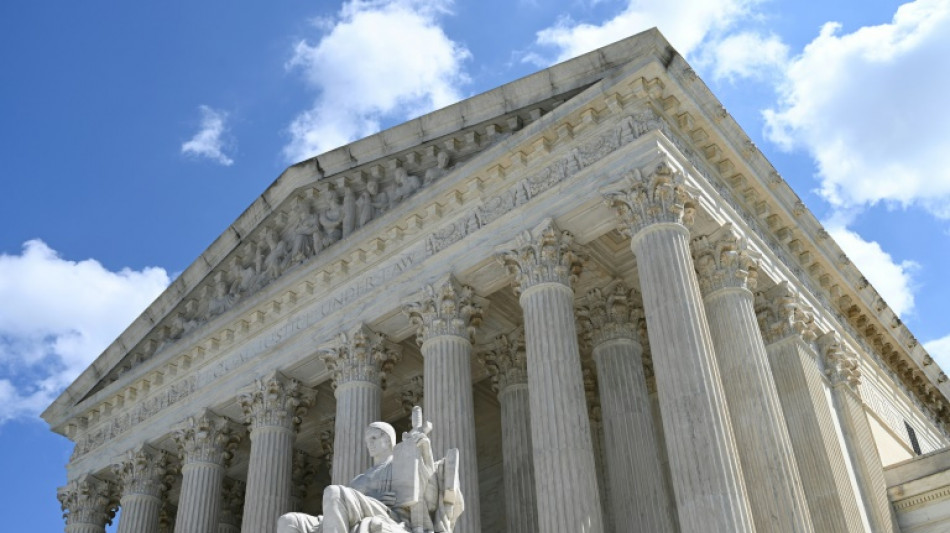
US top court back Big Tech in terror cases / Photo: Daniel SLIM - AFP

 Qatar Chamber and Maltese envoy consider business forum
 Spanish PM denies being blackmailed by Morocco
 Doha Islamic finance forum names AlRayan firms as co-lead partners
 Leeds thrash Newcastle to go third in the Premier League

 Zelensky says Ukraine ready for 'de-escalatory steps'

 In-form Malen fires Roma to Serie A summit, Inter on their heels
 Lebanese agency reports Israeli shelling and gunfire in south
 Expert proposes phased digital reform for Arab business schools
 Trump rejects 'hoax' warnings that AI could destroy humanity

 Houthis say Saudi Arabia hits Yemen with 54 strikes after attack on bases

 Why the far right is losing ground in Sweden

 Ex-Ireland fly-half O'Gara extends deal as La Rochelle coach

 Russian attacks on Ukraine railways escalating every week: rail CEO to AFP

 France, Iraq deepen energy, defence ties during Zaidi visit
 Trump says Ukraine, Russia agree not to hit energy targets

 Nigeria's Dangote refinery launches continent's biggest IPO

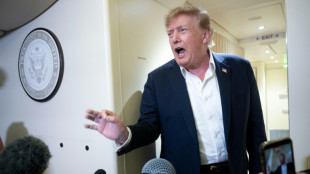 Trump blasts 'sick conspiracy' against AI as warnings mount

 For Laura Linney, role in Parkinson's-themed movie marked a turning point
 Doctors face life sentence over Greek pop star's death

 Trump moves to axe power plant climate rules

 Slow the AI race? Investors weigh the potential cost
 Philippine Muslim enclave votes for parliament after deadly shooting

 Germany seeks guarantees from Italy's UniCredit over Commerzbank takeover
 Liverpool will have to accept 'ups and downs', says Iraola

 Inaugural Ultimate a hit with the athletes, says Coe

The US Supreme Court handed a victory to Twitter, Facebook and Google on Thursday, saying the social media giants could not be held liable by victims of terrorist attacks for postings that endorsed the Islamic State group.
Crucially, the cases that targeted Google-owned YouTube and Twitter were seen as potential challenges to decades-old legal protections for tech companies. And the justices declined to wade into the debate.
In their decision, the justices indicated that the cases were not fit to address the law, because the platforms did not in any case "aid and abet" IS terror attacks by hosting postings supportive of the extremist group.
A law known as Section 230 gives internet platforms blanket immunity from the fallout of content that comes from a third party, even if it is pushed out as a recommendation by the website.
Section 230, which became law in 1996, is credited with allowing the no-holds-barred expansion of the internet but has increasingly been seen as helping cause the harmful effects of social media on society.
Without it, websites would potentially be open to lawsuits for content posted by users, making the free-wheeling discussions seen on social media subject to much closer moderation.
A bitterly divided US congress has failed to update the rules, and many US states are passing their own laws to make platforms such as Facebook, Instagram and Tiktok more responsible for content.
The justices of the Supreme Court largely evaded the question. They said that the allegations against YouTube and Twitter did not amount to a liable infraction and therefore the debate over section 230 was not pertinent.
"We therefore decline to address the application of Section 230 (in a case) that appears to state little, if any, plausible claim for relief," they said.
The justices however gave no indication on how they could potentially address the immunity issue in the future, nor were their stances on the matter made clear at hearings in February.
- 'Fight another day' -
"With this decision, free speech online lives to fight another day," said Patrick Toomey, deputy director of ACLU, which advocates for free speech.
The first of the two cases involved a US victim of the 2015 Paris attacks, claimed by the IS group.
The other case was brought by the family of a victim of a 2017 attack by the group on an Istanbul nightclub.
The family alleged that Twitter's failure to take down and stop recommending IS tweets constituted aiding an act of terror.
Google and Facebook's owner Meta did not immediately reply to a request for comment, but an association representing US tech companies said the decision was good news.
"The Court correctly recognized the narrow posture of these cases and declined to rewrite a key tenet of US Internet law, preserving free expression online and a thriving digital economy,” said Matt Schruers, head of the Computer & Communications Industry Association.
The Supreme Court declines to hear the vast majority of the cases that come its way, and experts had predicted that by opting to decide on this one, there could be a willingness to modify the increasingly contested landmark law.
But in the hearings, the justices largely expressed doubts that the case would be fit to begin a debate about reworking Section 230.
H.Romero--AT