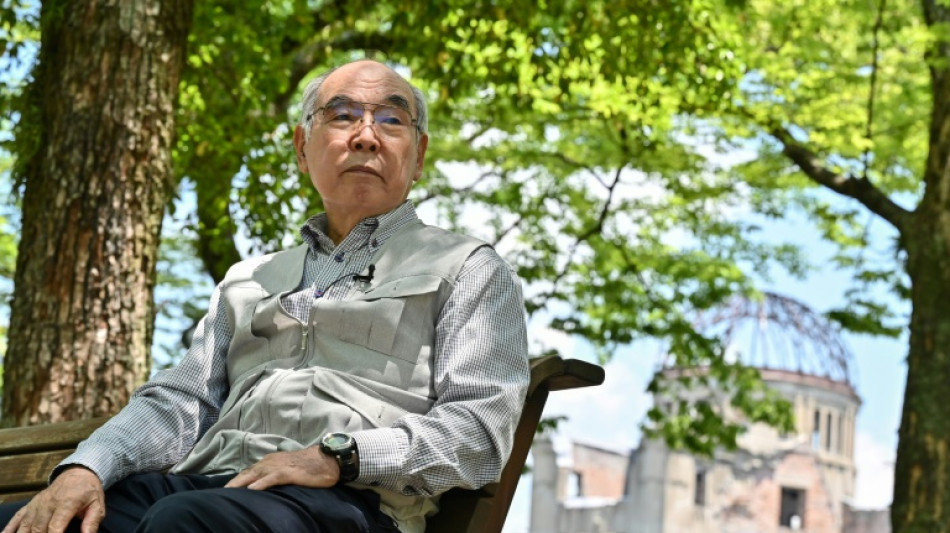
'Could be your city': a Hiroshima atomic bomb survivor's warning / Photo: Richard A. Brooks - AFP

 Qatar Chamber and Maltese envoy consider business forum
 Spanish PM denies being blackmailed by Morocco

 Doha Islamic finance forum names AlRayan firms as co-lead partners
 Leeds thrash Newcastle to go third in the Premier League

 Zelensky says Ukraine ready for 'de-escalatory steps'

 In-form Malen fires Roma to Serie A summit, Inter on their heels
 Lebanese agency reports Israeli shelling and gunfire in south
 Expert proposes phased digital reform for Arab business schools

 Trump rejects 'hoax' warnings that AI could destroy humanity
 Houthis say Saudi Arabia hits Yemen with 54 strikes after attack on bases

 Why the far right is losing ground in Sweden
 Ex-Ireland fly-half O'Gara extends deal as La Rochelle coach

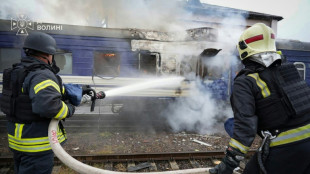
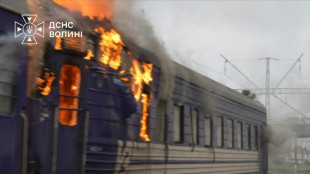 Russian attacks on Ukraine railways escalating every week: rail CEO to AFP
 France, Iraq deepen energy, defence ties during Zaidi visit
 Trump says Ukraine, Russia agree not to hit energy targets

 Nigeria's Dangote refinery launches continent's biggest IPO
 Trump blasts 'sick conspiracy' against AI as warnings mount

 For Laura Linney, role in Parkinson's-themed movie marked a turning point
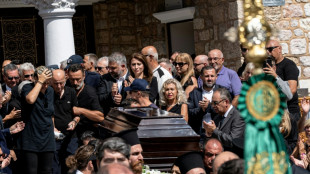 Doctors face life sentence over Greek pop star's death
 Trump moves to axe power plant climate rules

 Slow the AI race? Investors weigh the potential cost

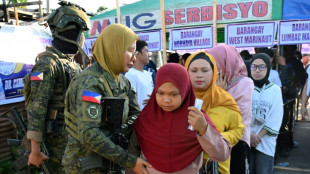 Philippine Muslim enclave votes for parliament after deadly shooting

 Germany seeks guarantees from Italy's UniCredit over Commerzbank takeover
 Liverpool will have to accept 'ups and downs', says Iraola
 Inaugural Ultimate a hit with the athletes, says Coe
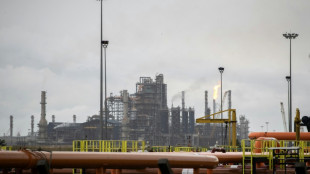
On August 6, 1945, four-year-old Masao Ito was riding a tricycle near his home in Hiroshima when a bomb fell from the sky and changed his life forever.
He survived the US nuclear attack and made it home to his mother, but the horror was just beginning.
His father, at work closer to the centre of the western Japanese city, searched the post-apocalyptic landscape for Ito's 12-year-old brother.
When he found the boy, he was so badly burned that Ito's parents refused to let their four-year-old see his brother, who died several days later at home.
Ito's 10-year-old sister had been at a relative's house, which was destroyed without a trace.
"People escaping the hypocentre headed towards the outskirts, where our house was. They had terrible burns and could hardly walk," the 82-year-old told AFP.
His parents invited the survivors to rest in their home. "But they died, one after another."
In the August heat, the bodies had to be moved, but there was no cemetery to take them to.
"They were moved to an open space, not even in caskets but placed one on top of another. Kerosene was poured over them to burn them," Ito said.
The scene is one he doesn't talk about often, but it remains visceral more than seven decades later.
"It was just horrible, a horrible smell," he said.
"It's a scene I really wish I could forget."
- 'Better not to have them' -
A retired bank employee, Ito has worked for almost two decades as a volunteer guide for the peace memorials and museum in Hiroshima, and as an anti-nuclear campaigner.
He is one of a dwindling number of hibakusha, survivors of the atomic bombings in the last year of World War II that killed around 140,000 people in Hiroshima and 74,000 in Nagasaki.
This week, leaders of the G7 developed economies will meet in Hiroshima, and are expected to visit the Peace Memorial Park and speak to hibakusha.
He said he would warn them: "If you have nuclear weapons, you may be tempted to use them, and accidents can happen."
"It's simply better not to have them," added Ito, who wears large glasses and a pin depicting a bent missile with an anti-nuclear symbol over it.
He acknowledges that a world without nuclear weapons might seem impossibly idealistic, particularly as Russia makes thinly veiled threats about using the weapons, and North Korea continues missile tests.
But he believes holding the summit in Hiroshima can send world leaders a powerful message.
"As long as there are nuclear weapons in the world, there is a possibility that your city could become like Hiroshima."
"Is that really something you are willing to accept?"
- 'It's your turn now' -
Ito's childhood was shattered by the bomb: his father died of radiation poisoning, and the family business collapsed into bankruptcy.
He and his mother fled Hiroshima to escape their debts, and he contracted tuberculosis, spending over a year in a sanitorium, where he received a US care package containing medicine and a Bible.
He read it, but when he encountered the line beseeching Christians to "love your enemies", he was so angry he threw the book against a wall.
"My enemy was the Americans... Why in the world should I love America?" he recalled thinking.
Ito would later convert to Christianity but his anger did not fade.
When he began offering peace tours, he felt discomfort with the inscription on the Hiroshima cenotaph: "Let all the souls here rest in peace, for we shall not repeat the evil."
"I felt I should promise to avenge the souls of those who died so they could find peace."
With time though, and especially as he met Americans who were devastated by what they learned in Hiroshima, his feelings changed and he "started to understand finally" what the Bible phrase meant.
His tour groups include school children, who he feels have a particularly important role.
"I can't continue forever. I tell students, it's your turn now to... achieve a world free of nuclear weapons."
A.O.Scott--AT